
Chile Evacuates 1.5 Million After Tsunami Red Alert Triggered by Massive Russian Quake
Boric government’s swift response reflects lessons from 2010 disaster, reinforces Chile’s disaster readiness

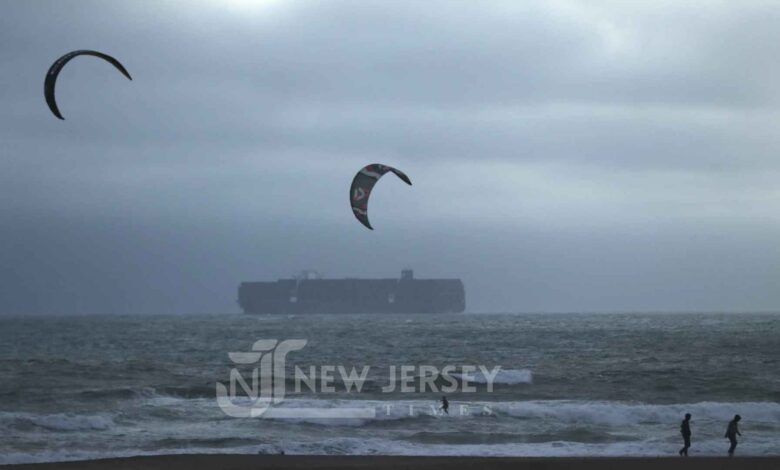
July 30 EST: When Chile’s government hit the red alert button in the early hours of July 30, ordering the mandatory evacuation of 1.5 million people from its Pacific coastline, it wasn’t merely reacting to a seismic threat. It was asserting national competence.


The trigger was external a magnitude‑8.8 earthquake off Russia’s Kamchatka Peninsula but the response was deeply Chilean: shaped by history, haunted by failure, and choreographed to signal a lesson learned. For President Gabriel Boric, a relatively young leader navigating a country that sits atop one of the world’s most active subduction zones, it was also a moment to prove his administration could lead when it mattered.
After 2010, Hesitation Is No Longer an Option
To understand Chile’s swift and sweeping action, rewind to February 27, 2010. A similarly powerful magnitude‑8.8 quake struck off the coast near Maule, generating a tsunami that caught the nation off guard. Over 500 Chileans died, not just because of the earthquake, but because the warning systems failed, and the evacuation orders came too late or not at all. The political fallout was brutal. Trust in institutions eroded, military credibility faltered, and the Bachelet government faced a wave of criticism it never fully shook off.
This time, there was no room for that kind of ambiguity. The minute tsunami models pointed to danger, SENAPRED Chile’s national disaster response agency triggered protocols that were painstakingly built over the last 15 years. There were no debates, no bureaucratic bottlenecks. Just sirens, text alerts, and highways jammed with families fleeing low ground.
A Leader Learning to Govern in Crisis
For President Boric, the tsunami warning offered a platform to lead without ideological baggage. His administration, often bogged down by debates over pension reform, constitutional overhauls, and simmering student protests, was momentarily unified around a single goal: get people out of danger.
Boric’s public address wasn’t flowery. It was measured, pragmatic.
“Remember that the first wave is usually not the strongest,” he said a line that carried weight both literally and metaphorically.
In a political climate that has grown increasingly fragmented, the evacuation effort became a rare act of national cohesion. Even his critics, often quick to pounce on perceived inexperience, stayed quiet.
Still, the real test of leadership isn’t just about reacting to nature. It’s about managing consequences logistical, psychological, and political. The decision to cancel classes, evacuate prisons, and shut down economic activity along hundreds of miles of coastline is expensive. The public complied this time. But if the tsunami fails to materialize in a dramatic way, the political cost could arrive later, in whispers of overreaction or unnecessary disruption.
A Region Watching Its Seismic Mirror
The Pacific Rim is used to this dance of fault lines and water. But what’s notable is how Chile’s reaction diverged from others. Japan recorded smaller waves and issued warnings but stopped short of mass evacuations. California, hit with modest flooding in Crescent City, lifted its advisories quickly. In contrast, Chile’s posture was maximalist and deliberately so.
Latin American neighbors like Colombia and Ecuador followed suit, shutting down beaches and evacuating the Galápagos, but none matched Chile’s scale. The contrast highlights how deeply embedded disaster memory is in Chilean statecraft. Unlike other nations, Chile doesn’t just anticipate tsunamis. It institutionalizes them.
The Politics of Over-Preparedness
There’s a political calculus here, too. In a country with fresh scars from natural disaster mismanagement, over-preparation isn’t just acceptable it’s demanded. Boric’s government isn’t only trying to protect lives. It’s guarding legitimacy. An under-response would be unforgivable. An over-response? Tolerable, even admirable.
But risk management is also about endurance. If warnings like these become routine and uneventful, public compliance may erode. That’s the challenge going forward. How do you maintain urgency without crying wolf?
A Tsunami That Didn’t Arrive and a Government That Did
By nightfall on July 30, tsunami waves had mostly dissipated, and Chile reported no casualties or major damage. The nation’s ports reopened cautiously. Coastal towns began to refill. And the president’s approval, for now, may see a quiet lift.
In political terms, the absence of tragedy is both a relief and a narrative win. Boric didn’t need a disaster to show leadership. He needed to prove the state was awake.
In Chile, the ocean is always watching. And this time, the state watched back.
New Jersey Times Is Your Source: The Latest In Politics, Entertainment, Business, Breaking News, And Other News. Please Follow Us On Facebook, Instagram, And Twitter To Receive Instantaneous Updates. Also Do Checkout Our Telegram Channel @Njtdotcom For Latest Updates.

Trained in war zones, raised in Newark, and seasoned in city hall, Jordan blends grit reporting with deep integrity. From floods to finance bills, they’re always first on scene and last to leave.