
MLK Day 2026: How America Is Marking Martin Luther King Jr.’s Legacy Today
A national day of service, uneven closures, and renewed debate as the U.S. observes Martin Luther King Jr. Day in a divided moment.


Atlanta, January 19 EST: By midmorning, the day had settled into its usual rhythm. Not celebratory. Not somber, either. Just reflective. Martin Luther King Jr. Day has a way of feeling heavier than most federal holidays, and that weight was evident across the country long before noon.



Church parking lots filled early. Community centers flicked on their lights. Volunteers showed up in layers, shaking off the cold, signing in without much fuss. This is how the day often begins, quietly, without ceremony. Online, the noise came later. Dr. Martin Luther King Jr., Dr. King, and MLKDay rose quickly on X, formerly Twitter, as Americans shared photos, quotes, and personal memories. Some were polished statements from elected officials. Others were blunt, emotional, even frustrated.
That mix felt appropriate. King’s legacy has never been neat.
A Holiday That Still Feels Complicated
Technically, today functions like any other federal holiday. Federal offices are closed. U.S. Postal Service locations are not delivering mail. Most banks will reopen Tuesday morning.
Beyond that, it depends. Many schools are closed. Many are not. Some businesses treat the day as sacred. Others barely acknowledge it. For millions of workers, it is a normal Monday, clocked in and moving on.

That unevenness is not accidental. Martin Luther King Jr. Day has always lived in a strange space. It is officially recognized, yet still negotiated. Respected in theory, inconsistently honored in practice. That tension traces back to the holiday’s origins, which were marked by years of resistance before it was finally adopted nationwide in 1986.
For people old enough to remember that fight, the holiday still carries a sense of hard-earned legitimacy. It was not inevitable. It had to be forced into existence.
Why The Day Is Built Around Action
Unlike most holidays, Martin Luther King Jr. Day is not designed around rest. It is officially designated as a national day of service, a reflection of King’s belief that justice demands participation.
Across the country, people spent the morning tutoring students, packing food boxes, cleaning public spaces, and staffing local nonprofits. None of it is glamorous. Much of it is repetitive. That is the point. King believed real change came from sustained effort, not symbolic gestures.
Organizers say volunteer turnout remains strong, particularly among students and young adults. Universities and community groups now structure entire programs around the holiday, treating it less like a tribute and more like a responsibility.
A Theme That Feels Timely
This year’s national theme comes from The King Center: Mission Possible 2: Building Community, Uniting a Nation the Nonviolent Way.
The message is deliberate. King’s commitment to nonviolence was not about avoiding conflict. It was about discipline, moral clarity, and persistence under pressure. In statements released ahead of today’s events, the Center emphasized that nonviolence requires courage, especially when division feels easier.
That framing lands sharply in 2026. Political divisions remain deep. Trust in institutions is thin. Speakers at events across the country are expected to acknowledge that reality, drawing connections between King’s philosophy and current debates over democracy, economic inequality, and civil rights.
Different Places, Different Expressions

In South Los Angeles, one of the largest public events of the day is unfolding, bringing together residents, activists, and local leaders for speeches, performances, and community outreach. According to local reporting, the event blends remembrance with direct support, offering services alongside reflection.

In central Pennsylvania, the focus is quieter. At Penn State University, students and residents are volunteering at the HUB-Robeson Center, where an MLK Day service program runs from 10 a.m. to 2 p.m. University officials say the goal is simple: take King’s words out of textbooks and put them into practice.
Later in the afternoon, State College will host its annual MLK Jr. Memorial March, beginning at 3:45 p.m. The route is familiar. The signs change every year. The message does not.
Elsewhere, observances are smaller and easier to miss. A discussion circle in a library meeting room. A short march through a residential neighborhood. A prayer service attended by the same faces year after year. These gatherings rarely make headlines, but they are the backbone of the holiday.
King’s Legacy In Real Time
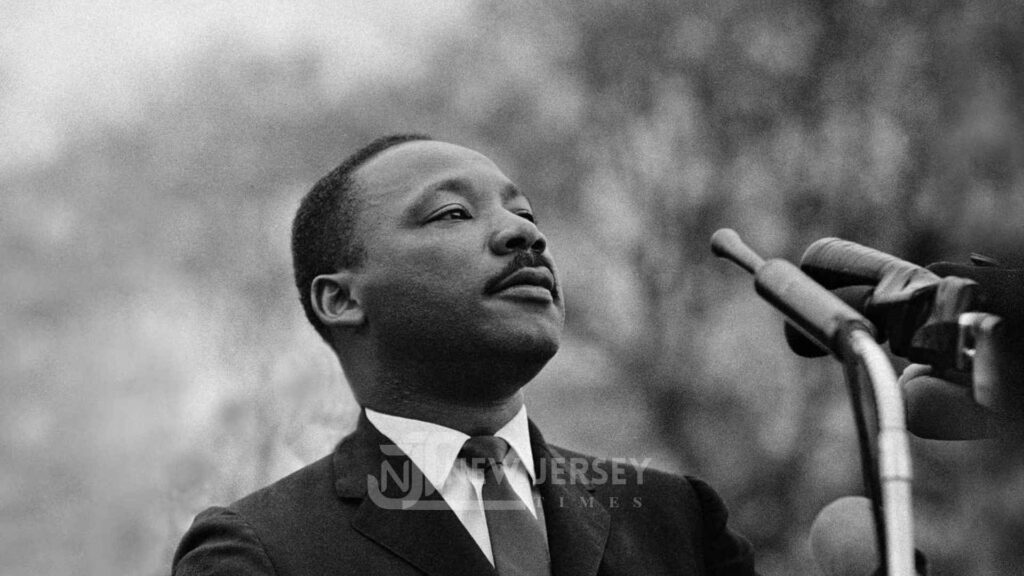
The surge of MLKDay online reflects how King’s legacy now moves through the world. His speeches are shared in fragments. His words are quoted, argued over, and sometimes misused.
Some users emphasize unity. Others point to his critiques of economic injustice and militarism. The result is not consensus. It is friction. And that, arguably, is more honest than a sanitized tribute.
Historians have long warned against turning King into a comfortable symbol. The conversations unfolding today suggest many Americans, especially younger ones, are pushing back against that impulse.
No Closure, On Purpose
As the day winds down, volunteer shifts will end and crowds will thin. By Tuesday morning, the routines of work and school will resume.

Martin Luther King Jr. Day does not offer closure. It never has. Instead, it leaves questions hanging. How much progress is enough? Who carries the responsibility forward? What does justice demand now, not decades ago?
King did not promise comfort. He promised a possibility, paired with an obligation. Once a year, the country pauses long enough to remember that difference. What happens next has always been the harder part.
New Jersey Times Is Your Source: The Latest In Politics, Entertainment, Business, Breaking News, And Other News. Please Follow Us On Facebook, Instagram, And Twitter To Receive Instantaneous Updates. Also Do Checkout Our Telegram Channel @Njtdotcom For Latest Updates.

Trained in war zones, raised in Newark, and seasoned in city hall, Jordan blends grit reporting with deep integrity. From floods to finance bills, they’re always first on scene and last to leave.