
Table of Contents
June 17 EST: Game 5 didn’t just tilt the series — it rattled the rafters. In a roaring, relentless showcase of heart and fire, the Thunder surged past the Pacers 120–109 to take a 3–2 lead in the NBA Finals. Now they’re one win away from a storybook ending 46 years in the making.


And the heroes? Jalen Williams and Shai Gilgeous-Alexander — a duo that didn’t just take over the game. They carved their names into Finals history.
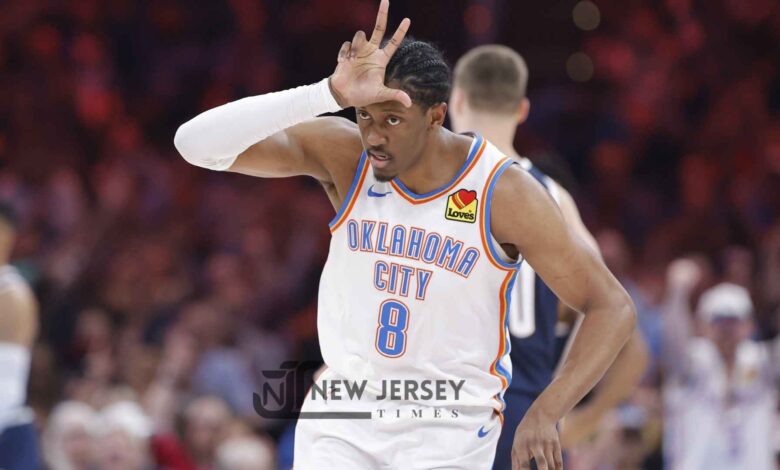
Jalen Williams Went Nuclear
You felt it from the jump: Williams had that look. The kind of locked-in that only shows up when the lights are brightest and the stakes are suffocating. By the time the dust settled, he had poured in 40 points — his most ever in a playoff game — and did it like he was born for the moment.
He wasn’t just hitting shots; he was dragging the Thunder through turbulence. When the Pacers cut the lead to single digits in the third, Williams coolly ripped off a personal 10-point run that popped the OKC bench and sent the crowd into orbit. He played like a man who knew his team needed a game-changer — and just decided to become one.
Shai Was Pure Control
And then there was Shai. The MVP didn’t have to shout. He just orchestrated. 31 points. 10 assists. No wasted motion, no panic. Just a masterclass in pacing and precision. Every time the Pacers tried to climb back in, Shai was there — slicing through the defense, flipping in floaters, finding corner shooters like he had GPS.
There’s no other way to say it: he owns the floor right now. Smooth, poised, unbothered — like he’s two steps ahead of everyone else. At one point, he spun past two defenders and lobbed an alley-oop with such chill it looked like a pickup game. That’s how in control he was.
Together, Williams and Gilgeous-Alexander became just the 14th pair in Finals history to drop a 40 and 30 in the same game. Not bad for two guys still in their mid-20s, dragging a young roster toward the finish line.
Thunder Defense Showed Teeth
This wasn’t all offense, though. The Thunder clamped down. 23 forced turnovers. 32 points off those giveaways. They weren’t just playing defense — they were hunting mistakes, then turning them into daggers. OKC’s guards picked pockets like they were clocking into a night shift. And when Indiana started rushing, the Thunder pounced.
They also hit 14 threes at a blistering 43%, but those weren’t just open jumpers — they were momentum killers. Every time the Pacers got within striking distance, OKC answered from deep like it was personal.
Indiana Falls Flat
Let’s be honest: Tyrese Haliburton didn’t look right. He hobbled out there, tried to gut through it, but gave them just four points. Zero in the first half. That’s not just rare — it’s historic. For a guy who’s carried Indiana all postseason, it was gutting to watch. He was tentative, favoring that leg, and never found rhythm. And without him, Indiana’s offense just didn’t have its spark.
Pascal Siakam gave it everything — 28 points with a fighter’s spirit. T.J. McConnell threw in 18 with the grit of a guy who’s never heard of load management. But it wasn’t enough. The Pacers couldn’t sustain a run, couldn’t get stops when it counted, and now they head back to Indy facing the steepest hill in basketball.
The Brink of Glory
This isn’t just another Finals lead — this is historic territory. Teams that win Game 5 of a tied Finals? They win the title three-quarters of the time. And this OKC team? Youngest playoff squad in the league. Didn’t matter.
They’re up 3–2. They’ve got the stars. They’ve got the momentum. They’ve got the belief.
On Thursday, in enemy territory, they’ll try to finish what they started. The Pacers are 9–1 at home this postseason, and they’re going to come out desperate, angry, and loud. But if Jalen and Shai bring that same fury, if the defense travels, if this Thunder team remembers who it is — they just might wake up Friday morning as champions.
One win to rewrite 46 years of waiting. One more game to become legends. Buckle up. Game 6 is going to be a war.
New Jersey Times Is Your Source: The Latest In Politics, Entertainment, Business, Breaking News, And Other News. Please Follow Us On Facebook, Instagram, And Twitter To Receive Instantaneous Updates. Also Do Checkout Our Telegram Channel @Njtdotcom For Latest Updates.

A former college-level cricketer and lifelong sports enthusiast, Arun Upadhayay brings the heart of an athlete to the sharp eye of a journalist. With firsthand experience in competitive sports and a deep understanding of team dynamics, Arun covers everything from grassroots tournaments to high-stakes international showdowns. His reporting blends field-level grit with analytical precision, making him a trusted voice for sports fans across New Jersey and beyond.