
Princess Charlotte Makes Her Football Debut with Prince William at UEFA Women’s EURO Final
The 10-year-old royal joined her father in Switzerland for a surprise appearance that lit up the women’s final — and royal fan circles.

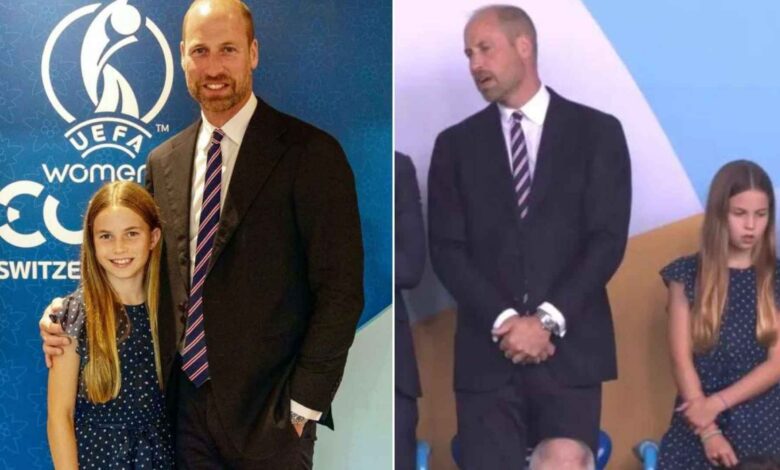
London, July 27 EST: Just when you thought the royal summer break was going to be all sand dunes and polo matches, Princess Charlotte pulled off a scene-stealing debut worthy of a Netflix trailer: her first public appearance at a major international football match and not just any match, but the UEFA Women’s EURO 2025 final in Switzerland.


Flanked by her dad, Prince William, who might as well be the Football Association’s forever mascot, 10-year-old Charlotte was spotted at St. Jakob‑Park stadium in Basel, cheering on the Lionesses as they took on Spain. No pressure, right?
It’s Giving Mini-Royal, Major Sports Fan
Charlotte’s cameo wasn’t just cute it was calculated. This wasn’t a last-minute trip to see Taylor Swift. Kensington Palace confirmed her attendance before the game even started, and while there was no red carpet, there was a spotlight. The move plants her squarely in the royal family’s next-gen soft launch strategy: more personality, less protocol.
She’s no stranger to football we’ve seen the videos, we’ve heard the stories. From kicking around with her brothers to sending that adorable message to the Lionesses in 2022, Charlotte’s had her cleats in the game. But Sunday’s appearance? That was her “I’m not a player, I just crush a lot” moment.
The Wales Family’s PR Game Is Strong
Let’s be honest this wasn’t just about watching a football match. This was about branding. And in 2025, the royal brand is evolving. Prince William, with his track record of casual dad vibes and visible Lionesses fandom, has always played it well. But bringing Charlotte into the mix at a women’s final? That’s a subtle nod to where the culture’s headed.
And it didn’t go unnoticed. Social feeds lit up with “Charlotte Hive” energy. Fans compared her debut to Prince George’s sideline style and even floated a future where Charlotte becomes the royal patron of women’s sports. Give it five years and a docuseries deal, and who knows?
Royal Realness in the Stands
There was something deeply charming about the moment Charlotte in the stands, no speeches, no fuss, just watching a game with her dad like millions of kids do every weekend. She didn’t need to wave a flag or drop a TikTok. She just had to show up. And in a royal family that’s learning (sometimes the hard way) how to balance heritage and relatability, that’s a power move.
Plus, she’s clearly a fan. As HELLO! pointed out, she’s the kid who once begged her dad to film a six-word pep talk for the Lionesses. You can’t fake that kind of enthusiasm even in a tiara.
What Comes Next?
As far as official word goes, Kensington Palace is playing it cool. No promises about future matches, no behind-the-scenes content (yet). But between William’s ongoing FA role and Charlotte’s growing love of the sport, don’t be surprised if this becomes a recurring family storyline especially as women’s football continues to boom.
For now, Charlotte’s pitch-side debut was a clean hit: a little unexpected, perfectly timed, and totally in tune with the cultural moment. A princess at a football final? That’s 2025 energy.
New Jersey Times Is Your Source: The Latest In Politics, Entertainment, Business, Breaking News, And Other News. Please Follow Us On Facebook, Instagram, And Twitter To Receive Instantaneous Updates. Also Do Checkout Our Telegram Channel @Njtdotcom For Latest Updates.

A bi-coastal pop culture critic and former indie screenwriter, Gia covers Hollywood, streaming wars, and subculture shifts with razor wit and Gen Z intuition. If it’s going viral, she already knew about it.

A former college-level cricketer and lifelong sports enthusiast, Arun Upadhayay brings the heart of an athlete to the sharp eye of a journalist. With firsthand experience in competitive sports and a deep understanding of team dynamics, Arun covers everything from grassroots tournaments to high-stakes international showdowns. His reporting blends field-level grit with analytical precision, making him a trusted voice for sports fans across New Jersey and beyond.
- Arun Upadhayay
- Arun Upadhayay
- Arun Upadhayay
- Arun Upadhayay
- Arun Upadhayay
- Arun Upadhayay
- Arun Upadhayay
- Arun Upadhayay
- Arun Upadhayay
- Arun Upadhayay
- Arun Upadhayay
- Arun Upadhayay
- Arun Upadhayay
- Arun Upadhayay
- Arun Upadhayay
- Arun Upadhayay
- Arun Upadhayay
- Arun Upadhayay
- Arun Upadhayay
- Arun Upadhayay
- Arun Upadhayay
- Arun Upadhayay
- Arun Upadhayay
- Arun Upadhayay