

Table of Contents
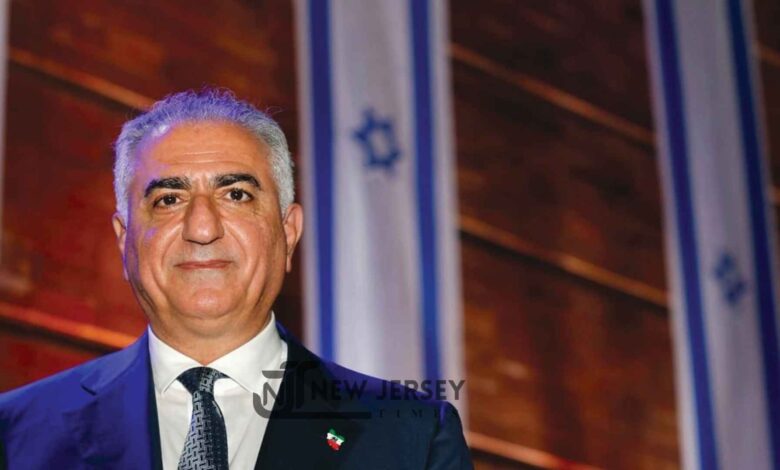
June 17 EST: Reza Pahlavi, the exiled son of Iran’s last monarch, has been here before — front of camera, flag behind him, promising Iranians that change is coming. But his latest message feels sharper. On June 17, he didn’t just call for resistance. He declared — flatly — that the Islamic Republic is “collapsing” and that the fall is “irreversible.”


It was the language of inevitability, not hope. And it came with a claim of readiness: a 100-day transition plan already drafted, a shadow cabinet reportedly waiting in the wings, and an appeal to Iran’s armed forces to switch sides while there’s still a future to inherit.
Whether this is foresight or fantasy depends on who you ask — and how you define collapse.
The View from Abroad, the Distance Within
Pahlavi’s announcement landed amid serious geopolitical flux. Israel has escalated its air campaign, targeting Iran’s nuclear infrastructure with what defense analysts say is rare precision. The Islamic Republic’s response — so far — has been muted. Leadership in Tehran appears cautious, not reactive. But there’s no mistaking it: the regime’s regional reach has taken a hit.
Domestically, protests still simmer — student uprisings, labor slowdowns, sporadic defiance from artists, dissidents, and tech workers. But it remains scattershot, uncoordinated. The slogans are powerful. The machinery of change? Still missing.
And that’s the hard part for Pahlavi. His name carries resonance — especially among the diaspora and parts of Iran’s middle class. But resonance is not infrastructure. There’s no opposition party. No unifying charter. No trusted figure inside the country with both access and authority.
In exile, he’s the best-known opposition voice. Inside Iran, he’s something closer to myth.
A Monarchy in the Mirror — Without the Crown
Crucially, Pahlavi doesn’t want the monarchy restored. Or so he says — repeatedly. He frames himself as a transition steward, not a king-in-waiting. That’s a calculated choice. Monarchism isn’t just unfashionable in Iran — for many, it’s radioactive. The Shah’s reign, despite its modernist gloss, ended in repression, exile, and revolution. No amount of revisionism can rewrite that legacy.
But Pahlavi also doesn’t pretend to be neutral. His plan — still unreleased in detail — reportedly calls for early elections, military neutrality, internet restoration, and international guarantees. What it lacks is a real-world apparatus to enforce any of it.
That hasn’t stopped international endorsements. Israeli Prime Minister Benjamin Netanyahu openly backed Pahlavi’s call this week, praising his leadership and painting Iran’s regime as days away from collapse. To some, that was validation. To others, it was a gift to the mullahs’ propaganda machine: proof that the opposition is merely a foreign-backed illusion.
Collapse vs. Decline
Is the Islamic Republic collapsing? Not yet. It’s brittle, yes. Bleeding, arguably. But its security services remain intact. Its elite divisions are still on alert. And its repressive apparatus, from censors to courts, hasn’t skipped a beat.
What’s clearer is that it’s declining — ideologically exhausted, economically strangled, and diplomatically cornered. In such moments, regimes often reach for the gun, not the ballot box.
Pahlavi’s gamble is that enough people inside Iran believe that the moment has arrived — that if given the signal, they will act. But calls from exile don’t make revolutions. Coordinated strikes, mutinies, defections — that’s what tips regimes. And so far, the signs remain mixed.
What to Watch
Keep an eye on the military. If defections begin — real ones, not rumors — then Pahlavi’s message carries weight. Watch the labor unions. If strikes expand beyond regional flare-ups into something national, the ground will shift.
Until then, Pahlavi’s statement remains what it is: a provocation to power, a rallying cry from afar, and a gamble on timing. It’s not the first. It won’t be the last.
But in Iran, history doesn’t repeat. It fragments, then reassembles. And whoever’s left standing gets to write the next chapter.
New Jersey Times Is Your Source: The Latest In Politics, Entertainment, Business, Breaking News, And Other News. Please Follow Us On Facebook, Instagram, And Twitter To Receive Instantaneous Updates. Also Do Checkout Our Telegram Channel @Njtdotcom For Latest Updates.

A political science PhD who jumped the academic ship to cover real-time governance, Olivia is the East Coast's sharpest watchdog. She dissects power plays in Trenton and D.C. without bias or apology.




