Table of Contents
Washington, July 7 EST: The Trump administration’s latest move to Terminate Deportation Protections (TPS) for over 76,000 Honduran and Nicaraguan nationals is more than a bureaucratic adjustment — it’s a calculated tightening of immigration levers, aligned with a deeper ideological push to dismantle decades of humanitarian precedent.


A Deliberate Blow to Humanitarian Leeway
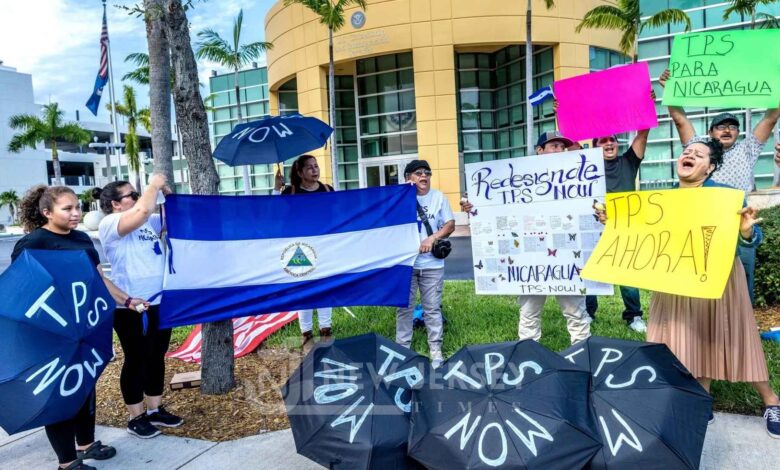
On July 7, the Department of Homeland Security, now under the stewardship of Kristi Noem, announced the end of Temporary Protected Status (TPS) for Hondurans and Nicaraguans — some of whom have been in the U.S. since Bill Clinton was in office.
The formal rationale? Conditions have “improved” in both countries since Hurricane Mitch, the 1998 catastrophe that killed more than 11,000 people and justified the original TPS grants. But as is often the case in immigration policy, legal justifications mask political objectives. Ending these protections, effective September 6, 2025, follows a familiar blueprint — one this administration has already applied to Haitians, Salvadorans, and Venezuelans.
The message is blunt: humanitarian exemptions are out. Institutional compassion is on the chopping block.
Who Pays the Price?
TPS was never designed as a backdoor to permanent residency — yet for many, it became the only door that stayed open. The roughly 76,000 people affected have spent over 25 years raising children, paying taxes, and anchoring communities in cities like Newark, Miami, and Los Angeles. Their lives here are not temporary. But under this policy, their legality soon will be.
Once the protections lapse, they lose work authorization. They lose their ability to remain in the open. And barring other legal avenues — which are few — they become deportable overnight.
There’s a cruel efficiency to this. The administration has sidestepped Congress entirely, opting for a regulatory purge of humanitarian status. And while officials cite improved conditions, human rights groups say otherwise. Honduras remains one of the most dangerous countries in the hemisphere. Nicaragua is gripped by authoritarianism under Daniel Ortega, whose regime has jailed dissidents and shuttered independent media.
These aren’t safe return conditions — they’re political landmines.
Political Theater, Policy Weapon
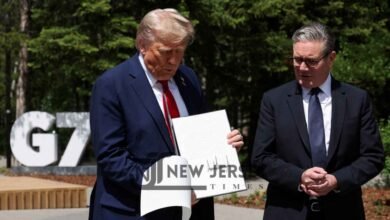
This is not just immigration policy. It’s political signaling. Donald Trump has long used immigration not only to rally his base, but to define the contours of American identity as he sees it — exclusionary, transactional, and deeply suspicious of permanence.
That lens clarifies this decision. TPS, for Trumpworld, represents everything they oppose: flexibility, discretion, a humane exception to the hardline. So it must go — not because it’s broken, but because it doesn’t fit the current ideological mold.
Even Congresswoman Pramila Jayapal, chair of the House Progressive Caucus, saw this coming. “This is not about country conditions. It’s about reengineering the immigration system to punish the most vulnerable,” she said in a statement Monday. Her view isn’t hyperbole — it’s an acknowledgment of the administration’s broader strategy: dismantle the discretionary, entrench the punitive.
The Economic Fallout Nobody Wants to Own
For all the tough-on-immigration posturing, the economic cost of this decision is staggering — though rarely acknowledged. TPS holders work in industries the American economy cannot afford to lose: construction, elder care, hospitality. They’re not a burden; they’re the infrastructure. Removing their legal status won’t create jobs — it will hollow out small businesses, break local economies, and force employers into underground labor markets.
Previous economic studies have put the cost of TPS terminations in the billions. But in this administration’s calculus, that’s acceptable collateral damage.
A Legacy of Repeal, Not Reform
This move doesn’t exist in isolation. It follows a long trail of policy reversals — the termination of DACA renewals, family separations, asylum limits, and a redefinition of who counts as “refugee” under U.S. law. The administration’s immigration posture is not chaotic; it’s cohesive. It’s a sustained rollback of the post-1980 humanitarian framework that made room for war refugees, disaster survivors, and those fleeing persecution.
In its place is a legal machine that values deterrence above all else. Noem’s DHS, echoing Trump’s language, insists TPS must be temporary. But that’s always been understood. What’s new is the weaponization of that temporariness — stripping protection not because it’s no longer needed, but because its continued existence offends political orthodoxy.
Courts, Congress, and the Countdown
With just 60 days until expiration, the window for relief is narrow. Litigation is likely — federal courts have previously stepped in to pause TPS terminations, citing procedural flaws or discriminatory intent. But legal victories have proved temporary. The Supreme Court, now firmly conservative, has signaled a willingness to let administrative discretion run wide.
On Capitol Hill, any meaningful TPS reform — let alone a path to citizenship — remains gridlocked. Even sympathetic lawmakers are short on leverage. The most likely outcome? A desperate scramble for individual legal remedies — asylum claims, family petitions, waivers. Few will succeed.
And when the clock runs out on September 6, tens of thousands will face an impossible choice: leave quietly, or stay illegally in the only country they truly know.
New Jersey Times Is Your Source: The Latest In Politics, Entertainment, Business, Breaking News, And Other News. Please Follow Us On Facebook, Instagram, And Twitter To Receive Instantaneous Updates. Also Do Checkout Our Telegram Channel @Njtdotcom For Latest Updates.

A political science PhD who jumped the academic ship to cover real-time governance, Olivia is the East Coast's sharpest watchdog. She dissects power plays in Trenton and D.C. without bias or apology.