
How New Jersey’s State Government Works: A Complete Guide
From powerful governors to property tax battles, here’s what drives politics in the Garden State.

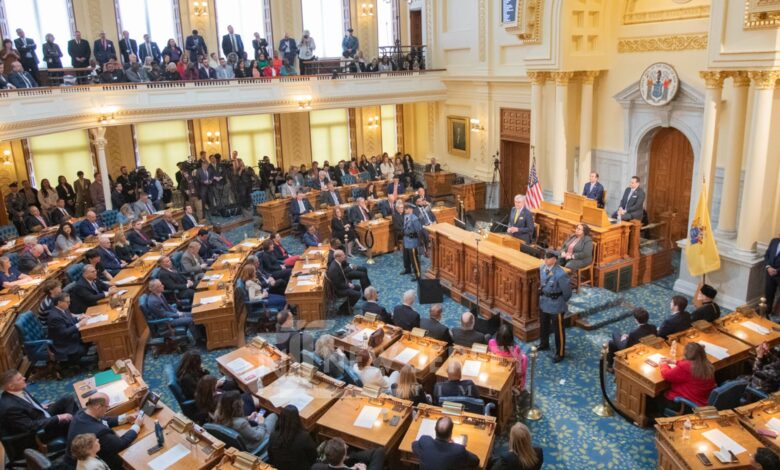
Trenton, September 3: New Jersey politics can look messy from the outside with budget standoffs, late-night votes, governors barking about taxes, and court rulings that change everything overnight. But underneath the noise, the system is pretty straightforward. The state runs on a strong governor, a legislature that fights for its say, and courts that have a history of stepping in when neither branch gets the job done.


If you live here, you already know how these decisions land in daily life. School funding fights ripple into classrooms. Transportation budgets decide whether NJ Transit runs late again. And property taxes, the state’s political third rail, are shaped as much in town halls as they are in Trenton.
The 1947 Reset

Here’s the thing: New Jersey didn’t always have such a powerful governor. Before 1947, the Legislature basically ran the show. The governor had little clout. That changed with the adoption of the 1947 Constitution, which consolidated power in the executive branch.
From that point on, the governor became the heavyweight. Budgets, appointments, and even the bureaucracy fell under the executive’s grip. Scholars often say no other state constitution tips the balance quite this much.
Three Branches, but Not Quite Equal
On paper, the setup looks just like Washington’s:
- Executive branch headed by the governor.
- Legislative branch made up of the Senate and General Assembly.
- Judicial branch with the New Jersey Supreme Court at the top.
In practice? The governor often overshadows the other two. Lawmakers can bark, but the governor carries the stick: the line-item veto. Courts step in on constitutional questions, but even there, governors appoint the justices who will later rule on their policies.
The Governor’s Toolbox

The Governor of New Jersey is elected for four years, capped at two terms. But the office carries more weight than most.
- The budget starts with the governor. Lawmakers can adjust it, but the first draft comes from the top.
- The line-item veto allows governors to slice out specific spending items. Chris Christie used it like a weapon during his battles with Democrats in the Legislature. Phil Murphy has leaned on it too, trimming down projects lawmakers try to slip in.
- Appointments reach deep. Governors pick commissioners, judges, board members, and even the attorney general. Those choices ripple for years.
- Executive orders can shift policy without waiting for a vote.
Murphy’s pandemic-era orders are a reminder of just how far that power stretches.
The Legislature: 120 Members, Endless Deals
The Senate has 40 members, the Assembly 80. They’re elected from 40 districts, redrawn every ten years. Assembly terms are two years. Senate terms alternate between two and four, depending on the cycle.
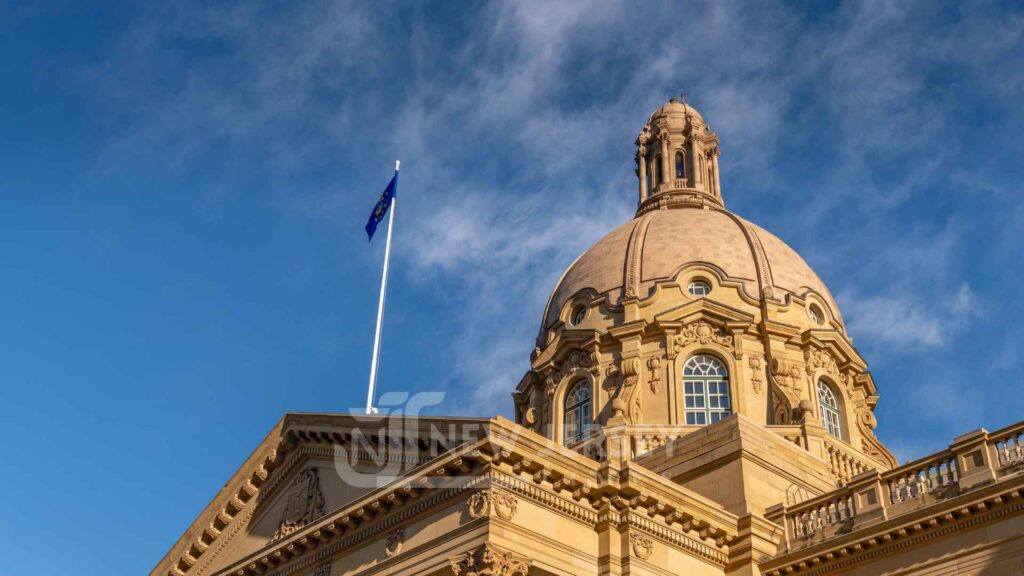
Leadership matters more than sheer numbers. The Senate President and Assembly Speaker decide which bills move forward. Under Steve Sweeney, the Senate President’s office became as powerful as the governor’s on some issues until voters ousted him in a political shocker in 2021.
Yes, lawmakers can override a veto, but they almost never do. The math requires a two-thirds majority, and party loyalty usually closes ranks.
The Courts: Independent, but Political
The New Jersey Supreme Court sits at the top of the judiciary, with a chief justice and six associate justices. Governors appoint, the Senate confirms, and justices serve seven years before they can be reappointed with tenure until age 70.

The court has made some landmark calls. The Abbott v. Burke decisions forced the state to pour money into poorer school districts, reshaping education for a generation. Housing policy, too, has been shaped by court mandates on affordable housing obligations.
So while the judiciary is supposed to be “above politics,” the reality is that every governor tries to shape it with appointments.
Counties, Towns, and That Property Tax Bill
Trenton grabs the headlines, but for most New Jersey residents, it’s local government that feels most real. The state has 21 counties and more than 560 municipalities, plus hundreds of school districts.

Mayors and school boards set tax rates. Zoning boards decide if that warehouse goes up behind your backyard. And since New Jersey relies more on property taxes than almost any other state, those local meetings directly affect your wallet.
That’s why property tax reform has been the political Everest here for decades. Governors promise it, legislatures study it, and commissions write reports. But the sheer number of municipalities makes it hard to solve.
Party Politics and Machine Muscle
New Jersey still runs on strong party organizations. County chairs decide ballot placement, which in turn can make or break campaigns. That system, nicknamed the “county line,” has come under fire in court challenges, but for now it still tilts the playing field.
It doesn’t mean voters have no say. It means the insiders usually pick the lineup before the voters see it. That mix of machine politics and public elections is what gives New Jersey its reputation for being rough-and-tumble.
How to Get Involved
So where do ordinary residents fit? A few pressure points actually work:
- Elections matter; all 120 legislative seats are up every two years.
- Committee hearings are open to the public, and lawmakers do listen when crowds show up.
- Local boards for school, planning, and zoning may sound dull, but they drive tax rates and development.
- Direct pressure phone calls, emails, and even old-fashioned letters are tracked by legislative offices.
Grassroots groups have scored wins. Environmental activists helped push stricter rules on pollution. Parents’ groups have influenced curriculum debates. Taxpayer associations keep pressing for relief.
Why It’s Worth Knowing
Understanding New Jersey’s government isn’t just about civics. It’s about why your property tax bill looks the way it does, why NJ Transit struggles, and why certain school districts get more state aid than others.
The governor may be the star player, but the Legislature and courts are in the mix, and local governments hit closest to home. Knowing how the pieces connect gives residents more leverage, and in a state where politics has always been a contact sport, leverage counts.
New Jersey Times Is Your Source: The Latest In Politics, Entertainment, Business, Breaking News, And Other News. Please Follow Us On Facebook, Instagram, And Twitter To Receive Instantaneous Updates. Also Do Checkout Our Telegram Channel @Njtdotcom For Latest Updates.

A political science PhD who jumped the academic ship to cover real-time governance, Olivia is the East Coast's sharpest watchdog. She dissects power plays in Trenton and D.C. without bias or apology.