
Was Tyler Robinson Connected to the Groypers? Here’s What We Know
Authorities confirm no evidence linking Tyler Robinson, the Charlie Kirk shooting suspect, to Nick Fuentes’ Groyper Army.

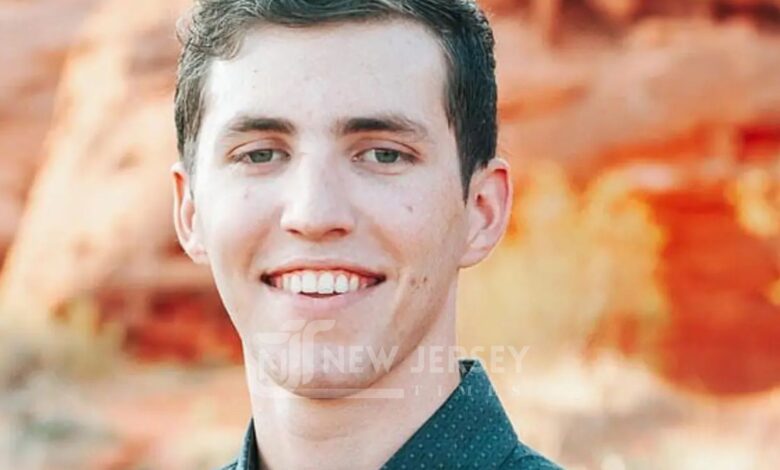
Salt Lake City, September 12 EST: The killing of Charlie Kirk, a man who built his brand as the standard-bearer for a certain style of college conservatism, was always going to send shockwaves through the movement he helped shape. That shock has quickly curdled into speculation.


Tyler Robinson, the 22-year-old now charged with Kirk’s murder at Utah Valley University, has become the subject of a furious online narrative. Within hours of his arrest, claims flooded social media that Robinson was a “Groyper,” part of the far-right youth network orbiting Nick Fuentes.
There is a problem with that claim; it is not supported by evidence. Not by police reports, not by court filings, not by credible media outlets. The Groyper storyline is running ahead of the facts.
The Allure of a Ready-Made Villain
The Groypers are not some obscure faction. Over the last half-decade, they’ve carved out a disruptive role on the American right, styling themselves as ideological purists against the donor-friendly conservatism of figures like Kirk.
They are racially reactionary, antisemitic in rhetoric, and deliberately confrontational. In 2019, they staged a series of ambushes at Turning Point USA events, heckling Kirk with questions about immigration and LGBTQ rights. Fuentes and his followers cast it as a generational revolt against “Conservative Inc.” Kirk, in turn, painted them as a malign force undermining the credibility of the movement.
That history is why the Groyper narrative took off so quickly after Kirk’s killing. It fits. The pieces seem to snap together: a hated rival slain, a suspect who voiced disdain for Kirk, and a movement that has long fantasized about tearing down his brand of conservatism.
The trouble is, none of the hard evidence points to Robinson being part of that world.
The Known Profile of the Suspect
What we know about Robinson is largely mundane. According to Reuters, he had no criminal history. The Wall Street Journal confirmed he was a registered voter but unaffiliated with any party.
Investigators say he criticized Kirk in private conversations with family, and his digital footprint included politically tinged grievances. The Times of India reported that bullet casings found at the scene carried personal engravings, suggesting a fixation but not necessarily an ideological network.
This is, so far, a profile of an isolated young man with hostile political views—not a foot soldier in Fuentes’ cause.
The Rush to Claim a Narrative
Politics abhors a vacuum. When tragedy strikes, rival factions scramble to define the meaning before the facts are fully known. That scramble is not new. In the 1960s, both left and right tried to claim (or disclaim) the motives behind the assassins of the Kennedys and Martin Luther King Jr. In the 1990s, Timothy McVeigh’s bombing in Oklahoma was initially blamed on Middle Eastern terrorists before investigators uncovered a homegrown anti-government extremist.
The same reflex is at play now. For many on the right, labeling Robinson a Groyper would make Kirk’s death not just a murder but an ideological assassination proof that the far-right fringe has literally turned its guns on mainstream conservatism. For Fuentes’ critics outside the movement, the story would validate long-standing warnings about the dangers of indulging white nationalist rhetoric.
But without evidence, the leap is dangerous. It risks turning one man’s actions into the pretext for broad-brush blame.
The Kirk–Fuentes Rivalry in Context
Charlie Kirk built his power not just on campuses but in the ecosystem of conservative media and donor networks. His gift was institutional legitimacy Turning Point USA became a hub for Republican outreach to young voters, something GOP strategists have craved for years.
Nick Fuentes positioned himself as Kirk’s shadow, the insurgent who mocked “TPUSA kids” as sellouts. Their rivalry has been less about policy specifics than about legitimacy—who speaks for young conservatives, who sets the tone for the future of the right.
That battle has rarely left the rhetorical or symbolic realm. Kirk commanded access to elected Republicans and financial backers; Fuentes commanded online mobs. Kirk thrived in ballrooms and donor retreats; Fuentes thrived in Telegram channels and YouTube streams.
For that rivalry to suddenly manifest in physical violence would mark a profound shift. Which is why people are so quick to believe it has.
Power, Blame, and the Stakes of the Story
The way Robinson’s motives are ultimately framed will ripple outward. If investigators find no link to Groypers, Kirk’s killing becomes a story about lone-wolf radicalization, not organized extremism. If evidence of affiliation emerges, it will be weaponized to show that Fuentes’ movement crossed from harassment into bloodshed.
For conservatives, the stakes are existential how do they police their own movement’s boundaries without fueling narratives of division? For the broader political ecosystem, the question is how to prevent tragedy from becoming raw material for propaganda.
The truth, inconveniently, may be simpler a disaffected young man, with grievances and access to a gun, chose violence.
Holding to What’s Verified
For now, Robinson stands alone in custody. Kirk is dead. Utah investigators are combing through the suspect’s online life. Until hard evidence emerges, attaching his name to the Groypers is speculation masquerading as fact.
Kirk’s death has already reshaped the conservative conversation, underscoring both his role as a lightning rod and the volatility of the political climate he inhabited. But if history teaches anything, it’s that violence is rarely as neatly explained as the first narratives suggest.
New Jersey Times Is Your Source: The Latest In Politics, Entertainment, Business, Breaking News, And Other News. Please Follow Us On Facebook, Instagram, And Twitter To Receive Instantaneous Updates. Also Do Checkout Our Telegram Channel @Njtdotcom For Latest Updates.

A political science PhD who jumped the academic ship to cover real-time governance, Olivia is the East Coast's sharpest watchdog. She dissects power plays in Trenton and D.C. without bias or apology.