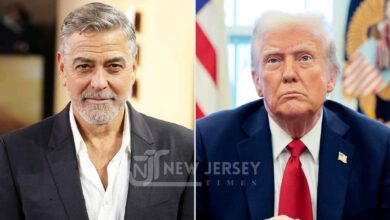
CBS Faces Scrutiny After Editing Out Trump’s “60 Minutes” Comments
Newly surfaced transcripts show CBS cut remarks about Trump’s $16M settlement and his “paid me a lotta money” quip reigniting old battles over media bias.


Palm Beach, November 3 EST: When Donald Trump sat across from Norah O’Donnell at Mar-a-Lago this weekend, it looked like a détente the former president’s first “60 Minutes” appearance in five years, his first with CBS News since suing its parent company Paramount Global. But less than twenty-four hours after broadcast, the familiar old friction between Trump and network television had reignited, this time over what CBS chose not to air.


Trump’s Edited Words Reignite Familiar Battles
According to People Magazine and The Guardian, several remarks from the interview were omitted from both the 28-minute televised cut and a longer 43-minute online version. In the official CBS transcript, one cut segment shows Trump leaning into the camera, smirking: “Actually, 60 Minutes paid me a lotta money. And you don’t have to put this on, because I don’t wanna embarrass you…”
That comment, an unmistakable jab at CBS’s July 2025 $16 million settlement with Trump, never aired. Neither did a brief exchange in which he downplayed his pardon of Changpeng “CZ” Zhao, the billionaire founder of Binance, claiming he had been “told [Zhao] was a victim of weaponization by the Biden administration.”
Both moments survived in transcript form but vanished from the public video record. CBS labeled all published versions as “condensed for clarity.”
For most politicians, such edits might pass without uproar. But Trump’s media battles are practically part of the American archive from his years branding mainstream networks “fake news” to the 2020 walkout during his last Lesley Stahl “60 Minutes” taping. Every cut, every hesitation, every camera angle becomes fodder for claims of bias.
That’s why these omissions, seemingly minor in an editorial sense, land like heavy artillery in the current political climate.
Old Wounds, New Optics
The irony is hard to miss. Only four months ago, Paramount agreed to pay Trump those $16 million to settle his lawsuit claiming “60 Minutes” deceptively edited a 2024 segment with then-Vice President Kamala Harris. The company admitted no wrongdoing, but the payment itself was extraordinary networks rarely settle with a political figure over alleged bias.
Now, CBS once again finds itself explaining its editing room decisions after airing another Trump interview.
There’s no public evidence of intentional distortion this time. But perception is its own kind of truth in politics, and perception is not on CBS’s side this week. To Trump’s base, the omissions fit neatly into a narrative of institutional manipulation. To newsrooms, they illustrate the fragile line between production judgment and public trust.
Editing for time is standard. Editing amid a credibility war is combustible.
CBS Faces a Trust Deficit
CBS has so far declined to issue a detailed statement beyond confirming the transcript’s authenticity. The network’s internal posture, according to staff familiar with its editorial process cited by The Guardian, remains that trimming for clarity is both lawful and routine.
That said, “routine” has rarely comforted audiences in the Trump era.
The public’s appetite for unfiltered footage the raw feed, the uncut conversation has only grown as faith in legacy media thins. And in this case, the optics are brutal: the network cut the very line where Trump said, on national television, that CBS “paid me a lotta money.”
For a broadcaster still recovering from last year’s legal bruising and an FCC inquiry over alleged editing bias in political content, the timing could hardly be worse. According to Reuters, CBS has been lobbying regulators to dismiss complaints related to the earlier Harris episode, insisting it upholds “the highest journalistic standards.”
But those words will ring hollow if the public suspects the network is again choosing what truths to withhold.
Trump’s Strategic Gain
Trump, ever the tactician when it comes to media theater, knows the power of being “edited.”
In his political mythology, omission equals proof. Every clipped quote or lost sentence becomes evidence of conspiracy, feeding his message that “the system” be it CBS, the Justice Department, or Silicon Valley is rigged against him.
By Monday morning, his allies were already circulating the missing transcript lines online, framing them as “the parts CBS didn’t want you to see.” Within hours, the phrase “paid me a lotta money” was trending across social media platforms.
For Trump’s campaign, it’s a two-for-one narrative victory: he pockets the $16 million and positions himself once again as the truth-teller censored by coastal media elites.
What This Moment Reveals
What makes this episode consequential isn’t just another spat between a combative politician and a cautious network. It’s that it captures the exhaustion of an entire media-politics relationship a dance of mistrust that’s lasted nearly a decade.
Television once held the power to define candidates. Now candidates define television. Trump’s presence and the response to his every edit exposes the limits of the old gatekeepers.
CBS may yet release the full 73-minute version of the interview, as internal debate reportedly continues over transparency. But that might not matter anymore. The damage is already woven into the story: a powerful institution facing a credibility test it thought it had settled for $16 million.
And Trump, as always, walking away with the narrative.
New Jersey Times Is Your Source: The Latest In Politics, Entertainment, Business, Breaking News, And Other News. Please Follow Us On Facebook, Instagram, And Twitter To Receive Instantaneous Updates. Also Do Checkout Our Telegram Channel @Njtdotcom For Latest Updates.

A political science PhD who jumped the academic ship to cover real-time governance, Olivia is the East Coast's sharpest watchdog. She dissects power plays in Trenton and D.C. without bias or apology.