
DOJ Probes D.C. Police Over Crime Data Manipulation Amid Trump Takeover
Federal investigation into alleged falsification of crime stats collides with Trump’s controversial control of Washington’s police force.

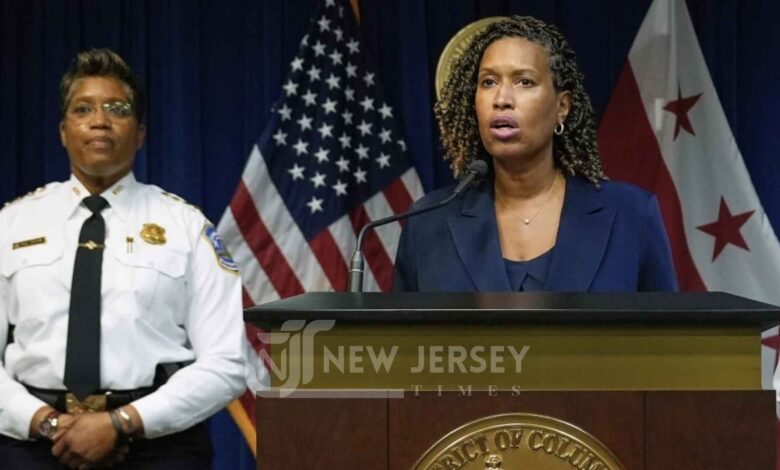
Washington, August 19 EST: The U.S. Department of Justice has opened a criminal investigation into whether senior officials in the Washington, D.C. Metropolitan Police Department manipulated crime data, the kind of inquiry that tests not just numbers on a spreadsheet but the balance of power in the nation’s capital. The probe lands in the middle of President Donald Trump’s federal intervention in the city’s policing, turning a long‑running fight over D.C. home rule into a live stress test of who gets to define public safety and on what authority.

What The Investigation Is Actually Probing
According to reporting by The Washington Post, the investigation is being run out of the D.C. U.S. Attorney’s Office and centers on whether MPD officials intentionally altered or reclassified offenses to make the city look safer than it was. The inquiry began after allegations that Commander Michael Pulliam, a veteran of MPD’s Third District, changed crime categories, and it now appears to reach beyond a single command into broader reporting practices.
Trump himself publicly affirmed the probe on social media, accusing city officials of creating a “false illusion of safety,” a line that has since become a political cudgel. D.C. officials, for their part, say violent crime has fallen sharply this year, a claim that is now under federal scrutiny.
Also Read: Diletta Leotta Joins Don Matteo Season 15 as Suor Costanza’s Niece
The Takeover Built On A Narrative Of Crisis
Nine days ago, the White House escalated matters by deploying National Guard units and asserting temporary federal control over MPD, an uncommon step that echoes past moments when presidents tested the outer edge of executive power in the District. Reuters reports that at least six Republican governors have since sent Guard troops to the city, pushing the total deployment to more than 1,100 soldiers. The administration says the troops are there to secure federal property and create space for arrests, not to act as front‑line police.
After an initial legal challenge from the D.C. Attorney General, the administration struck a deal with Mayor Muriel Bowser that kept Police Chief Pamela Smith in day‑to‑day operational control even as the federal posture hardened. The politics are blunt the president portrays a city out of control, while local leaders insist the numbers tell a different story.
Also Read: Julia Fox Turns Fashion Into Performance Art, Rejects the Male Gaze
The Home Rule Fight, Again
The clash sits on top of a half‑century argument about D.C. self‑government. Since the 1973 Home Rule Act, residents have elected their own mayor and council, but Congress and the president have retained unusual leverage over the city. That leverage is precisely what the White House leaned on when it issued an August 11 directive citing emergency authority and delegating operational oversight to the Attorney General.
In normal American cities, a federal takeover of local policing would be unthinkable; in the District, it is a recurring temptation baked into the law. D.C. officials are now challenging the scope of that move in court, warning that if the precedent sticks, future interventions will be easier to justify and harder to unwind.
Also Read: Klay Thompson Can’t Stop Talking About Megan Thee Stallion’s Spaghetti and Catfish
The Politics Of Crime Numbers
Here is the crux D.C. leaders point to sharp year‑over‑year declines in violent crime since a 2023 spike, citing double‑digit drops in homicides, robberies, and burglaries. Trump and his allies say those reductions look suspicious, and that the city has been cooking the books. As it turns out, both the Justice Department and independent fact‑checkers have noted the downward trend in reported crime while also emphasizing the limits of those claims.
The Washington Post has cited MPD data showing violent crime down roughly a quarter compared with last year, even as the murder rate remains elevated relative to many large cities. That said, if investigators find that data were knowingly altered by officials, the political narrative flips the claim of improvement becomes evidence of misconduct, and the city’s credibility takes a hit at the very moment it is trying to fend off federal control.
Also Read: Trump Vows to Ban Mail-In Voting Before 2026 Midterms, Legal Experts Say He Can’t
The Union, The Ranks, And The Street
Inside MPD, the mood is tense. The department has struggled with vacancies and overtime, and the police union has been openly skeptical of the glowing statistics City Hall cites. Union leaders argue that officers’ day‑to‑day experience does not match the size of the reported declines. That friction matters.
It feeds a perception gap between political leaders and patrol officers, and it gives the White House reliable surrogates who can argue that the federal presence is a necessary corrective rather than an intrusion. Still, skepticism is not proof. The question for prosecutors is whether they can trace any anomalies to deliberate actions by specific officials, not just to the clumsy, often imperfect business of classifying crime in a busy city.
History Is Not Neutral In Washington
Washington has seen iterations of this before. In 2020, Guard troops were summoned to the capital amid protests after the killing of George Floyd, raising questions about where policing ends and military presence begins. Reuters notes that, more recently, the administration tested the same muscle in Los Angeles, triggering active litigation over the legality of the move.
The arc is familiar assert emergency authority, send in reinforcements, test the legal boundaries, then backfill the policy rationale with a blizzard of crime anecdotes and selective numbers. The D.C. case adds a twist, because here the federal government does not need to cross state lines to assert control; it only needs to lean into a statute Congress wrote during another era of anxiety.
Also Read: Meloni Warns of “No Easy Solutions” on Ukraine Ahead of White House Summit
What To Watch Next
Expect subpoenas for internal emails, audits of offense reclassifications, and interviews up and down the chain of command. Commander Michael Pulliam remains a focal point, though both The Washington Post and local outlets have reported that he denies wrongdoing and that any discrepancies could be clerical rather than criminal. The Justice Department is saying little, which is standard, and there is no public timeline. For now, the politics are moving faster than the law.
The White House is using the investigation as proof of concept for its takeover; D.C. officials argue the city is being punished for improvements it actually made. The outcome will turn not on press conferences but on evidence that shows who called what a robbery, who reclassified it as something less, and why. If prosecutors can prove intent, the fallout inside MPD could be severe. If they cannot, the case becomes a cautionary tale about how easily crime statistics are weaponized when power is at stake.
The Bottom Line
This is not a sterile numbers fight. It is a struggle over narrative and control, one that pits a president eager to project order against a city that has, since 1973, been trying to govern itself with limited autonomy. Reported crime is down in key categories since the pandemic surge. That does not erase the public’s fear, nor does it prove a conspiracy. It does explain why crime data are the new battleground. Whoever defines the facts in Washington will dictate the policy, the policing, and, for the next few weeks at least, the streets themselves.
New Jersey Times Is Your Source: The Latest In Politics, Entertainment, Business, Breaking News, And Other News. Please Follow Us On Facebook, Instagram, And Twitter To Receive Instantaneous Updates. Also Do Checkout Our Telegram Channel @Njtdotcom For Latest Updates.

A political science PhD who jumped the academic ship to cover real-time governance, Olivia is the East Coast's sharpest watchdog. She dissects power plays in Trenton and D.C. without bias or apology.