
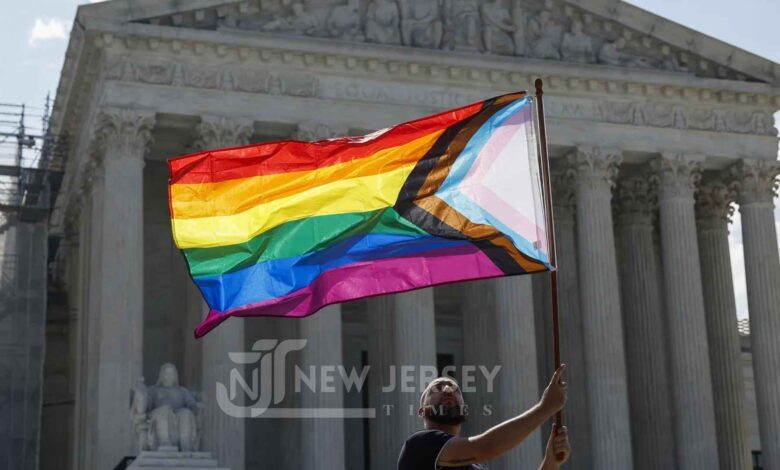
Washington, August 13 EST: There’s something almost theatrical about Kim Davis popping back up in the nation’s legal headlines, a full decade after she became a symbol of Christian defiance for refusing to sign marriage licenses for same-sex couples in Kentucky. Her return, this time through a Supreme Court petition, has stirred familiar anxieties. But let’s be clear: this isn’t the beginning of the end for marriage equality. Not even close.


Legal experts, civil rights advocates, and even some conservatives see Davis’s case for what it is a narrowly tailored appeal cloaked in the trappings of a culture war. She’s asking the Court to let her off the hook for the $360,000 in damages she now owes. But the deeper aim is symbolic: to poke at the legitimacy of Obergefell v. Hodges, the ruling that made same-sex marriage a constitutional right in 2015.
Still, symbols matter. Especially when the political climate is thick with questions about whether other rights long assumed settled are quietly back on the table.
This Isn’t Dobbs, and Marriage Isn’t Abortion
The Dobbs decision overturned a precedent that had already been politically wounded for years. Abortion rights had been chipped away at state by state, challenged through increasingly narrow cases until the Court had a clear path to overturn Roe v. Wade.
Marriage equality is in a different place. It’s not just a Court decision it’s a daily reality. The right to marry isn’t sitting on the shelf as an abstract principle; it’s in people’s mortgages, immigration papers, medical decision rights, and tax filings. Undoing it would mean unraveling the legal and financial architecture of millions of lives.
It’s also popular. Gallup polls show that around 70% of Americans support same-sex marriage, a number that’s held steady across years and partisan shifts. If the Court is thinking about its credibility, and it should be after Dobbs, marriage is a hard place to pick another fight.
Why Davis’s Case Won’t Change the Law
The core of Davis’s petition is personal, not constitutional. She wants the justices to say that she shouldn’t be penalized for acting on her religious beliefs even if it meant denying a government service. She’s not representing a broader class of plaintiffs, and the outcome of her case wouldn’t automatically threaten the right to marry.
In fact, even if the Supreme Court hears her appeal which is far from certain it would likely do so on narrow First Amendment grounds. That kind of decision might clarify the limits of religious exemptions in public service, but it wouldn’t touch the foundation of Obergefell.
That hasn’t stopped far-right groups from trying to link her case to something larger. MassResistance, among others, is pushing symbolic state resolutions declaring Obergefell invalid even though they have no legal force. It’s all about building momentum, keeping the issue in the bloodstream of the GOP base.
The Real Guardrail: The Respect for Marriage Act
After Dobbs, Congress moved quickly to pass the Respect for Marriage Act in 2022. It didn’t go as far as codifying a right to marry that would’ve taken a constitutional amendment. But it did shore up some critical protections:
- It guarantees that marriages performed in one state must be recognized in all others.
- It locks in federal recognition for same-sex and interracial marriages.
So even in the unlikely event that Obergefell fell, a same-sex couple married in New Jersey would still be legally recognized in Mississippi. What it doesn’t do is guarantee that every state has to issue licenses which means state-level fights could flare up fast if federal protections ever weakened.
The Court Is Conservative But Still Cautious
It’s no secret that Justice Clarence Thomas has called for revisiting Obergefell. He said so explicitly in his concurring opinion in Dobbs. But even among conservatives on the Court, there’s division about how far and how fast to go in revisiting precedent.
Chief Justice John Roberts has shown a clear preference for narrow rulings that preserve the Court’s legitimacy. After the backlash from Dobbs, including record-low approval ratings for the Court, Roberts may be even more cautious about taking up a case that touches marriage rights especially one this weak.
Also, the Court receives over 7,000 petitions a year and hears about 70 to 80 cases. Davis’s odds aren’t good.
What Comes Next
There’s no question that the conservative legal movement is playing the long game. Davis may not be their best shot but she’s a vehicle. These kinds of cases test the waters, shift the narrative, and keep their vision alive in the base. If Republicans win the White House in 2025, and a new justice is confirmed, the tone of the Court could change. That’s the real risk.
But for now, marriage equality is insulated not untouchable, but hardened by time, law, and public consensus.
The lesson from Davis’s case isn’t that rights are under imminent threat. It’s that the legal right to marry, like every other right, depends not just on rulings, but on power, vigilance, and the political will to defend it.
New Jersey Times Is Your Source: The Latest In Politics, Entertainment, Business, Breaking News, And Other News. Please Follow Us On Facebook, Instagram, And Twitter To Receive Instantaneous Updates. Also Do Checkout Our Telegram Channel @Njtdotcom For Latest Updates.

A political science PhD who jumped the academic ship to cover real-time governance, Olivia is the East Coast's sharpest watchdog. She dissects power plays in Trenton and D.C. without bias or apology.