Kristi Noem, Trump Administration Ask Supreme Court to End Venezuelan TPS
Supreme Court petition challenges ruling blocking Noem’s DHS from revoking protections for Venezuelans.

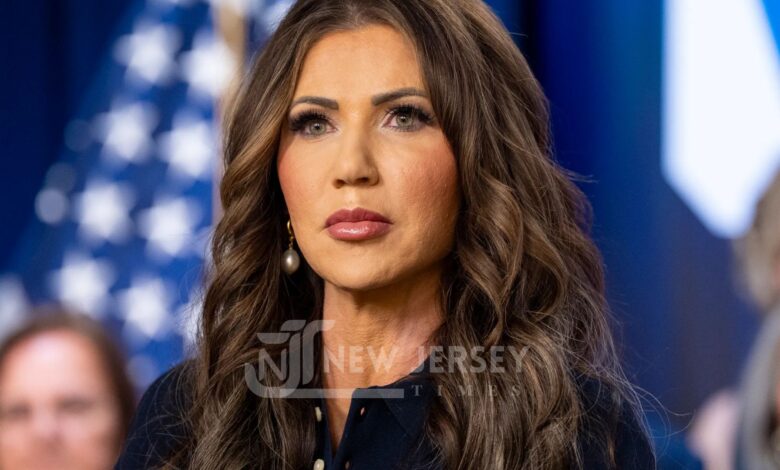
Washington, September 20: The Trump administration has escalated its fight over immigration relief, asking the U.S. Supreme Court to let it terminate Temporary Protected Status (TPS) for hundreds of thousands of Venezuelans. At the center of the battle is Homeland Security Secretary Kristi Noem, whose aggressive move to revoke protections has already been called “arbitrary” and unlawful by a federal judge.

The case is no longer just about one humanitarian program. It has become a test of how far the administration is willing to stretch executive authority on immigration and how much leeway the courts are prepared to grant.
A Sudden Reversal Meets Judicial Resistance
TPS, created in 1990, was designed as a stopgap for people fleeing wars, disasters, or political collapse. Venezuelans became eligible in 2021, after years of authoritarian rule and economic devastation left millions in exile. The program was extended by both Republican and Democratic administrations, largely without controversy.
That changed within days of Noem taking charge at DHS. She moved quickly to terminate TPS for both Venezuelans and Haitians, citing “national interest” and public safety concerns. But in early September, U.S. District Judge Edward Chen blocked her order, ruling that she had sidestepped the law’s basic requirements: evidence, reasoned analysis, and consideration of conditions on the ground. In his view, DHS hadn’t shown that Venezuela was suddenly safe for return.
Rather than recalibrate, the administration doubled down, taking the matter straight to the high court. The legal filing seeks a stay only on the Venezuelan ruling, leaving Haitians’ protection unchallenged for now a split that has not gone unnoticed among immigrant-rights advocates.
The Politics Beneath the Legal Fight
Noem’s calculation is both legal and political. For the White House, Venezuelan TPS has become a wedge issue: a way to signal toughness on immigration while framing humanitarian programs as loopholes that enable mass migration.
The rhetoric is familiar. During the first Trump term, efforts to end TPS for El Salvador, Honduras, and other countries collapsed under judicial review, with courts citing the same failures of process now dogging Noem. Yet politically, the administration milked the fights to reinforce its message of control and deterrence at the border.
This time, the stakes are arguably higher. Venezuelans are one of the largest new migrant groups in the United States, concentrated in swing states such as Florida, where even small policy shifts ripple into electoral politics. Republicans often frame Venezuelan exiles as natural allies against socialism, but Noem’s move risks alienating those very communities.
The Human Toll in the Balance
For Venezuelan families living under TPS, the uncertainty is punishing. The status is more than paperwork it means legal work permits, protection from deportation, and a sense of stability. Many have lived in the U.S. for years, with children in local schools and jobs that anchor regional economies. Losing TPS would thrust them back into the shadows, exposed to detention or forced removal to a country still in deep crisis.
Immigrant-rights groups describe Noem’s rationale as not only flimsy but tainted by racialized framing. Lawsuits argue that the administration has leaned on stereotypes, linking Venezuelans to organized crime groups like Tren de Aragua without evidence that TPS holders themselves pose such risks. Advocates say it is a familiar tactic: turning isolated cases of violence into a pretext for sweeping rollbacks of humanitarian protections.
Courts as the Last Guardrail
The legal terrain is tricky. Historically, courts have given broad discretion to DHS secretaries on immigration matters. But the Administrative Procedure Act requires agencies to explain themselves, ground decisions in evidence, and avoid capricious action. Judge Chen’s ruling rested on that foundation, echoing past cases where attempts to strip TPS were struck down for cutting corners.
If the Supreme Court sides with the administration, it could redefine the guardrails, granting the executive branch wide latitude to terminate humanitarian protections regardless of conditions abroad. If it upholds Chen’s decision, it would send a clear message: even in immigration, process and justification still matter.
A Broader Signal
Beyond the courtroom, this fight reveals how the Trump-Noem administration is approaching governance in its second act. Fast, unilateral moves signal resolve to its base but risk running afoul of the law. In the past, that strategy often produced short-term headlines but long-term setbacks, as judges swatted down rushed orders.
The question now is whether the Supreme Court, with its conservative supermajority, will tolerate the shortcuts or insist on a more deliberate process. For Venezuelan families and for the balance of executive power in immigration policy the outcome could not be more consequential.
New Jersey Times Is Your Source: The Latest In Politics, Entertainment, Business, Breaking News, And Other News. Please Follow Us On Facebook, Instagram, And Twitter To Receive Instantaneous Updates. Also Do Checkout Our Telegram Channel @Njtdotcom For Latest Updates.

A political science PhD who jumped the academic ship to cover real-time governance, Olivia is the East Coast's sharpest watchdog. She dissects power plays in Trenton and D.C. without bias or apology.