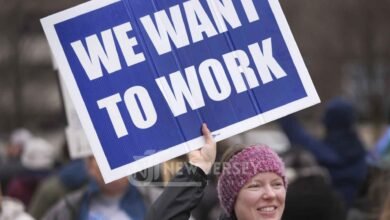
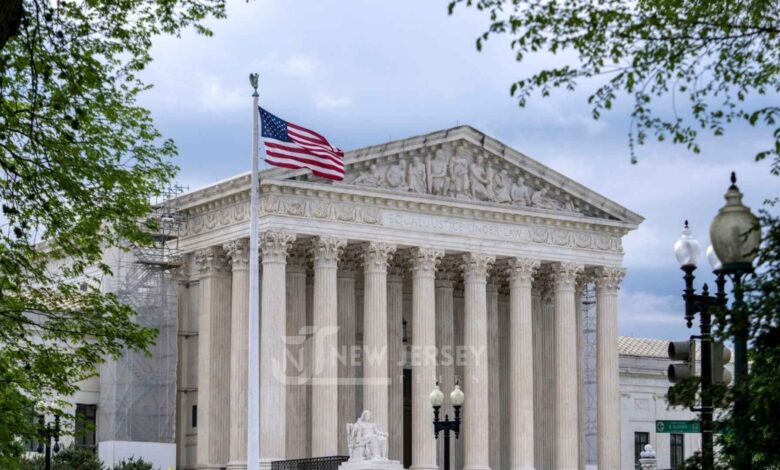
Washington, June 26 EST: The Supreme Court’s 6–3 ruling Thursday marks a quiet but consequential shift in the balance of health policy power — not just from Washington to the states, but from individual patients to bureaucrats and politicians.


By declaring that Medicaid enrollees lack a private right to sue their states for defunding providers like Planned Parenthood, the conservative majority has done what congressional Republicans could not: opened the door to widespread exclusions of reproductive health clinics from the Medicaid system — with no judicial backstop.
This isn’t Roe redux. There are no bans, no criminal penalties, no headlines about abortion restrictions. But make no mistake: this decision slices at the infrastructure of care, especially in poor and rural communities where Medicaid is the lifeline. It’s a quieter kind of rollback — one of legal access without real availability.
A Ruling That Redefines the Social Contract
At the center of Medina v. Planned Parenthood South Atlantic is a legal question that only a handful of Americans could recite: whether the “any qualified provider” clause of Medicaid grants individual patients the right to sue. The Court said no — the statute is too vague, the remedy too aggressive.
But the broader question, the one that pulses beneath the surface, is about the nature of public entitlement. Is Medicaid a right or a grant? A guarantee or a favor? On Thursday, the majority signaled it’s closer to the latter.
Justice Neil Gorsuch, writing for the majority, leaned on precedent that treats programs like Medicaid as contracts between governments, not promises to individuals. Violations, under this logic, are to be remedied by bureaucratic enforcement — not by patients in court.
That enforcement, of course, rarely happens.
A Case Born of a Southern Power Play
The ruling stems from a 2018 executive order by South Carolina Governor Henry McMaster, who unilaterally stripped Planned Parenthood South Atlantic from the state’s Medicaid network. His rationale: moral opposition to abortion, though federal law already bars Medicaid dollars from funding abortion procedures.
The real target wasn’t procedure — it was the institution. McMaster’s move echoed a strategy honed over the last decade in red-state politics: if you can’t outlaw abortion directly, choke the institutions that support it.
That order sparked a lawsuit from Julie Edwards, a Medicaid recipient who lost access to birth control and cancer screenings at her local Planned Parenthood clinic. Lower courts, including the Fourth Circuit, sided with her. But the Supreme Court flipped the script.
The Right to Sue — Now the Right to Be Ignored
At the heart of this decision is the idea that Section 1983, the post-Civil War statute that allows citizens to sue state officials for violating federal rights, doesn’t apply here. Why? Because the Medicaid statute doesn’t “unambiguously” confer those rights, according to the majority.
That interpretation effectively eliminates one of the few tools low-income patients have to challenge their exclusion from care. And it creates a dangerous precedent, according to critics, by narrowing access to the courts even further — not just in healthcare, but potentially in education, housing, and beyond.
In dissent, Justice Ketanji Brown Jackson was blunt. “This Court continues to shut the courthouse doors to ordinary people seeking relief,” she wrote, warning that the decision “blesses states’ efforts to restrict access to care for political reasons.”
It’s not just about law. It’s about which voices matter, and which ones don’t.
A Conservative Strategy Comes Full Circle
For years, conservative lawmakers have failed — by razor-thin margins — to defund Planned Parenthood at the federal level. In 2017, it was Senator John McCain’s thumbs-down that derailed repeal of the Affordable Care Act and with it, a suite of Planned Parenthood restrictions.
So the strategy shifted: defund state by state. And when that triggered lawsuits from patients, those cases became the next battlefield.
Thursday’s decision is the culmination of that long game. States can now drop Planned Parenthood from Medicaid without fear of litigation. That’s a win not just for McMaster, but for Republican governors nationwide — many of whom are already preparing similar moves.
Texas, Missouri, Florida — all have signaled interest in curbing Medicaid ties with providers tied to abortion rights. As of this ruling, they have the legal green light.
Real Consequences, Far from the Courtroom
For millions of patients, the impact will be immediate and deeply felt.
Planned Parenthood says up to 200 health centers are at risk of closure. Not because of abortion — but because contraception, STI testing, breast exams, and basic care suddenly became non-reimbursable.
In many communities, especially rural ones, Planned Parenthood isn’t one option — it’s the only option. Medicaid covers about 80 million Americans, and for many, the difference between seeing a provider and going without is whether their insurance can be used.
“This decision doesn’t say you can’t get care,” said Dr. Lisa Matson, a family physician in North Carolina. “It just makes it a lot harder, if not impossible.”
What’s Next: Congress, CMS, and Courtroom Silence
The ruling puts the ball squarely in Congress’s court — which, in this political climate, may be the same as nowhere.
Democrats are considering legislation to amend Medicaid statutes to explicitly allow private lawsuits, but the House is controlled by Republicans, many of whom view the ruling as a constitutional correction.
Even federal agencies like CMS (Centers for Medicare and Medicaid Services) are limited now. They can still penalize states for failing to comply with federal rules, but that process is long, slow, and deeply political.
In effect, the ruling returns healthcare policy to the states — but without a federal safety net for the poor.
And so we return to a pattern that has defined much of post-Roe America: rights shaped more by geography than law. Where you live — and who governs you — increasingly determines not just what you can do, but where you can go, who you can see, and whether you can get care at all.
New Jersey Times Is Your Source: The Latest In Politics, Entertainment, Business, Breaking News, And Other News. Please Follow Us On Facebook, Instagram, And Twitter To Receive Instantaneous Updates. Also Do Checkout Our Telegram Channel @Njtdotcom For Latest Updates.

A political science PhD who jumped the academic ship to cover real-time governance, Olivia is the East Coast's sharpest watchdog. She dissects power plays in Trenton and D.C. without bias or apology.