Trump Warns Putin of “Very Severe Consequences” Ahead of High-Stakes Alaska Summit
With NATO off the table, Trump seeks a Ukraine ceasefire while Europe worries about sidelined Kyiv.


August 14 EST: President Donald Trump is walking into his Alaska sit‑down with Russian President Vladimir Putin with a threat on the table and ambiguity in his pocket. He says there will be “very severe consequences” if the Kremlin does not agree to stop the war in Ukraine after Friday’s meeting in Anchorage, yet he has deliberately kept the contours of those consequences vague.

That combination of hard line and open space is classic summit statecraft, the kind that lets leaders claim resolve while leaving room to maneuver. Still, the choice to do this largely one‑on‑one, with Ukrainian President Volodymyr Zelenskyy temporarily at the margins, carries real risks for both process and outcome.
A Hard Line With Soft Edges
Publicly, the warning is blunt. Privately, the instruments of pressure remain undefined. According to AP News, Trump has not specified whether the “very severe consequences” would be economic, military, diplomatic, or some hybrid meant to change Moscow’s calculus without widening the war. That said, the timing is the point. Before any talk of maps or treaties, the White House wants silence on the guns.
A ceasefire first, everything else later. French President Emmanuel Macron reportedly told reporters the president was “very clear” about that priority after a pre‑summit video call with European leaders and Zelenskyy. Clarity on goals, ambiguity on tools. That pairing lets Washington set stakes without locking into specifics that might spook allies or embolden adversaries.
Ceasefire Now, Framework Later
Listen closely to what officials around Trump are saying. Secretary of State Marco Rubio has framed the meeting as an effort to halt the fighting quickly, while acknowledging that a durable settlement would take more time. In other words, this is phase one. Stop the bleeding, then build the scaffolding.
That sequencing echoes past conflict management efforts where battlefield dynamics set the negotiating table, not the other way around. As Reuters reported, Washington’s immediate ask is a pause, not peace in our time.
Security Guarantees, With NATO Off The Table
The other notable signal is security guarantees for Ukraine that do not run through NATO. As reported by Reuters, Trump floated the idea of assurances that would aim to deter renewed aggression without formally extending the alliance’s umbrella. For Kyiv’s partners, that is both intriguing and unsettling. Intriguing, because it could lower Russia’s temperature enough to lock in a ceasefire. Uneasy, because non‑NATO guarantees can be squishy if enforcement is unclear.
European leaders have reacted with cautious optimism, while warning that any arrangement must be robust, real, and centered on Ukraine’s sovereignty and territorial integrity. The subtext is obvious. If these guarantees are too light, they risk cementing a frozen conflict that favors the stronger occupier.
Who Gets A Seat At The Table
Power is often about who is in the room. Trump has suggested he might invite Zelenskyy to a follow‑on session if the Alaska encounter goes well. That puts the Ukrainian president one meeting away from the table, not at it. The White House says the first meeting is a feel‑out, a chemistry test between two men who have known each other for years and who both like to keep negotiations personal. Critics hear something else a risk that Kyiv’s interests become an afterthought to a great‑power bargain.
As Reuters noted, Trump publicly dangled the prospect of a three‑way meeting, but only after he sees whether Putin will engage. That sequencing, even if tactical, inevitably feeds anxiety in Kyiv and across Europe.
The Alaska Optics
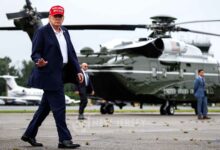
Choosing Anchorage is not just logistics. It is theater. The sit‑down is expected to take place at or near Joint Base Elmendorf–Richardson, a Cold War workhorse that long served as a forward edge for U.S. deterrence against the Soviet Union. Holding talks there advertises proximity to Russia while still signaling home‑field control. It also highlights how far the bilateral relationship has drifted from the Helsinki summit of 2018, when Trump and Putin met in Europe under an entirely different strategic climate.
The stage is different, the stakes are higher, and the cameras will be looking for signs of who sets the tone. AP News has noted the symbolism of the venue and the fact that Putin is traveling to the United States despite the International Criminal Court warrant that Washington is not legally bound to enforce.
Moscow’s Posture, Washington’s Read
The Kremlin is playing its own game of calibrated warmth. Vladimir Putin has praised U.S. “sincere efforts” and cast the summit as a chance to explore not only Ukraine but a broader security agenda. That line is meant to look constructive, but it also tries to widen the frame from a ceasefire to the kind of big‑picture bargain Moscow prefers.
Trump, for his part, has broadcast optimism that Putin is “ready to make a deal,” while hedging on whether an immediate ceasefire is realistic. The push and pull of expectation setting tells you both sides are trying to claim initiative without giving it away. AP News and Reuters each captured this choreography in their pre‑summit reporting.
Battlefield Math And Political Clocks
All diplomacy rests on leverage. On the ground, Ukrainian forces face pressure in parts of Donetsk, and Russia has sought to capitalize on momentum while testing Western cohesion. In Kyiv and across Europe, leaders know a ceasefire that merely freezes lines would hand Moscow time to digest gains and rearm. Yet winter looms, energy politics never sleeps, and voters in multiple countries are tired.
That is why the aim of an immediate halt to fighting has traction. It would stop the bleeding and create a lane for talks on borders, returns, and reconstruction. But it will only stick if the guarantees have teeth and if Ukraine consents to the terms. Reuters has sketched out these battlefield and political pressures, which form the real calendar behind Friday’s choreography.
The History That Haunts The Room
Summitry between Washington and Moscow has a long record of producing surprises. Reykjavik 1986 delivered no formal deal, yet it redefined arms talks and helped set conditions for future breakthroughs. Helsinki 2018 produced controversy without clear deliverables, a reminder that solo sessions can scramble alliances as easily as they settle disputes. Trump’s choice of a tightly controlled meeting with minimal note‑taking will tempt both sides to test boundaries.
For the U.S., the guardrails are allied consultation and domestic politics. For Putin, the guardrail is his own war aim to secure recognition of gains and extract concessions that blunt Ukraine’s Western path. Those aims collide with the red lines European leaders underscored this week, particularly that borders cannot be changed by force and that Kyiv must not be sidelined. AP News reporting on the leaders’ call reflected that shared stance.
What To Watch For
Three tells will surface quickly. First, language. If both sides emerge talking about a “temporary halt to hostilities” with verifiable mechanisms, that is a sign the ceasefire priority landed. If the language drifts into “mutual restraint” with few specifics, expect a wobble. Second, architecture.
Any mention of security guarantees must answer the enforcement question, especially with NATO explicitly out of the frame. Third, inclusion. If Zelenskyy is formally invited to a rapid follow‑on with a defined agenda, Kyiv’s agency is intact. If his participation remains a hypothetical, the center of gravity shifts toward a U.S.‑Russia channel that will unnerve Europe and embolden Moscow.
For now, Trump has set a clear public marker and kept his private options wide. Putin has responded with polite noises and few concessions. The distance between those positions is precisely where summits either find a narrow bridge or slip into spectacle. By Saturday morning in Alaska, we will learn which path these two leaders chose to walk
New Jersey Times Is Your Source: The Latest In Politics, Entertainment, Business, Breaking News, And Other News. Please Follow Us On Facebook, Instagram, And Twitter To Receive Instantaneous Updates. Also Do Checkout Our Telegram Channel @Njtdotcom For Latest Updates.

A political science PhD who jumped the academic ship to cover real-time governance, Olivia is the East Coast's sharpest watchdog. She dissects power plays in Trenton and D.C. without bias or apology.