
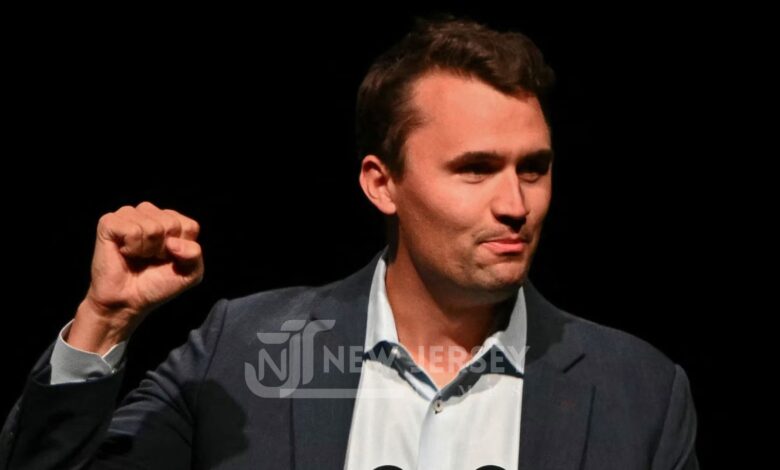
Provo, September 11 EST: A sniper’s bullet cut short the life of conservative firebrand Charlie Kirk on Wednesday, and as of Thursday morning, Utah police still don’t know who pulled the trigger. The 31-year-old activist was speaking at Utah Valley University when he was shot dead, a killing that officials are already calling one of the most brazen political attacks in years.
The Search That Isn’t Over
Despite roadblocks on the highways and helicopters circling over Utah County through the night, the gunman has slipped away. Reuters reported that two people were detained in the early chaos but quickly released once investigators realized they weren’t involved. For now, police admit they don’t have their suspect.
Residents described a strange mix of fear and disbelief. “I’ve lived here 20 years and I’ve never seen anything like this,” one man told local TV. “The sky was full of helicopters, the streets full of cops and yet whoever did this is still out there.”
Cox Calls It What It Is
Governor Spencer Cox didn’t tiptoe around his language. He called it straight: a political assassination. “This wasn’t random violence,” he said. “This was someone trying to kill an idea by killing the man behind it.” His words hit hard in a state where political violence has been rare, and where Kirk’s brand of activism wasn’t always welcome but was undeniably influential.
Federal agencies the FBI, the ATF are now involved, but they’ve released little more than boilerplate statements about “active investigations.”
The Figure Who Divided and Energized
Kirk wasn’t shy. He started Turning Point USA as a teenager and turned it into a conservative powerhouse, drawing thousands of college students and building direct ties to Donald Trump’s movement. He thrived on confrontation, attacking universities, media, and Democrats with the same fire.
He was loved and loathed in equal measure. Supporters called him the voice of a new conservative generation. Critics said he was an agitator who thrived on division. What can’t be denied is that he made himself impossible to ignore.
Reaction Rolls In
Tributes came fast. Trump called him “a patriot” and said the killing was “an act of pure evil.” President Biden, for his part, condemned the shooting as “senseless violence” and asked Americans not to let politics become a bloodsport. Even some of Kirk’s fiercest critics admitted the assassination crossed a line no democracy should tolerate.
The fact that it happened on September 11 gave the story a chilling edge. Analysts couldn’t help but draw connections, though police have given no indication that the date was chosen deliberately.
Utah Valley in Shock
The campus where it all unfolded is in mourning. Classes are canceled. Students held vigils on the lawn, some in silence, others praying out loud. The university president said the school was “heartbroken.”
“It’s just unreal,” said one professor, shaking his head. “We’re used to protests, maybe heated arguments, but this? A sniper? Nobody saw this coming.”
The Security Question
Already, there are tough questions about security at the event. Witnesses say there were no bag checks, no heavy police presence, nothing to suggest the school expected trouble. With Kirk’s profile and the sharp reactions he drew some lawmakers are saying this should never have happened in such an open, unsecured environment.
Republicans in the state legislature have promised hearings. “If we can’t keep our public spaces safe for political speech, we’re in real trouble,” one lawmaker said.
What Now
The investigation is in its first hours, and that means the facts are still thin. We don’t know what rifle was used, whether the shooter acted alone, or what motive they carried. What we do know: the person who pulled that trigger is still free, and authorities are telling the public to stay vigilant.
The political ripples will come later. Some believe Kirk’s death could rally conservatives heading into the 2026 elections. Others fear it could harden divisions in a country already fraying at the edges.
For the moment, Utah is on edge. Police cars sit at intersections, helicopters circle, and a family is left grieving while a movement loses its loudest voice. Charlie Kirk is gone, and the silence around who killed him only makes the shock sharper.
New Jersey Times Is Your Source: The Latest In Politics, Entertainment, Business, Breaking News, And Other News. Please Follow Us On Facebook, Instagram, And Twitter To Receive Instantaneous Updates. Also Do Checkout Our Telegram Channel @Njtdotcom For Latest Updates.

A political science PhD who jumped the academic ship to cover real-time governance, Olivia is the East Coast's sharpest watchdog. She dissects power plays in Trenton and D.C. without bias or apology.
- Olivia Mathers
- Olivia Mathers
- Olivia Mathers
- Olivia Mathers
- Olivia Mathers
- Olivia Mathers
- Olivia Mathers
- Olivia Mathers
- Olivia Mathers
- Olivia Mathers
- Olivia Mathers
- Olivia Mathers
- Olivia Mathers
- Olivia Mathers
- Olivia Mathers
- Olivia Mathers
- Olivia Mathers
- Olivia Mathers
- Olivia Mathers
- Olivia Mathers
- Olivia Mathers
- Olivia Mathers
- Olivia Mathers

Trained in war zones, raised in Newark, and seasoned in city hall, Jordan blends grit reporting with deep integrity. From floods to finance bills, they’re always first on scene and last to leave.
- Jordan Adebayo
- Jordan Adebayo
- Jordan Adebayo
- Jordan Adebayo
- Jordan Adebayo
- Jordan Adebayo
- Jordan Adebayo
- Jordan Adebayo
- Jordan Adebayo
- Jordan Adebayo