
Table of Contents
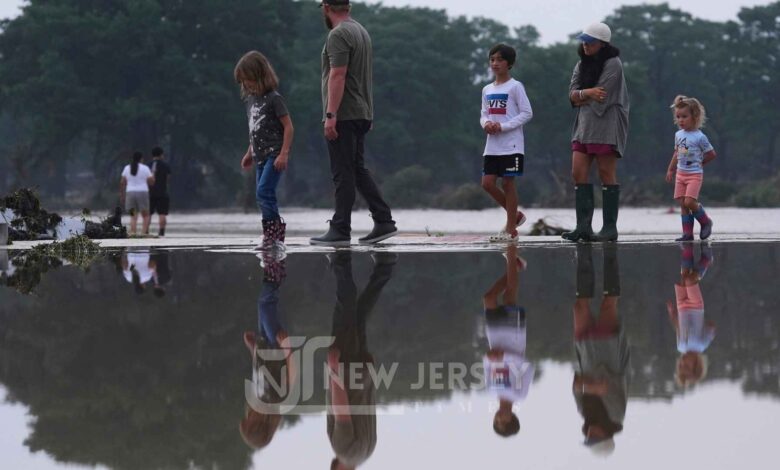
July 8 EST: Kerrville flash flood tragedy highlights the fragility of riverside life in Texas, where a catastrophic 30-foot surge on July 4 obliterated an RV park and left a family of five missing. The flooding at Blue Oak RV Park exposed not just the power of the Guadalupe River, but the glaring absence of emergency systems meant to protect residents in vulnerable housing.

A River That Doesn’t Wait
On July 4, as much of the country lit sparklers and barbecued under calm skies, the Guadalupe River surged 30 feet in 40 minutes, drowning the Blue Oak RV Park without warning. In real terms, that’s the difference between life and death, not over hours, but minutes.
Texas knows flash floods. The Hill Country has a history of violent waters; the region has been called “Flash Flood Alley” for decades. But still, residents at Blue Oak were caught off guard — no sirens, no alerts robust enough to make a difference. Instead, in the dead dark between 3:30 and 4:00 a.m., it fell to the park’s co-owner, Lorena Guillén, and her husband, to wake sleeping families with fists on metal doors.
They ran from RV to RV in near silence, the only sound louder than their knocking the rising roar of floodwater. Most residents got out. One family — two parents and three small children — did not.
When the Warning System Is a Human Being
The irony is brutal: in a nation of satellites, digital alerts, and multi-billion-dollar emergency management budgets, it came down to two people running on foot. This wasn’t a backwoods trail camp. This was a residential RV park with 28 occupied homes. That they were all washed away shows what happens when federal flood risk maps and real human risk no longer match.
Texas emergency services have long struggled with messaging in rural, high-risk zones. Floodplain maps are often outdated. FEMA’s support is reactive, not preemptive. And despite years of record storms — Harvey, Imelda, Uri — the infrastructure for alerting vulnerable populations hasn’t meaningfully improved. RV parks, mobile home sites, and informal housing often fall between the cracks of municipal responsibility and federal oversight.
Guillén’s actions were nothing short of heroic. But the fact that she had to act at all — with no tools beyond her voice and body — speaks volumes about who is expected to do the protecting in America when the system doesn’t show up.
A Family Gone, a Community Gutted
The family that was lost had parked on a higher patch of ground, what Guillén described as a kind of “island.” But flash floods don’t negotiate. Rescue teams tried to reach them, but the current was too strong. When the waters receded, the “island” was gone — and so was the family.
More than 30 other campers were reportedly swept downstream. By Monday, the search and rescue operation had turned to a recovery mission, with dogs and drones scanning a half-mile of wreckage. The debris field — vehicles, twisted RV shells, propane tanks — is more than just a sign of destruction. It’s a map of overlooked vulnerability.
Policy Blind Spots, Repeating Patterns
This wasn’t the first time floodwaters turned deadly in Texas, and it won’t be the last. In 1987, a similar wall of water killed 10 campers just downriver. Since then, Texas has seen tens of billions spent on storm recovery — but little of it has gone to the invisible residents of RV parks, unincorporated towns, or informal settlements.
There are regulatory reasons for that. RV parks often exist in gray zones — they’re transient, privately owned, and not considered permanent dwellings. As a result, they’re left off most public emergency planning. Yet for many, especially seniors and low-income families, they’re home. And as this flood proved again, disaster doesn’t check zoning permits before it hits.
A Crisis of Accountability
What happened in Kerrville isn’t an act of God. It’s the foreseeable result of systemic neglect, paper-thin local infrastructure, and a decades-long tendency to let the rural poor fend for themselves.
Guillén and her husband stepped into the void. They didn’t wait for orders. But the question isn’t why they ran door to door — it’s why they were the only ones who did.
New Jersey Times Is Your Source: The Latest In Politics, Entertainment, Business, Breaking News, And Other News. Please Follow Us On Facebook, Instagram, And Twitter To Receive Instantaneous Updates. Also Do Checkout Our Telegram Channel @Njtdotcom For Latest Updates.

A political science PhD who jumped the academic ship to cover real-time governance, Olivia is the East Coast's sharpest watchdog. She dissects power plays in Trenton and D.C. without bias or apology.