Becky G Quietly Breaks Her Silence in New Documentary Rebbeca
In limited screenings, the singer finally addresses the long-running Sebastian Lletget cheating scandal but leaves fans guessing about where things stand now.


Trenton, December 10 EST: Becky G has spent the past couple of years dodging a conversation she never asked for, and for the most part, people seemed content to fill the silence for her. With Rebbeca, the new documentary she’s letting into the world this week, she finally speaks up, though not in the loud or cathartic way some expected. The film rolled out quietly at the Tribeca Festival and is getting two small theatrical showings, almost like she wanted to test how much noise the truth would make before she opened the door all the way.


A Story She Never Gave Permission To Tell
According to People, Becky G revisits the cheating allegations tied to Sebastian Lletget the ones that first lit up social media back in March 2023 without retelling every beat. She doesn’t rehash timestamps or rumors. Instead, she talks about the part that’s harder to explain: the strange feeling of watching your personal life get narrated by strangers while you don’t say a word.

She admits her silence didn’t land the way she thought it would. It was supposed to be a way to protect herself, maybe even to buy some time. But the longer she stayed quiet, the more people decided she must be hiding something. Or avoiding something. Or crumbling under weight she couldn’t name. She says the quiet got mistaken for weakness, and you can tell that stung more than the rumor itself.
Whether she and Lletget are together now is left floating. She dodges the question completely. There’s one shot blink and you miss it of a guy who looks a whole lot like him from the back. No commentary, no confirmation. Just a moment that passes by like an inside reference only the two of them will ever really understand.
The Apology That Didn’t Heal Much
When everything blew up in 2023, Lletget tried to get ahead of it. Billboard documented his apology, where he described the incident as a “10-minute lapse in judgment” and talked about entering a “mental wellness program” to rebuild trust. The wording raised as many eyebrows as it lowered. People wanted a straightforward explanation; instead, they got a statement that seemed drafted under pressure, the kind that settles the dust just long enough for it to puff back up again.
Fans were watching Becky G closely at the time. Every performance, every Instagram post, every accessory. When she walked onstage at a festival without her engagement ring something E! Online zeroed in on it became a whole new storyline. She made a comment during her set that some people swore was aimed at him, though it could just as easily have been a moment of rawness in a long week.
A Documentary That’s More Interior Than Explanatory
Rebbeca doesn’t feel like it was made to clean up a scandal. It feels more like the kind of project someone makes after realizing they’ve spent years being interpreted by everyone except themselves. Becky G gets into the pressures of building a career under bright lights, the push-pull of being a young Latina star in an industry that doesn’t always know what to do with the complexity of that identity, and the emotional clutter that builds up after too much public speculation.
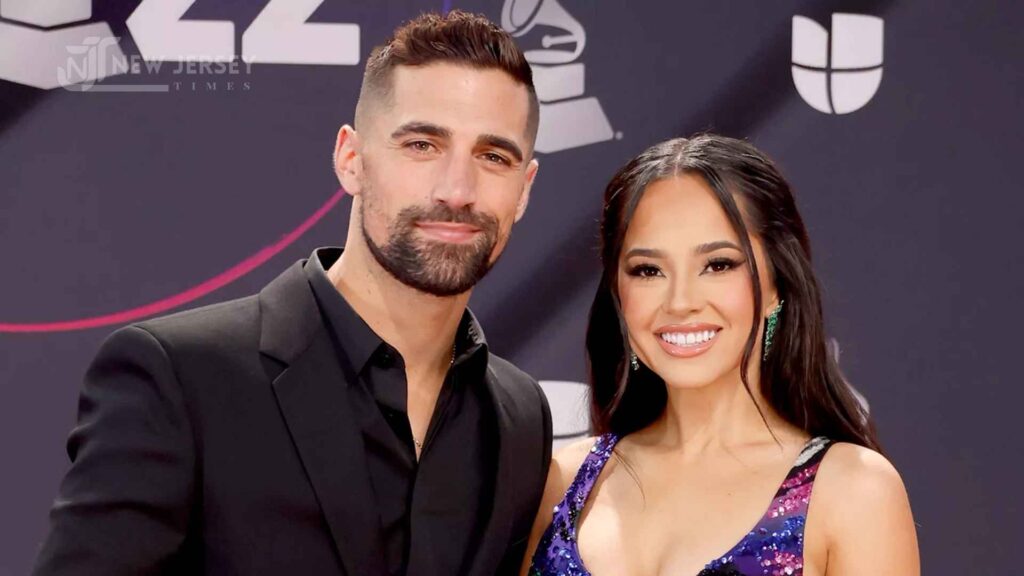
The cheating situation shows up in the film as one thread, not the whole fabric. She doesn’t dramatize it. She also doesn’t mourn it. It sits there, unresolved, as if she’s saying: this happened, it hurt, and it doesn’t define me but it did change something, even if I’m not naming exactly what.
There’s a tiredness in the way she talks about protecting her boundaries, almost like she’s trying to patch holes in a wall that’s been kicked too many times. But there’s also steadiness. She doesn’t overexplain, and she doesn’t pander. That restraint feels earned.
The Shot That’s Already Creating Theories
That quick glimpse of the man who resembles Lletget is what everyone seems to be talking about. People notes the film offers no explanation, no voiceover pointing the viewer in any direction. It’s just there. For half a second. Enough to start a new round of speculation.
Maybe that’s the point. Relationships, especially long ones that have lived partly online, don’t resolve themselves neatly. Sometimes they fade, reconnect, stall, restart. Sometimes the people in them don’t even know what label to put on things. The documentary seems to respect that ambiguity rather than pretend there’s a tidy update to offer.
The Way Stars Reclaim Their Narratives Now
There’s something telling about Becky G choosing a documentary rather than an interview. Social media demands certainty; documentaries allow for breath. She doesn’t break down the door of the scandal. She just nudges it open and lets people see whatever they see.
It fits the moment we’re in. Celebrities have realized that the traditional PR cycle doesn’t let them control anything except the initial headline. With documentaries, they can slow the frame down, explain what mattered to them, and ignore what didn’t.
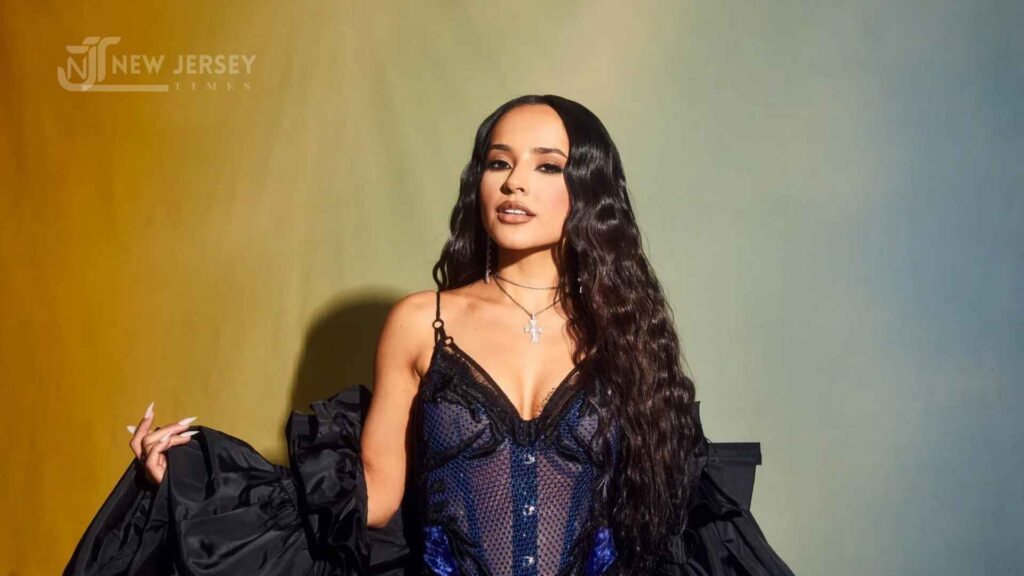
Her decision to keep the release small just two nights, no major red-carpet blitz makes the whole thing feel even more personal. More like she wanted the film to find people who genuinely wanted to understand, not the ones looking for confirmation of gossip they’ve already rehearsed.
The Question That Still Doesn’t Have An Answer
Whether Becky G and Sebastian Lletget are still engaged, still close, or still working things out is something only they seem to know. And maybe only vaguely. Life isn’t a press release. Sometimes you’re still figuring it out even while the world thinks the chapter should be closed.
What Rebbeca makes clear is that Becky G is no longer letting silence speak for her. She’s choosing what to share and choosing what to leave untouched. And the parts she keeps to herself might say more about where she is now than anything she put on camera.
New Jersey Times Is Your Source: The Latest In Politics, Entertainment, Business, Breaking News, And Other News. Please Follow Us On Facebook, Instagram, And Twitter To Receive Instantaneous Updates. Also Do Checkout Our Telegram Channel @Njtdotcom For Latest Updates.

A bi-coastal pop culture critic and former indie screenwriter, Gia covers Hollywood, streaming wars, and subculture shifts with razor wit and Gen Z intuition. If it’s going viral, she already knew about it.