
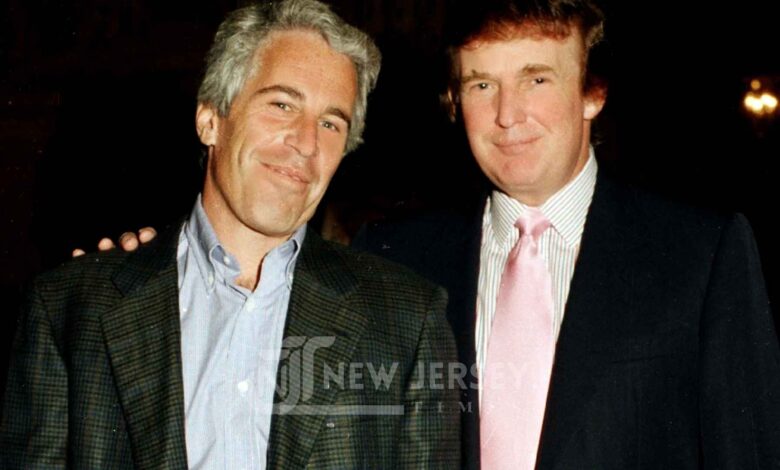
July 11 EST: The Trump-era Department of Justice and FBI have moved to shut the door—firmly, if belatedly—on one of the darkest and most persistently conspiratorial chapters in American political culture: the unresolved legacy of Jeffrey Epstein.

Their recently leaked memo, dry in tone but pointed in conclusion, leaves little room for ambiguity. There is, they say, no secret “client list.” No credible evidence of blackmail operations. No smoking gun of foul play in Epstein’s 2019 death inside a Manhattan jail. The surveillance footage, they assert, tells a story of suicide—not sabotage.
A Bureaucratic Full Stop on a National Obsession
This is Washington’s preferred style of closure: quiet, procedural, and buried in sealed filings. But nothing about Epstein has ever been quiet. For years, his story—of privilege, predation, and protection—has been a touchstone for public distrust in the elite, and a magnet for the conspiratorial fringes. A financier with ties to presidents, princes, and scientists, who somehow slipped in and out of accountability for decades? Of course the country kept asking questions.
Yet what’s most revealing about this moment is not what’s in the memo—it’s who’s recoiling from it.
Trump’s Own Circle Splinters
Rather than settle the matter, the DOJ’s conclusions have laid bare the widening rift within Trump’s post-presidential power structure. Figures like Dan Bongino and Kash Patel, once front-line loyalists, are reported to have bristled at the memo’s release. According to Axios, Bongino even staged a symbolic protest by taking a day off after Attorney General Pam Bondi signed off on the final draft.
These aren’t minor players. Bongino and Patel have built considerable political capital in MAGA world by promising transparency and vengeance—especially on Epstein. Bondi, too, came in with tough-on-elite trafficking rhetoric. But when push came to classified shove, only one of them had to sign their name to the paper that extinguished the fantasy of unmasking Epstein’s most powerful associates.
It didn’t sit well. And the blowback was immediate.
MAGA Turns Inward
Conservative populists, already skeptical of Beltway institutions, erupted. Steve Bannon demanded a special prosecutor. Elon Musk mocked the memo’s findings, fueling online speculation that he himself might be implicated. The notion was dismissed, but the damage was done. For many MAGA die-hards, the very fact that names remain sealed is proof enough of a cover-up.
This backlash isn’t just about Epstein. It’s about a broader feeling of betrayal—of a promise left unfulfilled. Trump’s movement didn’t just promise to “drain the swamp.” It offered something deeper: retribution. That the DOJ under Trump-appointed officials has now delivered a final report that reads like any other government cleanup job is more than disappointing to some. It’s sacrilege.
The Bureaucracy Strikes Back
In some ways, this memo is a case study in how the machinery of government protects itself. Institutions like the FBI and DOJ aren’t built to accommodate political revenge fantasies. They operate on timelines, red tape, and internal clearance. When Deputy Attorney General Todd Blanche publicly insisted that there was no internal discord, he wasn’t lying—he was telegraphing an institutional reflex: preserve the consensus, deny the politics.
Still, politics oozes through the seams. And the Epstein story was never just about crime. It’s about power—who wields it, who shields it, and who survives its exposure. The DOJ may not have found a literal “list,” but it’s clear the public still believes something—or someone—is being protected.
Epstein’s Legacy: Unresolved and Unwelcome
This isn’t the first time a high-level review has failed to satisfy the public’s hunger for answers. The Warren Commission, the 9/11 Commission, even Mueller’s report—all offered volumes of information, but not the psychic closure many Americans crave. Epstein joins that lineage now: an emblem of unresolved elite impunity.
What’s new is the fragmentation. Trump’s base isn’t circling the wagons this time; they’re training fire inward. The split between Bondi and her more transparency-driven peers isn’t just a personnel squabble—it’s a reflection of how hard it’s become to maintain a unified MAGA narrative in the face of institutional resistance.
What’s Next?
For now, the memo may close the door on official inquiries. But unofficially, the battle has just begun. Expect more FOIA requests, more legal gambits from groups like Judicial Watch, and more pressure on Republican lawmakers to peel back the seals.
And in the meantime, Trump himself—cornered by court cases, campaign chaos, and now backlash from his own diehards—has waved off Epstein questions as “ridiculous.” The base may not be so quick to let it go.
New Jersey Times Is Your Source: The Latest In Politics, Entertainment, Business, Breaking News, And Other News. Please Follow Us On Facebook, Instagram, And Twitter To Receive Instantaneous Updates. Also Do Checkout Our Telegram Channel @Njtdotcom For Latest Updates.

A political science PhD who jumped the academic ship to cover real-time governance, Olivia is the East Coast's sharpest watchdog. She dissects power plays in Trenton and D.C. without bias or apology.