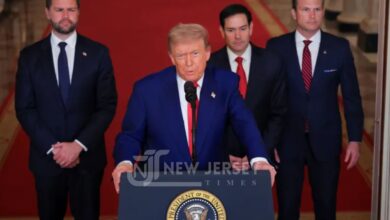
Trump Faces MAGA Backlash Over Renewed Epstein Revelations
A resurfaced birthday note and years of social ties with Epstein are stirring unrest inside Trump’s political base—and raising old questions he still can’t shake.

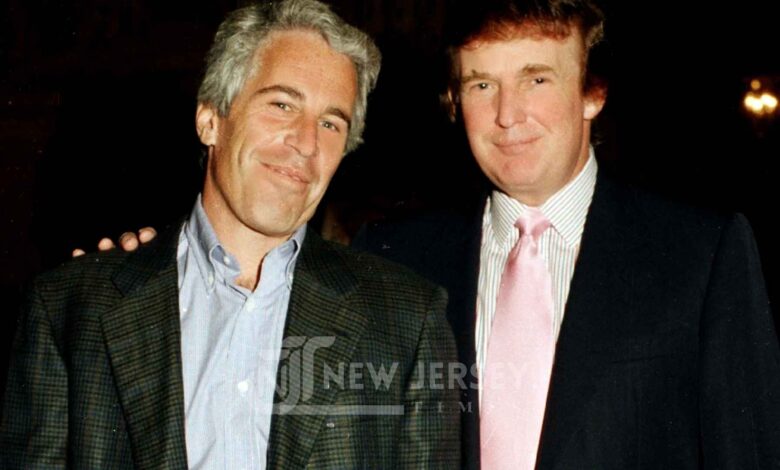
July 19 EST: The uneasy dance between Donald Trump and the ghost of Jeffrey Epstein is spinning again—this time with documents, recordings, and simmering outrage from within Trump’s own political base. The connection, once downplayed as a passing acquaintance, now re-emerges with enough evidence to suggest not criminality, but complicity in something darker: elite tolerance.

And Trump, famously adept at slamming shut scandals with bravado and spin, seems unable to close this one.
A Friendship Too Close for Comfort
Trump and Epstein weren’t strangers; they were fixtures of the same gilded Manhattan nightlife and Palm Beach social scene. From the late 1980s through the early 2000s, they appeared at the same parties, shared mutual friends, and reportedly dined together often. According to The Times, Epstein was a regular at Mar-a-Lago, and in 2002, Trump called him a “terrific guy,” praising his taste in “beautiful women… on the younger side.”
It wasn’t just empty flattery. In a 2017 recording, Epstein called Trump his “closest friend for ten years.” Whether that claim was sincere, self-aggrandizing, or both, it speaks to a relationship that went well beyond chance encounters.
This is where things get uncomfortable: Trump’s presence in Epstein’s contact books and litigation records isn’t unique—many public figures are there. But unlike, say, Bill Gates or Les Wexner, Trump once wrapped his arms around Epstein publicly. He gave him legitimacy in a tabloid ecosystem that fed off status, money, and silence.
The Birthday Note That Changed the Temperature
What’s reignited scrutiny now is a so-called “birthday book” from 2003, unearthed in recent litigation. Inside is what appears to be a handwritten note from Trump, accompanied by a risqué sketch. Trump denies its authenticity and is reportedly considering legal action, but the story has already moved past the note itself.
Its emergence has cracked open a broader, harder question: Why did Trump once praise Epstein so openly? And why has his response—first conspiratorial, now deflective—failed to satisfy even his own supporters?
The Real Estate Rift That Ended a Decade
According to Vox and Wikipedia, Trump and Epstein’s falling-out stemmed from a real estate feud in 2004. Both men had eyes on a Palm Beach mansion; Trump outbid him. Afterward, Epstein was reportedly banned from Mar-a-Lago. Trump has since used this to create distance, saying in multiple interviews that he hadn’t spoken to Epstein in 15 years.
But Epstein’s own statements contradict that timeline, and in politics—as in journalism—proximity often matters more than proof. Trump may not have been part of Epstein’s crimes, but his failure to forcefully denounce him when it would have mattered most is part of the story.
When the Conspirator Becomes the Denier
Trump built his post-2016 identity partly on attacking elite cover-ups—of Hunter Biden, the Clintons, and yes, Jeffrey Epstein. He flirted with QAnon, teased a “client list,” and hinted that Epstein’s 2019 jail death wasn’t suicide.
But the government says otherwise. In 2025, both the DOJ and FBI reaffirmed there is no secret client list and no evidence of foul play. Trump has since pivoted—calling for the release of grand jury records while steering away from the same conspiracies he once winked at.
That about-face is infuriating parts of his base. To them, it smells of betrayal.
MAGA’s Civil War Over Epstein
The Epstein scandal is now more than a political liability—it’s a cultural fault line. MAGA diehards who once saw Trump as an avenger against corrupt elites now accuse him of going soft. Laura Loomer, Dan Bongino, and Pam Bondi—figures once considered staunch allies—have publicly urged him to release documents and name names.
The New Yorker reports deep unrest in Trump’s inner orbit, with some strategists worried the scandal is beginning to chip away at his strongest asset: unshakable loyalty.
The irony? Trump helped build this expectation. He trained his movement to believe that hidden power must be exposed, that silence equals guilt. Now, caught in his own web, he’s offering legal nuance instead of fire—and they’re not buying it.
What’s Left Unsaid
There’s still no legal case tying Trump to Epstein’s crimes. A rape accusation from the 1990s was withdrawn, and no federal charges have ever been filed. Yet the optics—the parties, the praise, the presence in Epstein’s files—leave lingering questions that no campaign slogan can erase.
If the 2016 election was about outsiders smashing the system, 2025 feels different. Now Trump’s facing a new kind of revolt—not from liberals or the press, but from believers demanding he finish what he started.
He may have outlasted Mueller, Stormy Daniels, and January 6, but Epstein could be the scandal he can’t spin. Not because of what’s proven, but because of what too many already believe.
New Jersey Times Is Your Source: The Latest In Politics, Entertainment, Business, Breaking News, And Other News. Please Follow Us On Facebook, Instagram, And Twitter To Receive Instantaneous Updates. Also Do Checkout Our Telegram Channel @Njtdotcom For Latest Updates.

A political science PhD who jumped the academic ship to cover real-time governance, Olivia is the East Coast's sharpest watchdog. She dissects power plays in Trenton and D.C. without bias or apology.