Trump Claims Nobel Peace Prize After UN Speech
Ex-president tells UN he ended wars, insists his record deserves the Nobel Peace Prize


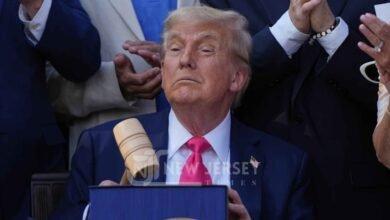
New York, September 23 EST: Donald Trump walked into the United Nations General Assembly not as a supplicant of multilateral diplomacy, but as a salesman of his own foreign policy legacy. In a hall designed for consensus-building, the former president delivered something closer to a campaign rally speech: combative, self-referential, and laced with one audacious claim after another.


The headline moment was impossible to miss. Trump declared that he had “ended several wars” and therefore deserved the Nobel Peace Prize, citing conflicts ranging from India and Pakistan to Congo and Cambodia. It was less a diplomatic address than a public lobbying effort, something the Norwegian Nobel Committee has repeatedly said is meaningless to its deliberations.
Trump’s Familiar Pitch
If the demand sounded familiar, that is because it is. Trump has been chasing Nobel recognition since at least 2018, when allies began nominating him after the Singapore summit with Kim Jong Un. Later, the Abraham Accords became his favored example, with supporters insisting he had brought an unprecedented calm to the Middle East. At the UN, he revived the theme with a sharper edge: others, he argued, have been handed the prize for far less, while his own record has been denied its due.
In Trump’s telling, the Nobel is not merely an honor; it is proof of legitimacy. To his base, it would vindicate a worldview that prizes transactional deals over traditional alliances and scorns the institutions that award such recognition.
The India-Pakistan Problem
But then came the claim that startled diplomats and drew swift reaction in South Asia. Trump told the world body he had “ended” the war between India and Pakistan. As the Hindustan Times pointed out, no such war has been formally underway since 1999, though tensions have flared repeatedly in Kashmir.
For Delhi and Islamabad, the statement was more than imprecise; it was politically charged. To acknowledge that an American president “ended” their conflict would be to accept a narrative of outside ownership in a deeply national dispute. Indian analysts dismissed Trump’s line as opportunistic spin, noting that U.S. interventions have often moderated crises but never resolved the core issue.
A Battle With History
What makes Trump’s Nobel campaign striking is not just the self-promotion, but the way it collides with history. Barack Obama received the prize in 2009 less for results than for symbolic promise, an award that critics later argued had been premature. Trump now flips that script, claiming that his tangible results have been ignored because of institutional bias.
There is an irony here. The Nobel Committee has always tried to wall itself off from politics, but its choices inevitably become political. Henry Kissinger’s 1973 Peace Prize for the Vietnam accords remains one of the most controversial decisions in the award’s history, precisely because the war raged on. Trump, conscious of such precedents, frames his omission as evidence of establishment hostility rather than impartial judgment.
Power, Recognition, and the UN Stage
That Trump chose the UN as the venue underscores his strategy. The institution he derided as bloated and ineffective provided him the perfect backdrop for contrast: globalists who talk versus a dealmaker who acts. His allies will seize on that imagery, pointing to a man demanding recognition from the very stage he distrusts.
Yet seasoned diplomats view it differently. For them, Trump’s speech was less a serious policy outline than a performance aimed at U.S. voters. As one European official remarked privately, it was “campaigning in multilateral clothing.”
What Comes Next
The Nobel Committee, for its part, has been unambiguous. As reported by the Times of Israel, it will not be swayed by lobbying. The 2025 Peace Prize will be announced in early October, and Trump’s speech will not change the calculus.
Still, the moment matters. In using the UN to make his case, Trump again reminded the world how he sees power: not in the slow grind of institutions, but in singular achievements tied to his own name. Whether those claims survive scrutiny is secondary. For his supporters, the image of Trump demanding a Nobel on the world stage reinforces the grievance that drives his campaign, that the world and its gatekeepers refuse to give him credit.
History will judge whether that grievance is bluster or vindication. For now, it is simply the story Trump insists on telling, one speech at a time.
New Jersey Times Is Your Source: The Latest In Politics, Entertainment, Business, Breaking News, And Other News. Please Follow Us On Facebook, Instagram, And Twitter To Receive Instantaneous Updates. Also Do Checkout Our Telegram Channel @Njtdotcom For Latest Updates.

A political science PhD who jumped the academic ship to cover real-time governance, Olivia is the East Coast's sharpest watchdog. She dissects power plays in Trenton and D.C. without bias or apology.