Secret Service Uncovers Telecom Threat Near U.N. General Assembly
U.S. seizes illicit SIM networks as Trump slams U.N. and Iran diplomats face new restrictions in New York.


New York, September 23 EST: A series of dramatic developments unfolded Tuesday around the United Nations General Assembly, where President Donald Trump’s address, a sweeping counterintelligence operation, and new restrictions on Iranian diplomats converged to underscore how high-stakes diplomacy in New York often collides with domestic security and geopolitics.


Secret Service Uncovers Telecom Threat Near the U.N.
According to Reuters, federal agents dismantled a sprawling electronic network in the greater New York area designed to send illicit communications and potentially disrupt emergency services during the General Assembly.
The Secret Service, working with multiple agencies, seized more than 300 SIM-servers and at least 100,000 SIM cards from several sites within a 35-mile radius of Manhattan. Officials said the devices were used to send targeted telecommunications threats to senior U.S. officials and to facilitate encrypted communication among foreign operatives and their contacts inside the United States.
As Politico reported, authorities feared the network could have crippled New York’s cellular infrastructure, including critical lines used by first responders. One senior U.S. official described the setup as “industrial scale,” warning that it represented both a counterintelligence risk and a potential public safety hazard.
The timing was no accident. Security agencies remain on high alert whenever world leaders converge in New York for the U.N., and this year’s session has already seen heightened scrutiny given tensions with Russia, Iran, and other adversaries.
Trump Rebukes the U.N. in General Assembly Address
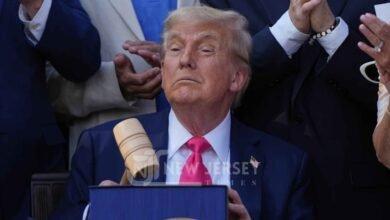
Inside the U.N. chamber, President Trump used his speech to deliver a blunt critique of the institution itself. According to The Washington Post, he charged that the U.N. has “not lived up to its potential,” citing bureaucratic inefficiency and a lack of accountability.
Trump confirmed that the United States has withheld as much as $1 billion in funding, a move that has already forced cuts to U.N. staffing. He also pressed European nations to end oil purchases from Russia, calling the practice a betrayal of Ukraine at a time of war.
The president warned that if allies fail to tighten the economic vise, the U.S. is prepared to levy sweeping tariffs on Russian exports. The threat drew muted reaction inside the chamber but underscored Trump’s longstanding approach of leveraging American economic weight as a diplomatic tool.
His address, delivered before heads of state, diplomats, and world media, was vintage Trump: defiant toward multilateral institutions, unapologetically nationalist, and geared toward a global stage as much as his domestic base.
U.S. Tightens Restrictions on Iranian Diplomats
Adding to the week’s confrontational tone, the State Department announced fresh limits on how Iranian diplomats stationed in New York can live and shop while performing their U.N.-related duties.
As reported by The Washington Post, Iranian officials are now barred from accessing wholesale retailers such as Costco, Sam’s Club, and BJ’s, with memberships revoked. The restrictions also cover luxury purchases: any acquisition of high-end goods like watches, leather products, or vehicles over $60,000 now requires prior authorization from the Office of Foreign Missions.
A U.S. official described the measures as designed to curb “abuse of privileges,” but the timing leaves little doubt about their political message. The move will likely fuel complaints from Tehran that Washington is weaponizing diplomats’ daily lives as leverage.
A Convergence of Security, Diplomacy, and Politics
Taken together, the developments reveal the unusual intensity of this year’s U.N. session. On one hand, U.S. security agencies are grappling with an unprecedented technological threat on their home turf. On another, the president is pushing a harder line on both international institutions and geopolitical adversaries. And layered on top are symbolic but consequential restrictions on an adversary’s diplomatic corps.
For New Yorkers, the General Assembly is often remembered for its gridlocked traffic and visible security presence. But as this week shows, the stakes extend far beyond motorcades. What happens in and around the U.N. can reverberate across U.S. politics, foreign relations, and even the infrastructure millions rely on daily.
For now, federal officials insist that the telecom threat has been neutralized. But they also acknowledge it is part of a wider trend: adversaries increasingly turning to unconventional tools, whether cyber, financial, or logistical, to disrupt American governance during moments of maximum visibility.
New Jersey Times Is Your Source: The Latest In Politics, Entertainment, Business, Breaking News, And Other News. Please Follow Us On Facebook, Instagram, And Twitter To Receive Instantaneous Updates. Also Do Checkout Our Telegram Channel @Njtdotcom For Latest Updates.

A political science PhD who jumped the academic ship to cover real-time governance, Olivia is the East Coast's sharpest watchdog. She dissects power plays in Trenton and D.C. without bias or apology.