
Christopher Nolan’s The Odyssey Is a Mythic IMAX Gamble and Fans Are Already All In
From a year-early IMAX ticket rush to a trailer that broke the internet, Nolan’s next epic is playing the long game.

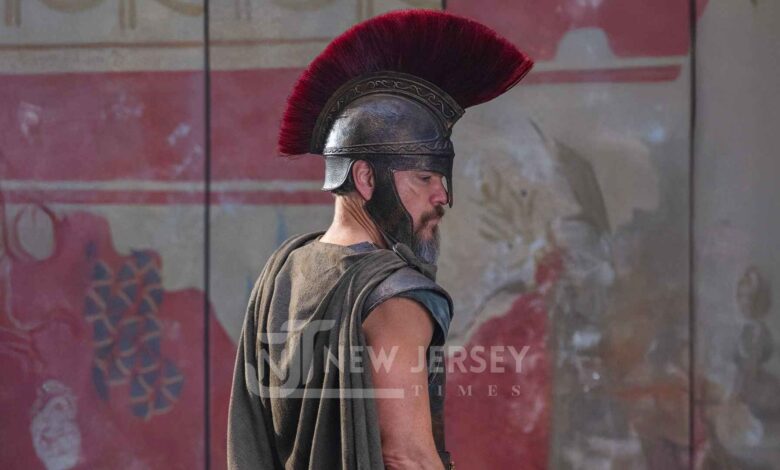
Los Angeles, December 27 EST: Let’s clear the fog first, because the internet has been doing what it does best. Christopher Nolan’s next film, The Odyssey, is not landing in theaters this week, or this year, or anywhere near December 27, 2025. That date belongs to something else entirely: the moment Nolan finally unleashed the first official trailer, and promptly sent film Twitter, IMAX obsessives, and ancient-mythology sickos into collective meltdown.



The actual release date is July 17, 2026, and yes, Nolan wants you thinking about it this far out. If the last few days have proven anything, it’s that the man knows exactly how to stretch anticipation into a slow, cinematic burn.
A Trailer That Felt Like An Event
The debut trailer for The Odyssey didn’t just drop. It arrived. One minute you’re scrolling, the next you’re watching Matt Damon stare down destiny as Odysseus, battered and unbowed, with that familiar Nolan-scale intensity humming underneath every frame.
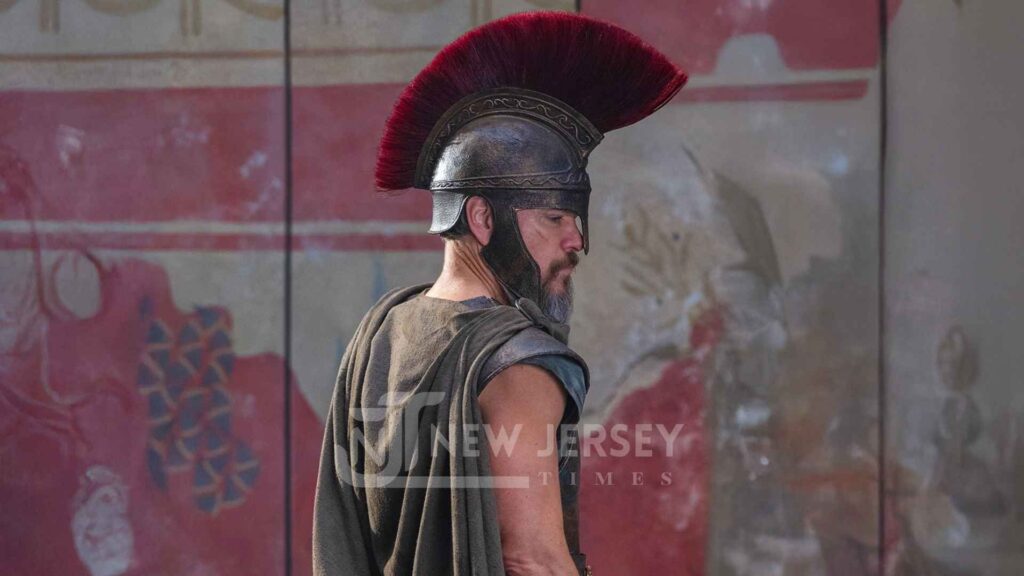
The footage, first reported on by People and Deadline, wastes no time signaling intent. This is not a museum-piece adaptation of Homer’s epic poem. This is a full-bodied, myth-soaked action spectacle. Warships slice through black water. Steel meets steel. The Trojan Horse looms like an omen rather than a plot device. And somewhere in the middle of it all is Tom Holland as Telemachus, caught between boyhood and inheritance, searching for a father who has become legend.
What really lands, though, is texture. Shot entirely on newly developed IMAX film technology, the images feel heavy, tactile, almost stubbornly physical. Nolan has never loved green screens, and it shows. Sand sticks. Armor dents. Waves don’t feel simulated. This is a world you could scrape your knees on.
It’s also the first time The Odyssey has ever been filmed for IMAX in this way, a detail Nolan reportedly pushed hard for. The ambition is almost comically on-brand.
Nolan’s Long Game And The IMAX Flex
Here’s where things get even more Nolan-coded.

Back in July 2025, a year before most studios would even think about opening pre-sales, IMAX 70mm tickets for The Odyssey quietly went live. And then vanished. According to multiple reports from international business outlets and entertainment trades, premium-format showings across AMC and Regal locations sold out almost instantly.
The numbers being floated are wild. Some reports claim upward of 70 million IMAX tickets were snapped up during that early window. Whether that figure holds up under scrutiny or not, exhibitors confirmed the bigger takeaway: demand was immediate, intense, and global. Scalpers moved in. Screens filled up. Group chats lit on fire.
For Nolan, who has spent the better part of a decade publicly defending theatrical exhibition like it’s a sacred oath, this was a victory lap disguised as a business experiment. It’s also a reminder that in a post-streaming-first era, he remains one of the few directors who can still turn format into spectacle.
A Cast Built For 2026, Not 1996
Then there’s the cast, which feels engineered to dominate both awards chatter and fan discourse.

Alongside Matt Damon and Tom Holland, the ensemble includes Anne Hathaway, Robert Pattinson, Lupita Nyong’o, Zendaya, and Charlize Theron. It’s a lineup that bridges generations, fandoms, and cinematic lanes, from prestige drama to global pop culture.
Details about who’s playing whom are still mostly locked away, though early reporting suggests Nolan is taking liberties with the mythology, blending characters and reshaping roles rather than delivering a strict translation of the text. That tracks. Nolan has never been especially interested in reverence for its own sake. He’s more into emotional architecture, into what these stories feel like when filtered through modern anxieties.

And let’s be honest. Casting Zendaya and Tom Holland in a mythological epic ensures that TikTok is already doing half the marketing.
Shot Across The Map, Built At Scale
Production-wise, The Odyssey is as sprawling as its source material. Filming stretched across Morocco, Sicily, Greece, the U.K., Scotland, and Ireland, with Nolan favoring real locations over digital replication whenever possible.
The reported budget, roughly $250 million, reflects that commitment. This is not a contained epic. It’s a global one. The film is produced by Emma Thomas and Nolan through Syncopy, continuing a partnership that has quietly become one of the most stable and creatively successful in modern studio filmmaking.
Universal Pictures is distributing, picking up momentum from the studio’s collaboration with Nolan on Oppenheimer. That relationship, strengthened by awards-season dominance, appears to have come with significant creative freedom attached.
The Post-Oppenheimer Moment
Context matters here.
Nolan is coming off Oppenheimer, a film that managed the rare feat of being a box-office juggernaut, a critical darling, and an awards magnet all at once. His Best Director Oscar win didn’t just cap a career chapter. It recalibrated his leverage.
Industry insiders told Deadline that Universal granted Nolan unusually wide latitude on The Odyssey, from its release strategy to its technical ambitions. The early IMAX ticket push. The delayed trailer. The emphasis on film over digital. None of it feels accidental.
As it turns out, patience is a powerful marketing tool when audiences trust the payoff.
Why Fans Are Already Locked In
Strip away the numbers, the formats, the awards math, and what you’re left with is something simpler. The Odyssey promises scale with soul. It’s about survival, homecoming, legacy, and the cost of war. Those themes hit differently in 2026 than they did in ancient Greece, but they hit all the same.
Nolan isn’t just adapting a story people recognize from textbooks. He’s tapping into something elemental, then packaging it with the kind of craftsmanship that makes audiences feel like they’re witnessing an event, not just watching content.
For now, the wait continues. More footage will come. More casting details will leak. Discourse will swell and fracture and reassemble.
But if the trailer drop taught us anything, it’s this: Nolan doesn’t need to rush. He’s already got the crowd leaning forward, eyes locked on the horizon, waiting for the long way home.
New Jersey Times Is Your Source: The Latest In Politics, Entertainment, Business, Breaking News, And Other News. Please Follow Us On Facebook, Instagram, And Twitter To Receive Instantaneous Updates. Also Do Checkout Our Telegram Channel @Njtdotcom For Latest Updates.

A bi-coastal pop culture critic and former indie screenwriter, Gia covers Hollywood, streaming wars, and subculture shifts with razor wit and Gen Z intuition. If it’s going viral, she already knew about it.