
Hard News, Clean and Direct: Kimi Antonelli Wins Miami Grand Prix for Third Straight Victory of the 2026 F1 Season

Miami, May 4:
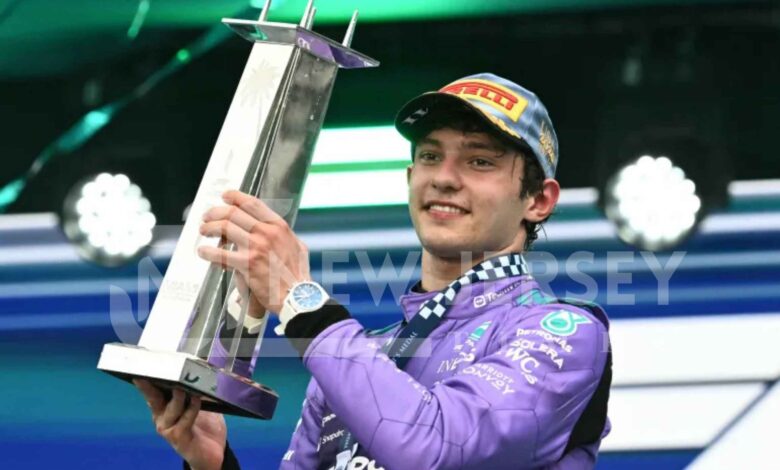
Kimi Antonelli walked away from the Miami Grand Prix 2026 with another trophy, another record, and another reason for the rest of the Formula 1 field to lose sleep on Sunday night. This was his third consecutive win F1 2026 season has seen from the 19-year-old Mercedes driver, and it was every bit as hard-fought and dramatic as the two that came before it.
Three races. Three pole positions. Three wins. Kimi Antonelli has done what no driver in Formula 1 history has ever done — converted each of his first three career poles into victories, back to back to back. Not Ayrton Senna. Not Michael Schumacher. Nobody. Just a teenager from Bologna, Italy, in his debut season, quietly dismantling records that many in the paddock assumed were untouchable.
The Miami Grand Prix 2026 was his most complete performance yet, even if it did not always look that way from the outside. And that gap between perception and reality is precisely what makes watching him so compelling right now.
The Morning Nobody Wanted
Kimi Antonelli’s third win F1 2026 almost did not happen at all. Heavy rain drenched the Miami International Autodrome on Sunday morning, and the forecast was pointing at thunderstorms arriving well before the originally scheduled start. Race officials moved the green light forward by three hours to get ahead of the weather system. Teams scrambled their entire Sunday routines. Engineers rewrote warm-up schedules on the fly. Catering got moved. Briefings got reshuffled. The whole paddock operated on borrowed time and collective anxiety from the moment the sun came up.

By the time the cars reached the grid, the rain had backed off enough to race. The sky was still grey and heavy, but the track was dry. Kimi Antonelli pulled up to pole position for the third consecutive weekend and looked, by all visible accounts, completely unbothered by everything that had happened around him since sunrise.
That composure is either natural or the product of years of careful development inside the Mercedes junior programme. Probably both. Either way it is becoming the defining characteristic of his 2026 F1 season so far. Other drivers pace. Other drivers question. Antonelli just waits for the lights to go out.
Turn One and Everything That Followed
The start of the Miami Grand Prix 2026 did not go to plan for Kimi Antonelli, which at this point is almost a tradition. Ferrari’s Charles Leclerc reacted off the line with the kind of urgency that makes you wince and admire in equal measure, swept around the outside into Turn 1, and carved himself into the lead before most people in the grandstands had processed what was happening. Antonelli dropped to third before the field had reached the first braking zone.
Max Verstappen made things considerably worse almost immediately. The four-time world champion lost the rear of his Red Bull at Turn 2, spun directly across the racing line in the path of oncoming traffic, and somehow rejoined without collecting anyone. He dropped to tenth. The race was barely alive and already it felt like a season’s worth of drama had been compressed into ninety seconds of actual racing.
Separate crashes for Isack Hadjar and Pierre Gasly brought out the Safety Car shortly after. Gasly’s incident was the more serious of the two — from the sources, his Alpine went airborne before making heavy contact with the barriers. The grandstands went quiet in that particular way they do when something genuinely frightening has just happened on a race track. The fact that he walked away was the most significant result of the opening phase of the Miami Grand Prix 2026.
Kimi Antonelli, sitting third and sounding calm on the radio, waited. He has been remarkably good at that through three races now. The chaos happens around him and he processes it, files it away, and gets back to the business of winning.
How the Win F1 2026 Was Actually Secured
The middle portion of the Miami Grand Prix 2026 was a slow and deliberate chess match between Mercedes and McLaren, with Lando Norris leading and managing his tires carefully while Kimi Antonelli stayed just close enough behind him to keep the strategy team’s options open at all times. Neither driver made a significant error. Neither team made an obvious misstep. It was the kind of mid-race phase that looks calm on television and is anything but calm on the pit wall.
The decisive call came at the end of lap 26. Mercedes brought Kimi Antonelli in for his pit stop with Norris still running on track and a gap of just under two seconds between them. McLaren reacted one lap later, which in pit stop mathematics is sometimes enough and sometimes is not. On Sunday at the Miami Grand Prix 2026 it was not. Antonelli’s out-lap was sharp, the stop itself was clean, and both cars emerged from the pit lane virtually side by side. Antonelli had warmer rubber and the inside line and used both decisively to move ahead and take the lead.
Norris pushed hard through the final twenty laps. Both drivers received track limit warnings from race control. The gap between them fluctuated but never truly threatened to close in any meaningful way. Kimi Antonelli took the chequered flag three seconds clear and became the sole leader of the 2026 F1 Drivers’ Championship with 100 points — the first driver this season to reach that number.
From the sources, a gearbox concern was flagged over the team radio in the closing stages of the race. Antonelli managed it without losing visible pace. He is 19 years old and managing gearbox concerns in the final laps of a Grand Prix he is leading. Every time that detail resurfaces it gets more impressive rather than less.
The Record No One Expected From Miami Grand Prix 2026

According to multiple sources, Kimi Antonelli’s win F1 2026 in Miami made him the only driver in the sport’s history to win from each of his first three career pole positions consecutively. Senna had the poles but not the perfect conversion rate. Schumacher did not complete the sequence either. Kimi Antonelli did both, in a debut season, against a field that includes a four-time world champion, the reigning champion, and two of the fastest cars McLaren has ever put on a race track.
That is not a minor footnote buried in a statistics database somewhere. That is a genuine piece of sporting history being assembled in real time, on live television, by someone who was not old enough to vote in most countries until recently. The names being placed alongside his are not simply famous. They are two of the greatest drivers the sport has ever produced. The company Kimi Antonelli is now keeping in the record books is extraordinary by any reasonable measure.
Where the Championship Stands After Miami Grand Prix 2026
Kimi Antonelli now leads the 2026 F1 Drivers’ Championship with 100 points. George Russell sits 20 points behind in second place, a gap that had been trimmed to just seven points after Antonelli’s Sprint penalty on Saturday before the Miami Grand Prix 2026 main event stretched it back out again decisively. Russell salvaged fourth with two late passes in a chaotic closing lap, limiting the damage without being able to stop it.
Charles Leclerc endured a nightmare closing sequence — a spin, contact with the wall, and a 20-second post-race penalty for repeatedly leaving the track dropped him from a provisional third to eighth in the final standings. He now sits 37 points behind Kimi Antonelli in the championship. Ferrari left Florida with legitimate concerns about whether the SF-26 has the engine performance required to genuinely challenge Mercedes across a full season.
McLaren leaves Miami as the most credible threat on outright pace. Norris was fast all weekend and came closer than anyone has managed yet to beating Kimi Antonelli in a straight fight during the Miami Grand Prix 2026. Oscar Piastri rounded out the podium with a clean and well-timed pass on Leclerc in the penultimate lap. From the sources, the team left encouraged despite the result, pointing to their underlying speed as evidence that the gap to Mercedes is closing race by race.
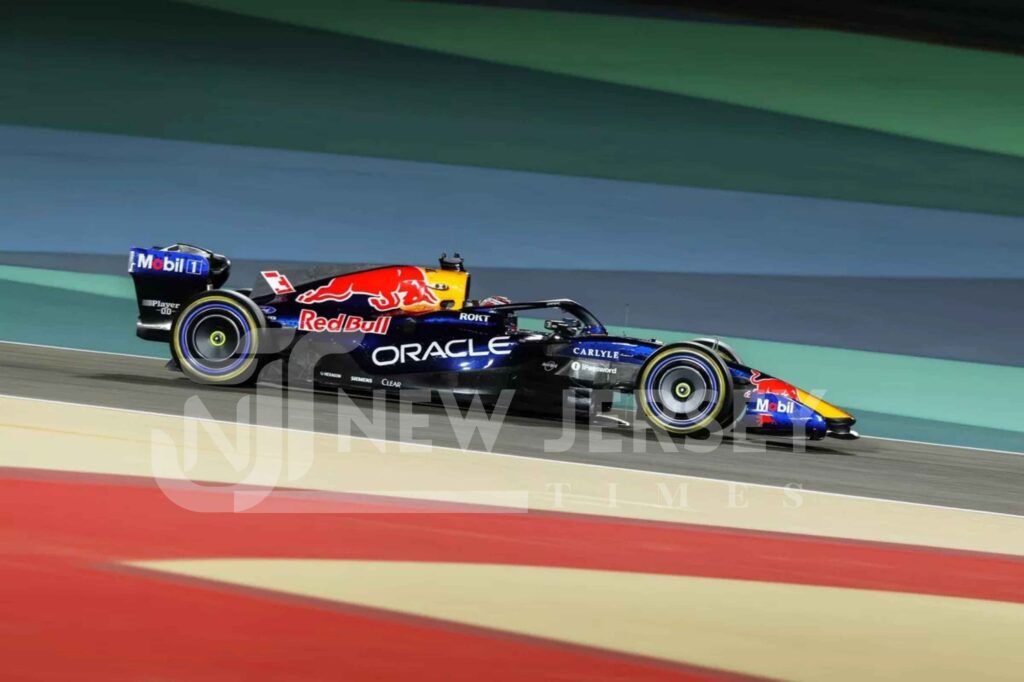
Red Bull showed flashes without showing solutions. Verstappen’s recovery from his opening lap spin to fifth was characteristically brilliant and quietly impressive. The car underneath him is not yet at the level it needs to be for a genuine championship challenge, though there are reportedly developments on the way that the team believes will change that picture.
In the Constructors’ Championship, Mercedes leads Ferrari by 68 points after four rounds. The Silver Arrows reportedly held their first major upgrade package back for Montreal on May 24, while most rivals brought significant developments to Miami during the unexpected mid-season break created by the cancellations of the Bahrain and Saudi Arabian races due to regional conflict. Whether that decision looks shrewd or conservative depends entirely on what happens in Canada.
He Is Not Getting Carried Away
Standing on the Miami Grand Prix 2026 podium in the thick Florida heat, Kimi Antonelli said what he always says after a win F1 2026 weekend delivers. He credited the team. He acknowledged the undercut strategy that swung the race in his favor at the precise moment it needed to. He admitted a small energy management error mid-race, described it plainly, and moved past it without drama or deflection.
When someone pushed him on the championship and what three consecutive wins from three consecutive poles actually means for the rest of the 2026 F1 season, he did not reach for the obvious answer. He did not talk about titles or history or records. He said what a driver who genuinely intends to be around for a long time says.
“This is just the beginning,” he said, from the sources. “The road is still long. We are working super hard and the team is doing an incredible job.”
Eighteen races remain in the 2026 F1 season. Circuits will come that suit other cars better than Miami suited Mercedes. Upgrades will land and shift the competitive order. Strategies will misfire at the worst possible moments. The weight of leading a world championship only gets heavier as the calendar builds toward its second half. All of that is real and all of it is coming.
But right now, in the first week of May, Kimi Antonelli has not lost a Formula 1 Grand Prix. Every time he has started from pole he has won. Every time the race has thrown chaos at him he has found a way through it cleanly and quickly. The Miami Grand Prix 2026 was the latest and perhaps most complete example of exactly that quality.
At 19, in his first season, against the best drivers on the planet, this is not looking like a fluke anymore. It stopped looking like a fluke somewhere around Japan. Now it is starting to look like something rarer and more interesting than that. It is starting to look like a pattern that nobody in the field has yet worked out how to break.
New Jersey Times Is Your Source: The Latest In Politics, Entertainment, Business, Breaking News, And Other News. Please Follow Us On Facebook, Instagram, And Twitter To Receive Instantaneous Updates. Also Do Checkout Our Telegram Channel @Njtdotcom For Latest Updates.

A Wall Street veteran turned investigative journalist, Marcus brings over two decades of financial insight into boardrooms, IPOs, corporate chess games, and economic undercurrents. Known for asking uncomfortable questions in comfortable suits.

A former college-level cricketer and lifelong sports enthusiast, Arun Upadhayay brings the heart of an athlete to the sharp eye of a journalist. With firsthand experience in competitive sports and a deep understanding of team dynamics, Arun covers everything from grassroots tournaments to high-stakes international showdowns. His reporting blends field-level grit with analytical precision, making him a trusted voice for sports fans across New Jersey and beyond.