
Joe Bugner, Heavyweight Boxer Who Twice Fought Muhammad Ali, Dies at 75
The former British, European, and Commonwealth champion, who went the distance with legends Muhammad Ali and Joe Frazier, has passed away in Australia.

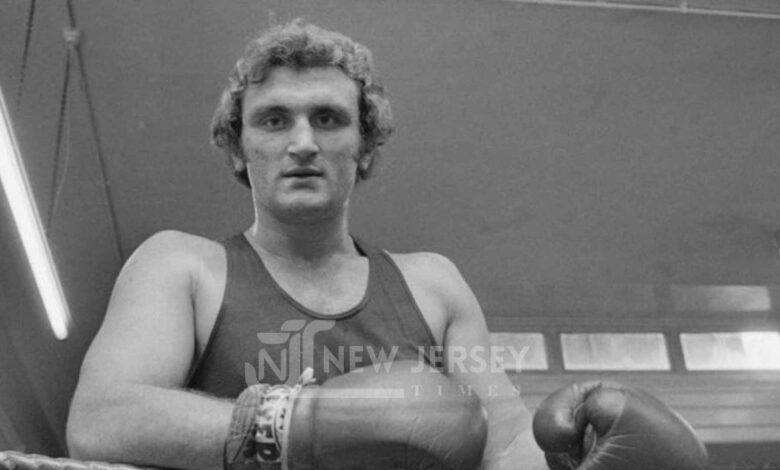
Brisbane, September 1 EST: The fight is over for Joe Bugner, the Hungarian kid who grew up in Britain, traded punches with giants, and spent a lifetime proving he could take whatever the world threw his way. He died Monday in a care home in Brisbane, Australia, aged 75. And make no mistake this wasn’t just another heavyweight gone. This was the man who stood in the ring with Muhammad Ali and Joe Frazier and never once blinked.


The Kid Who Took Cooper’s Crown
Bugner’s story was always bigger than boxing. A refugee from Hungary, running from Soviet tanks with his family, he landed in England and by his late teens was already banging his way up the ranks. Then came 1971, and the fight that changed everything his win over Henry Cooper for the British, European, and Commonwealth belts.
It should have been a coronation. Instead, it was a storm. The crowd booed him, pundits panned him, and Cooper was treated as the people’s champion even in defeat. Bugner won the titles but lost the public that night. For the rest of his British career, he fought not just opponents, but a wall of indifference.
Sharing the Ring With Legends
Here’s the thing a fighter is measured by who he fights, not just who he beats. And Bugner fought the best of them. In 1973, he went 12 hard rounds with Smokin’ Joe Frazier in London. No knockout, no collapse, just toe-to-toe with a man who broke opponents in half.
Then came Ali. Twice. First in Las Vegas in ’73, then again in Kuala Lumpur in 1975 for the world title. The results were the same Bugner lost on points. But those scorecards don’t tell the story. He absorbed Ali’s jabs, the showboating, the flurries, and he stayed on his feet. Ali himself, never one to waste praise, said Bugner was “hard to hit clean.” That’s no small badge of honor.
Think about it how many heavyweights can say they went the distance with both Ali and Frazier? That’s a club with only one member, and his name was Joe Bugner.
The Long Road, The Long Fights
Bugner’s record reads like a scrapbook of persistence, 83 professional bouts, 69 wins, 41 knockouts, 13 losses, and a draw. But numbers don’t capture the man’s stubborn streak. He kept coming back sometimes for money, sometimes for pride, always because the fight wasn’t finished for him.
By the 1990s, he’d shifted his career to Australia, winning the Australian heavyweight title in 1995 and, against all odds, the WBF title in 1998 at 48 years old. Most men his age were slipping into slippers. Bugner was still lacing up gloves.
A Fighter Beyond the Ropes
Bugner wasn’t just a boxer. He had cameos in films like Street Fighter, advised on Cinderella Man, and even braved the bugs and banter of reality TV in I’m a Celebrity…Get Me Out of Here! He was always game, always present, always willing to put himself out there.
But the later years weren’t kind. He battled financial problems and dementia, the kind of fights no one can win. Those struggles left scars that no cutman could patch.
Divisive, Durable, and Damn Tough
He was never fully loved in Britain. That’s just the truth. The Cooper fight haunted him, and fans never warmed to his cool demeanor. But talk to fighters and promoters, and you hear a different tune. Frank Warren called him a man who “went the distance with Ali and Frazier.” Frank Bruno said it flat out, “a sad day for boxing.”
Bugner’s legacy is grit. He may not have worn the crown for long, but he never gave it up easily. He was the man who kept standing, round after round, year after year, life blow after life blow.
The bell has rung for Joe Bugner, but his record lives forever. Not the wins, not the belts, but the fact that he stayed in the fight always.
New Jersey Times Is Your Source: The Latest In Politics, Entertainment, Business, Breaking News, And Other News. Please Follow Us On Facebook, Instagram, And Twitter To Receive Instantaneous Updates. Also Do Checkout Our Telegram Channel @Njtdotcom For Latest Updates.

A former college-level cricketer and lifelong sports enthusiast, Arun Upadhayay brings the heart of an athlete to the sharp eye of a journalist. With firsthand experience in competitive sports and a deep understanding of team dynamics, Arun covers everything from grassroots tournaments to high-stakes international showdowns. His reporting blends field-level grit with analytical precision, making him a trusted voice for sports fans across New Jersey and beyond.
- Arun Upadhayay
- Arun Upadhayay
- Arun Upadhayay
- Arun Upadhayay
- Arun Upadhayay
- Arun Upadhayay
- Arun Upadhayay
- Arun Upadhayay
- Arun Upadhayay
- Arun Upadhayay
- Arun Upadhayay
- Arun Upadhayay
- Arun Upadhayay
- Arun Upadhayay