Mercedes Halts U.S. EV Deliveries as Tax Credit Vanishes, Sales Stall
EQE and EQS models pulled from order books as Mercedes recalibrates electric strategy amid tepid U.S. demand

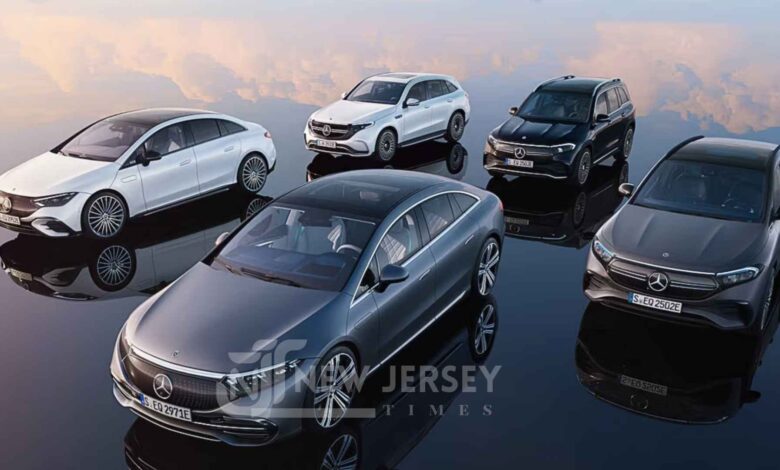
July 30 EST: Mercedes-Benz is putting its U.S. electric vehicle rollout on ice at least for now. The automaker confirmed Tuesday it will pause deliveries of its EQE and EQS models, stop taking new orders, and cut prices across the board. The decision comes after several quarters of flatlining demand, backed-up dealer lots, and the sudden loss of a key federal tax incentive that had kept some buyers in the game.


The move marks a sharp correction for Mercedes’ U.S. EV strategy, one that had aimed to go toe-to-toe with Tesla and BMW but instead found itself stuck with underwhelming sales and an overstock problem. With the wind of tax subsidies gone, the company is now shifting its focus to clearing inventory and recalibrating its product playbook.
Tax Policy Pulled the Rug Out
At the center of the reversal is the $7,500 federal EV tax credit, which was stripped away earlier than expected under a mid-July spending package signed by President Trump. Mercedes had leaned heavily on the subsidy to make its premium EVs pencil out for U.S. buyers especially models like the EQE sedan and EQS SUV, which can stretch well above $100,000.
When the incentive disappeared, so did much of the customer interest. Dealers began discounting EQ models by as much as $15,300, according to autoevolution, just to keep inventory moving. But with sales still sluggish, Mercedes made the call: shut the order books, cut sticker prices, and hit pause on new deliveries.
Production for the EQE and EQS lines in the U.S. will stop on September 1. Only the entry-level EQB SUV will remain in the lineup.
Deep Cuts Reflect Market Reality
Mercedes’ price adjustments weren’t subtle they were surgical. The 2026 EQE sedan and EQE SUV are being repriced down to roughly $66,100, a drop of 13% to 16% depending on trim. The EQS sedan was cut by about 4%, and the EQS SUV dropped a steep 14%, according to Car and Driver.
That’s not a growth strategy. It’s a liquidation signal.
“We are temporarily putting on hold order banks for EQ models in the U.S. to align with current market demand,” a Mercedes spokesperson said.
Translation: there’s too much product and not enough appetite. Dealers have been signaling the same thing for months. Posts on TikTok and comments picked up by Autoweek suggest a growing unease with the EQ lineup’s appeal. Design has been a sticking point many longtime buyers aren’t trading in their GLEs or S-Classes for the smooth, rounded shapes of the EQs.
Leadership Tries to Reframe the Narrative
Mercedes CEO Ola Kaellenius pushed back on the idea that this is a long-term retreat. In comments to Reuters, he argued that battery-electric vehicle adoption in the U.S. would continue to rise, just more slowly than initially projected.
But that optimism is now competing with hard numbers. Sales of the EQ lineup have underperformed relative to expectations. And Mercedes’ future product mix suggests a shift in emphasis. Between now and 2027, the company plans to launch 19 new gasoline and diesel models alongside 17 electric ones a portfolio that looks more hedged than high-voltage.
A Missed Bet in a Volatile Market
For all the EV hype of the past three years, the U.S. market is proving fickle. Consumers are still wary of range limits, patchy charging networks, and higher upfront costs especially now that the federal credit is gone.
Mercedes may have misjudged both the pace and the tone of the transition. In Europe, where incentives remain and infrastructure is more developed, EV sales have held steadier. But in the U.S., the combination of cooling demand and regulatory whiplash has forced even luxury brands to rethink their approach.
The upcoming electric CLA, set to debut later in 2025, will be an early test of whether Mercedes can find its footing in this space. Until then, the company is stepping back, selling down, and watching the market more closely than it did on the way in.
New Jersey Times Is Your Source: The Latest In Politics, Entertainment, Business, Breaking News, And Other News. Please Follow Us On Facebook, Instagram, And Twitter To Receive Instantaneous Updates. Also Do Checkout Our Telegram Channel @Njtdotcom For Latest Updates.

A Wall Street veteran turned investigative journalist, Marcus brings over two decades of financial insight into boardrooms, IPOs, corporate chess games, and economic undercurrents. Known for asking uncomfortable questions in comfortable suits.