
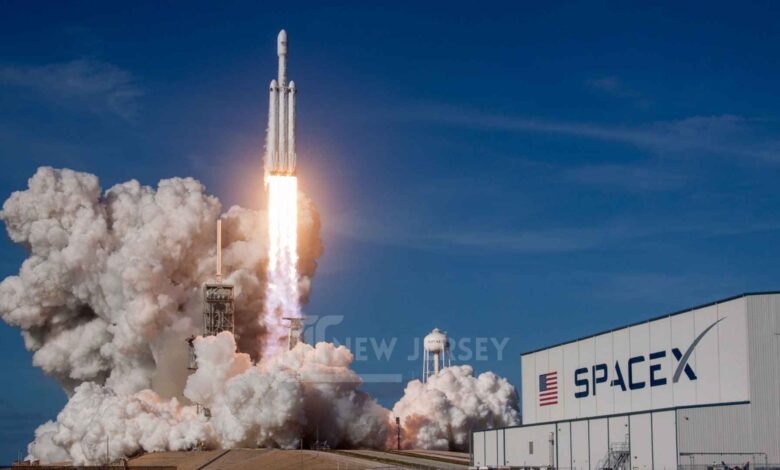
SpaceX suffered a major setback Tuesday night when one of its Starship upper stages exploded during a ground test in South Texas. The blast destroyed the test vehicle and damaged infrastructure at the Massey test site, forcing a pause in the company’s march toward its 10th integrated Starship launch.


The vehicle, known as Ship 36, was undergoing a standard propellant loading procedure when the explosion occurred at 11:02 p.m. Central Time. No ignition happened. Just fueling.
No injuries were reported, and safety teams were already on standby. But the explosion—loud enough to be heard miles away—now leaves SpaceX without a flight-ready upper stage and will almost certainly push back its next launch window.
Hardware Lost, Timeline Blown
Ship 36 wasn’t just another test article. It was widely believed to be the leading candidate for the next orbital Starship mission. Its destruction takes more than hardware off the table—it resets the clock on a milestone flight the company was already struggling to deliver.
The lower stage for Flight 10, known as Booster 11, remains at the launch site. But without a matching upper stage and a functional test stand, there’s no path forward in the immediate term.
This comes after three consecutive failed missions—Flights 7, 8, and 9—each ending in midair or post-stage separation failures. That’s four major Starship anomalies in under six months.
Regulatory Attention Incoming
Expect a response from the FAA. While this wasn’t a flight failure, any explosion at this scale triggers reporting and review. The Massey site is a key part of SpaceX’s ground infrastructure. If it’s offline for weeks, the testing cadence takes a hit.
The FAA may also use this moment to apply more pressure. SpaceX’s rapid development cycle has earned praise for innovation, but less so for procedural rigor. With NASA’s Artemis program relying on a future version of Starship to land astronauts on the Moon, delays and explosions carry national-level consequences.
Perception Risk Piling Up
SpaceX is still a private company, but that hasn’t insulated it from the court of public and partner opinion. Each failure—whether in flight or on the pad—adds weight to a perception problem: that the company is struggling to cross the threshold from prototype to reliable platform.
The market’s patience isn’t infinite. Starship is supposed to be the company’s next-generation architecture—a system that can carry cargo, astronauts, satellites, and even international payloads.
Right now, it’s still a rocket that can’t complete a mission.
Internally, SpaceX is almost certainly treating this like any other failure—log data, review damage, design a fix. But externally, confidence wavers every time flames shoot into the sky instead of progress.
What This Means for the Road Ahead
There’s no official timetable yet for the next attempt. It will depend on how fast SpaceX can determine what failed, clear the Massey stand for future tests, and prepare a new upper stage.
Until then, the Starbase site in Boca Chica is in pause mode. The booster stays grounded. Engineers go back to diagnostics. The FAA watches closely.
SpaceX has built a business on moving faster than legacy aerospace. That edge comes with risk. But as delays pile up and regulatory pressure mounts, the calculus starts to shift.
Speed can’t come at the expense of readiness. And readiness, for now, looks further away.
New Jersey Times Is Your Source: The Latest In Politics, Entertainment, Business, Breaking News, And Other News. Please Follow Us On Facebook, Instagram, And Twitter To Receive Instantaneous Updates. Also Do Checkout Our Telegram Channel @Njtdotcom For Latest Updates.

A Wall Street veteran turned investigative journalist, Marcus brings over two decades of financial insight into boardrooms, IPOs, corporate chess games, and economic undercurrents. Known for asking uncomfortable questions in comfortable suits.