
Table of Contents
Washington, July 5 EST: President Donald Trump marked Independence Day with a legislative crescendo that will shape the nation’s economic and political contours for a generation. The new law—branded by the White House as the “One Big, Beautiful Bill”—is less a conventional budget package and more a manifesto: a sprawling fusion of permanent tax relief, historic welfare retrenchment, and a militarized vision of federal power, all passed on a razor-thin congressional margin and signed under the roar of Air Force flyovers.


A Reagan-Sized Tax Cut With a Trump Twist
At its core, the legislation delivers what Trumpism has always promised to its base and backers: tax cuts that outlive the president himself. Nearly all the expiring provisions from the 2017 Tax Cuts and Jobs Act have been made permanent—cementing low corporate rates and high estate tax thresholds for the foreseeable future. But the bill doesn’t stop at reinforcing the old architecture.
Trump added populist trimmings with deductions for cash tips and overtime, and a tax break for buyers of American-assembled cars—a calculated nod to working-class voters in union-heavy states. These sweeteners are temporary, sunsetted in 2028, but politically timed to linger through the 2026 midterms and possibly the next presidential cycle.
Then there’s the Child Tax Credit, nudged up from $2,000 to $2,200 per child, and the creation of “Trump Accounts”—savings vehicles for children seeded with $1,000 from the government. To skeptics, these are crumbs. To strategists, they’re branding. Trump’s talent for symbolism has not dulled in his second term.
The Knife Beneath the Ribbon: Medicaid and SNAP Overhaul
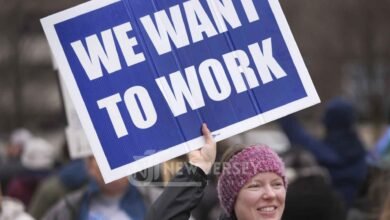
For every dollar of tax relief in the bill, there is a dollar clawed back from the poor. The Medicaid cuts—nearly $1 trillion over a decade—aren’t just accounting moves; they are philosophical statements. For the first time in the program’s 60-year history, recipients will be required to work 80 hours a month to maintain benefits. Co-pays, eligibility audits, and funding bans for providers like Planned Parenthood round out a welfare rollback unseen since the 1996 reforms under Clinton and Gingrich.
SNAP (food stamps) saw similar treatment: work mandates for adults 18 to 64, with states punished financially for administrative errors. As Democrats warn of looming hunger and lost healthcare for millions, Republicans argue it’s about restoring “dignity” and “personal responsibility.”
But dignity is doing heavy rhetorical lifting. The Congressional Budget Office estimates 10.9 million Americans could lose Medicaid coverage. That number, if realized, would represent the largest one-time removal from federal health rolls in U.S. history.
Guns, Walls, and Drones: Where the Money Goes
The bill is not purely a scalpel—it’s also a cannon. Defense spending sees an additional $150 billion, directed largely at drone fleets and shipbuilding. But the more politically charged expansion lies in immigration enforcement: a tenfold increase in ICE funding, surging from $10 billion to over $100 billion by 2029, paired with $70 billion for border fortification and new deportation targets of one million people annually.
This is not standard Republican border security. It is a vision of immigration as a national threat requiring militarized deterrence, executed through federal muscle. Civil liberties groups have already vowed legal challenges.
A Bonfire of the Green Incentives
Trump also used the bill to torch what remains of Biden’s climate agenda. The methane tax, once a centerpiece of the Inflation Reduction Act, is repealed. So are most clean-energy tax credits. Fossil fuel producers, meanwhile, win longer drilling permits and revived lease auctions.
It’s not subtle. In a single legislative strike, the U.S. has reversed a decade of energy policy trendlines. The market signal is clear: carbon is back.
Political Math and the Price of Power
The bill passed the House 218–214, with zero Democratic support and multiple Republicans voting “no” under pressure from hospital associations and state Medicaid directors. In the Senate, it squeaked through only with a tie-breaking vote from Vice President J.D. Vance, who framed the bill as “restoring the American promise.”
Yet the bill is wildly unpopular. According to Time Magazine, only 29% of Americans support it; a full 55% oppose. Among independents, the rejection rate is even higher. Even Fox News polling showed unease among Republican voters, particularly over the Medicaid cuts and rising national debt—which the bill grows by as much as $3.4 trillion over the next decade.
For all its ambition, this is a legislative gamble. Trump has dared Democrats to campaign in 2026 on restoring welfare benefits. And they will. Democratic strategists are already testing messaging that brands the bill a “Reverse Robin Hood Act”—taking from the poor to fund tax breaks for the well-off.
Still, history suggests Trump is betting on a broader calculus: that in moments of economic uncertainty and cultural anxiety, assertive power matters more than popular policy. He’s channeling Nixon’s silent majority, Reagan’s tax revolt, and his own 2016 formula. Whether it works in 2025 America remains to be seen.
Theater of the Signing
The July 4 signing was pure Trump: jets streaked overhead, military officers flanked the dais, and the crowd erupted as the president waved the freshly signed legislation. But the moment was quickly marred by controversy. Trump referred to certain bankers as “Shylocks”—an antisemitic slur that drew immediate condemnation from Jewish groups and prompted a half-hearted walk-back from the White House.
Even his victories, it seems, cannot escape his liabilities.
The Bill That Defines a Second Term
The One Big, Beautiful Bill is Trump’s new signature. It will define his second term more than any court ruling, scandal, or speech. It reshapes the tax code, shreds key pillars of the welfare state, reorients immigration policy toward hardline enforcement, and unapologetically reverses America’s climate commitments.
It is not bipartisan. It is not modest. It is, by design, a sharp stick in the eye of the political establishment. And for better or worse, it now defines what the modern Republican Party is willing to risk to govern by conviction.
New Jersey Times Is Your Source: The Latest In Politics, Entertainment, Business, Breaking News, And Other News. Please Follow Us On Facebook, Instagram, And Twitter To Receive Instantaneous Updates. Also Do Checkout Our Telegram Channel @Njtdotcom For Latest Updates.

A political science PhD who jumped the academic ship to cover real-time governance, Olivia is the East Coast's sharpest watchdog. She dissects power plays in Trenton and D.C. without bias or apology.