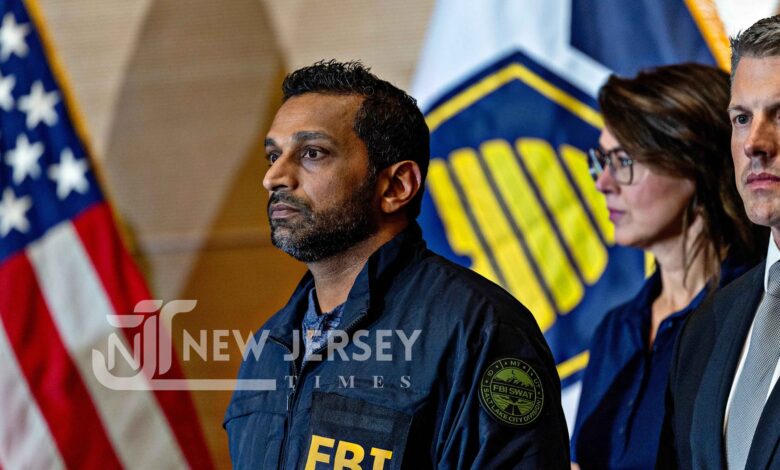
Trenton, May 13: Let’s be honest about what happened in that hearing room on Tuesday.


A sitting FBI director was asked, by a United States senator, whether Kash Patel had been so intoxicated on the job that his own staff had to physically break into his home to check on him.
That is not a normal Tuesday in Washington.
And yet there was Kash Patel, ninth director of the Federal Bureau of Investigation, sitting before the Senate Appropriations Subcommittee trying to justify a $12.53 billion budget request while simultaneously fielding questions about his drinking habits, his personalized bourbon collection, and whether the agents he fired were targeted for doing their jobs a little too well under a different president.
It was, in the most clinical sense possible, a lot.
What made it worse is that none of this exists in a vacuum. Kash Patel did not arrive at the FBI as a neutral appointment. He was hand picked by Trump, installed by the Trump administration to lead a bureau that the president had long viewed as a political enemy, and he has governed it accordingly since day one.
Tuesday was the day the consequences of that decision showed up in public, all at once, under oath.
Nobody Came Here to Talk About the Budget
Kash Patel opened the way these things usually open.
He talked numbers. A 20 point drop in the national murder rate. A 31 percent jump in fentanyl seizures. Eight of the FBI’s ten most wanted fugitives captured on his watch. He sounded, for about four minutes, like a man who had his talking points locked and was going to get through this thing cleanly.
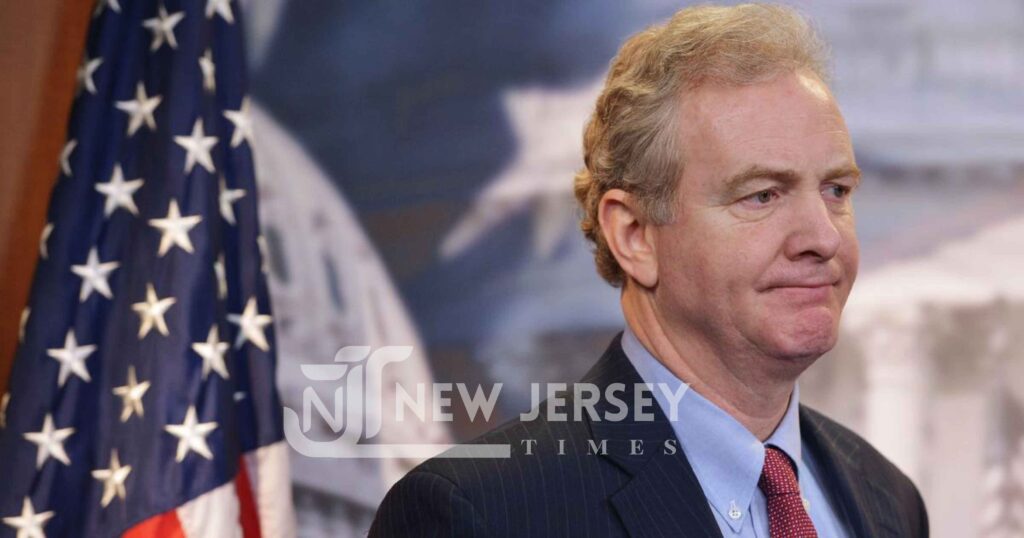
Then Sen. Chris Van Hollen of Maryland started talking.
Van Hollen is the ranking Democrat on the subcommittee, which means it is his job to ask the uncomfortable questions. On Tuesday he clearly had a list, and he was not skipping any of it.
He told Kash Patel, according to CNN and ABC News, that he did not care one bit about the director’s personal life. Which, as anyone who has ever heard that particular sentence can tell you, is always immediately followed by exactly the thing the speaker claims not to care about.
“I don’t give a damn what you do on your own time and your own dime,” Van Hollen said, “unless and until it interferes with your public responsibilities.”
And there it was.
The Atlantic Story, and What It Actually Said
A few weeks back, reporter Sarah Fitzpatrick at The Atlantic published a piece that, by any measure, was damaging to Kash Patel.
She talked to dozens of people inside and around the bureau. What they told her, collectively, was that Kash Patel had alarmed colleagues with episodes of excessive drinking and periods where he simply was not reachable. Not late to a meeting, not slow to return calls. Gone.
Van Hollen leaned into it hard at Tuesday’s hearing.
He cited reports, as covered by NBC News, that Kash Patel’s staff had been forced to physically break into his home at some point because he was too incapacitated to come to the door himself.
He said, directly to Kash Patel’s face, that a director who shows up drunk and hungover is a director who cannot do the job.
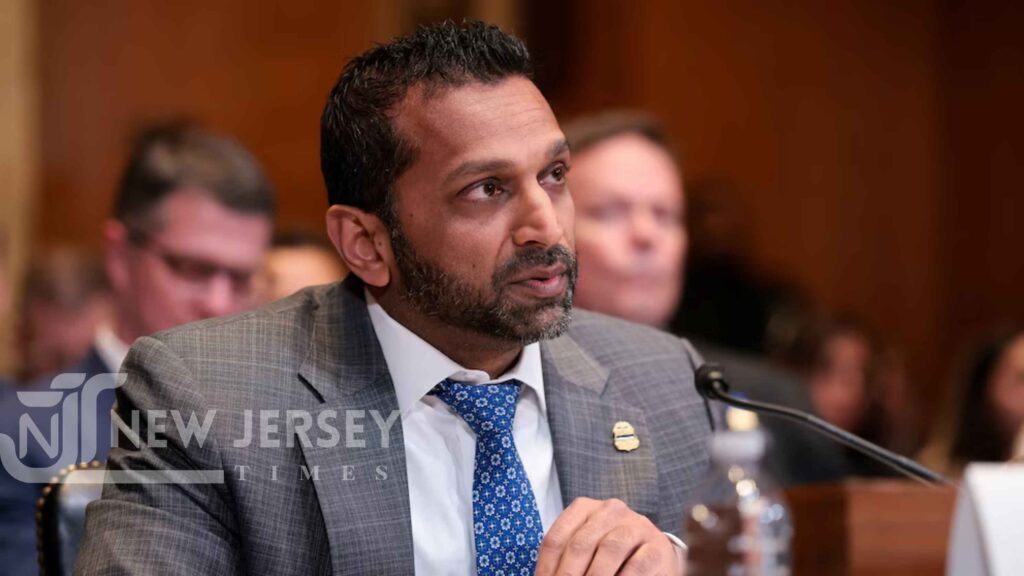
Kash Patel’s response was fast and loud. He called it a “total farce.” He told Van Hollen he would not sit there and be tarnished by what he considered baseless garbage. Per the Associated Press and PBS NewsHour, he was emphatic, categorical, and clearly furious.
Fine. People deny things. That is not unusual.
What was unusual was what came next.
Kash Patel challenged Van Hollen to take an alcohol use disorders test. Right there. On the record. In the Senate.
“I’ll take any test you’re willing to take,” he said, per Spectrum News.
And Van Hollen said yes.
So now two of the most powerful people in the American law enforcement oversight ecosystem have mutually agreed to submit to sobriety screenings. Because that is where we are.
The Bourbon Bottles With His Name On Them
Before the hearing even happened, Kash Patel had already been in a war with The Atlantic for weeks.
He filed a $250 million defamation lawsuit against the magazine and against Fitzpatrick personally, as reported by CNN Business, calling the story a malicious hit piece designed to destroy him.
The Atlantic did not blink. They called the lawsuit meritless and said they would fight it all the way.
Then, per Poynter, Fitzpatrick published a follow up piece.
This one was about the bourbon.
Specifically, that Kash Patel reportedly travels with custom engraved bottles of Woodford Reserve that say “Kash Patel FBI Director” on them, feature an FBI shield, and carry the number nine, because he is the ninth director in the bureau’s history. Some bottles, according to sources close to the matter, carry his signature as well.
The branding, “Ka$h Patel” with a dollar sign where the S should be, is something career agents at the bureau have apparently found somewhere between baffling and insulting.
This is the context in which Kash Patel was trying to convince a Senate subcommittee that the drinking allegations were completely made up.
He Fired the Iran Experts. Days Before the Iran War.
Here is the part of this story that keeps getting buried under the more colorful details, and it really should not be.
As first reported by CNN and confirmed by CBS News, Kash Patel fired around a dozen agents, analysts, and staff from a unit called CI 12, an elite counterintelligence team that specializes in tracking threats from Iran.
He fired them days before the United States launched military strikes against Iran, in an operation reportedly called Operation Epic Fury.
The reason Kash Patel fired them had nothing to do with anything they did wrong at work.
Every single one of them had, at some point, worked on the federal investigation into Trump’s handling of classified documents at Mar a Lago. That was the offense. Working a legitimate federal case that the Trump administration did not like.
CI 12 was not some low stakes administrative office. These were the people tracking assassination plots against American officials. They had spent years building expertise on how Iran operates, how it recruits, how it hides its fingerprints. Former Secretary of State Mike Pompeo, former National Security Adviser John Bolton, and Trump himself had all, at various points, been targets of Iranian plots that units like this one existed to disrupt.
And Kash Patel gutted it, right before a war, because the people in it had done their jobs during the previous administration.
One former senior DOJ official put it plainly to CNN, on condition of anonymity: “If you lose half your capacity, you lose half your ability. That in itself is a reason to be concerned.”
That is an understatement, but it will do.
The Sticky Note That Started a Press Crackdown
There was one more thread Van Hollen pulled on Tuesday, and it deserves more attention than it has received.
As reported by CNN and The Wall Street Journal, the Justice Department issued subpoenas to journalists covering the Iran war, trying to force them to give up their confidential sources.
The whole thing reportedly started because Trump handed a stack of printed news articles to acting Attorney General Todd Blanche with a handwritten sticky note on top.
The note said “treason.”
One word. Handwritten. On a sticky note. That is how the Trump administration initiated a federal press crackdown.
Blanche’s office moved on it immediately.
PEN America’s journalism program director Tim Richardson called it out directly, saying per Poynter that Kash Patel has no business using the bureau’s investigative power to go after a journalist who was examining his own conduct. He is right.
Kash Patel, for his part, told Sen. Patty Murray of Washington at the hearing that the FBI is not investigating any journalists, has never investigated any journalists, and would not investigate any journalists. Murray did not appear to find this fully satisfying. She was not alone.
The Republicans Were There Too, Technically
Republican members of the subcommittee were present throughout the hearing.
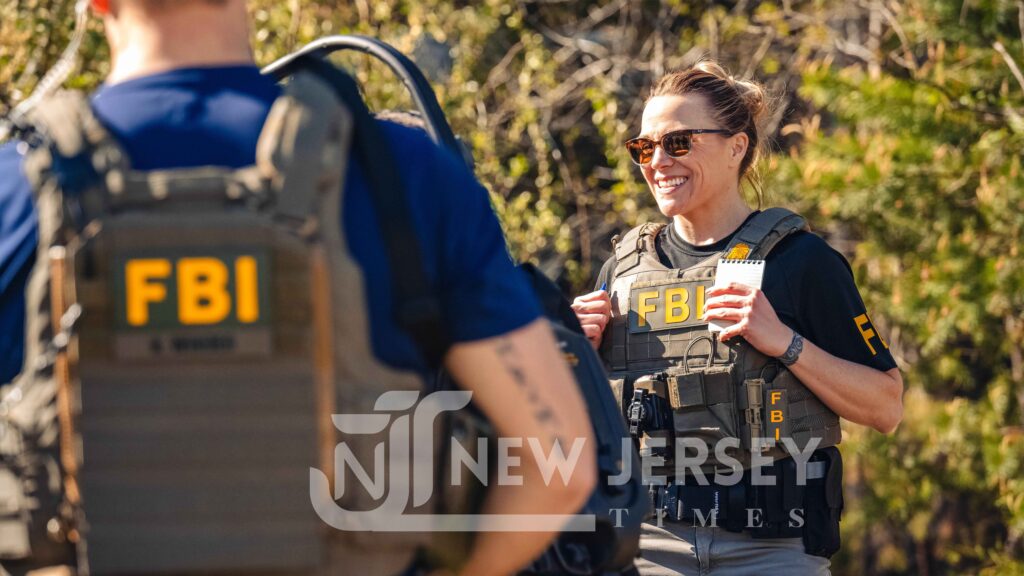
They praised the FBI’s drug seizure numbers. They nodded along to Kash Patel’s budget justifications. They did not, for the most part, engage seriously with anything their Democratic colleagues raised.
This is not surprising. It is just worth noting.
Because the decisions Kash Patel has made under the Trump administration, gutting counterintelligence teams, reportedly ordering polygraphs on his own staff to find leakers, suing journalists, firing agents for past case involvement, are not small things. They are the kind of decisions that, under different political circumstances, would have consumed weeks of bipartisan hearings.
For now they are Democratic talking points, and that is largely where they stay.
Van Hollen was not understated after the hearing ended. In a statement to NBC News he said: “If public reporting on his drinking were not enough to call into question his fitness to serve as FBI Director, his behavior today absolutely did. He’s a disgrace to the office he holds.”
What Any of This Actually Means
Kash Patel is still the director. He will almost certainly still be the director tomorrow.
But there is a version of this story where the personal conduct questions, as loud as they are, end up being the least important part of what is happening at the FBI right now under the Trump administration.
The counterintelligence firings are real. The journalist subpoenas are real. The reported polygraphs of his own staff are real, or at least reported by outlets that tend to be accurate about these things, whatever Kash Patel says to the contrary.
The national security apparatus that is supposed to protect American officials from foreign assassination plots is operating with fewer experienced people than it had a year ago, because those people worked a case that Trump did not like.
As reported by multiple outlets, even Trump has reportedly grown impatient with Kash Patel privately, irritated by the sight of his FBI director celebrating with beers at the Olympics in Italy while claiming to be on official government business.
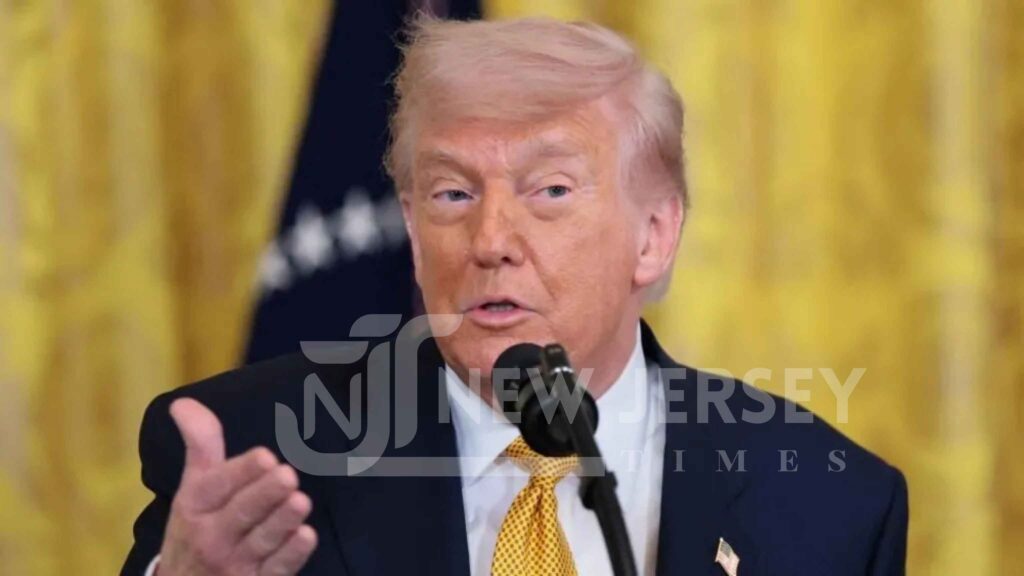
Trump does not drink. He has spoken publicly about his late brother’s battle with alcoholism. The optics did not land well inside the Trump administration, and sources suggest the frustration has been building for some time.
Still, Kash Patel has the job. And the job, at the moment, looks like this.
Q: What triggered all of this at the May 12 hearing?
A budget hearing that was supposed to be procedural turned into an open confrontation after Sen. Chris Van Hollen raised The Atlantic investigation alleging Kash Patel had shown up to work impaired, missed unexplained stretches of time, and left colleagues seriously concerned about his fitness to lead the bureau.
Q: What exactly did The Atlantic report about Kash Patel?
Reporter Sarah Fitzpatrick spoke with dozens of people connected to the FBI and reported episodes of excessive drinking, erratic behavior, and unexplained absences. Kash Patel denies all of it and has filed a $250 million defamation lawsuit against the magazine. The Atlantic says it stands by every word.
Q: What is the CI 12 situation, and why does it matter?
CI 12 is an elite FBI counterintelligence unit tracking threats from Iran. According to CNN and CBS News, Kash Patel fired around a dozen of its members days before the U.S. launched strikes against Iran, purely because they had worked on the Mar a Lago documents investigation under the previous administration.
Q: Did Kash Patel order polygraphs for his own staff?
According to NBC News and The Washington Post, Kash Patel ordered lie detector tests for more than two dozen staff members and security detail personnel after The Atlantic story broke. Kash Patel denied this at Tuesday’s hearing. The accounts directly contradict each other and remain unresolved.
Q: What is the sticky note story about?
As reported by CNN and The Wall Street Journal, Trump handed acting Attorney General Todd Blanche a pile of news articles with a handwritten sticky note reading “treason,” which led to DOJ subpoenas targeting journalists covering the Iran war. The Trump administration has defended the move. Press freedom organizations have called it an assault on the free press.
Q: Is Kash Patel’s position safe within the Trump administration?
As of this reporting, yes. But multiple outlets note that Trump has grown privately frustrated with Kash Patel, particularly over photographs of him drinking at the Olympics in Italy during official government travel. The Trump administration has not publicly signaled any personnel change, but the political ground is reportedly shifting.
Article Summary
On May 12, 2026, what should have been a routine FBI budget hearing turned into one of the more extraordinary confrontations Capitol Hill has seen in recent memory, with Kash Patel fighting off drinking allegations, defending the firing of an elite Iran counterintelligence team days before a war, and denying he ordered polygraphs on his own staff to root out leakers.
The deeper story is about an institution under real strain, where Kash Patel and the Trump administration have consistently prioritized political loyalty over national security capacity, and where the question of whether the FBI can function independently from the White House is no longer theoretical.
New Jersey Times Is Your Source: The Latest In Politics, Entertainment, Business, Breaking News, And Other News. Please Follow Us On Facebook, Instagram, And Twitter To Receive Instantaneous Updates. Also Do Checkout Our Telegram Channel @Njtdotcom For Latest Updates.

A Wall Street veteran turned investigative journalist, Marcus brings over two decades of financial insight into boardrooms, IPOs, corporate chess games, and economic undercurrents. Known for asking uncomfortable questions in comfortable suits.

A political science PhD who jumped the academic ship to cover real-time governance, Olivia is the East Coast's sharpest watchdog. She dissects power plays in Trenton and D.C. without bias or apology.