
Washington, December 6 EST: What unfolded at the Kennedy Center on Friday night was supposed to project calm, ceremony, and the easy glow of international harmony. Instead, once FIFA announced that Donald J. Trump had been chosen as the first recipient of its new Peace Prize Football Unites the World, the atmosphere flipped. The room stayed polished; the politics did not.

FIFA only revealed the prize a month ago, on November 5, describing it as an annual recognition for individuals whose actions advance peace. The framing felt lofty for an organization known mostly for stadium bids, broadcast rights, and the occasional governance scandal. Still, Gianni Infantino positioned the award as part of a broader identity shift: football, he said, should highlight leaders who push the world toward stability.
That tone didn’t quite survive the evening.
Trump Receives The Medal Amid A Carefully Choreographed Display
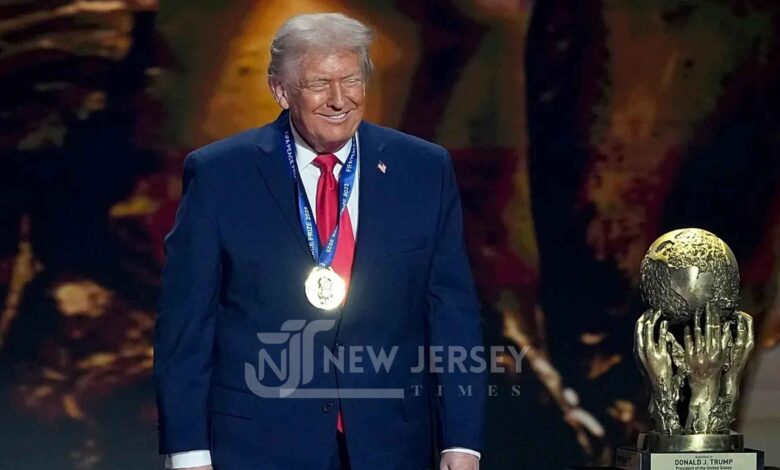
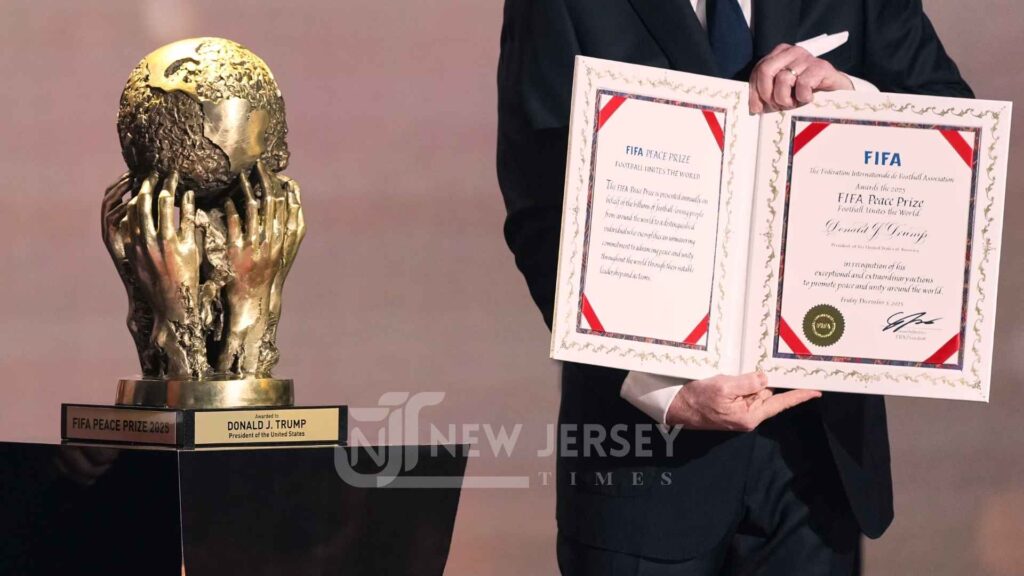
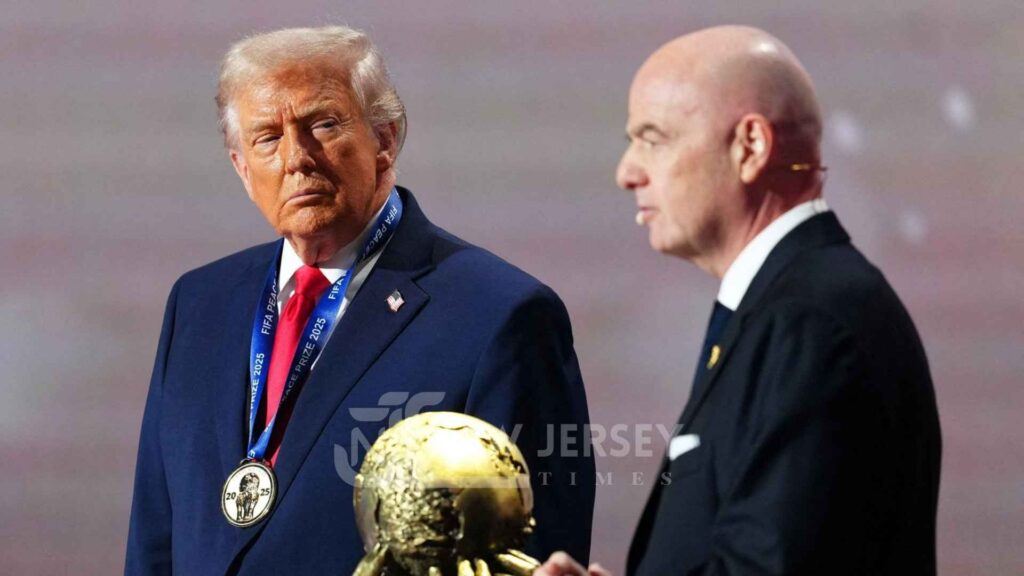
As the event moved into its final act, Trump stepped forward to accept a medal, a certificate, and a gold-globe trophy held by sculpted hands. The moment, reported by Reuters, was wrapped in stage lighting and orchestral flourishes, the sort of production FIFA usually reserves for a World Cup opening ceremony.
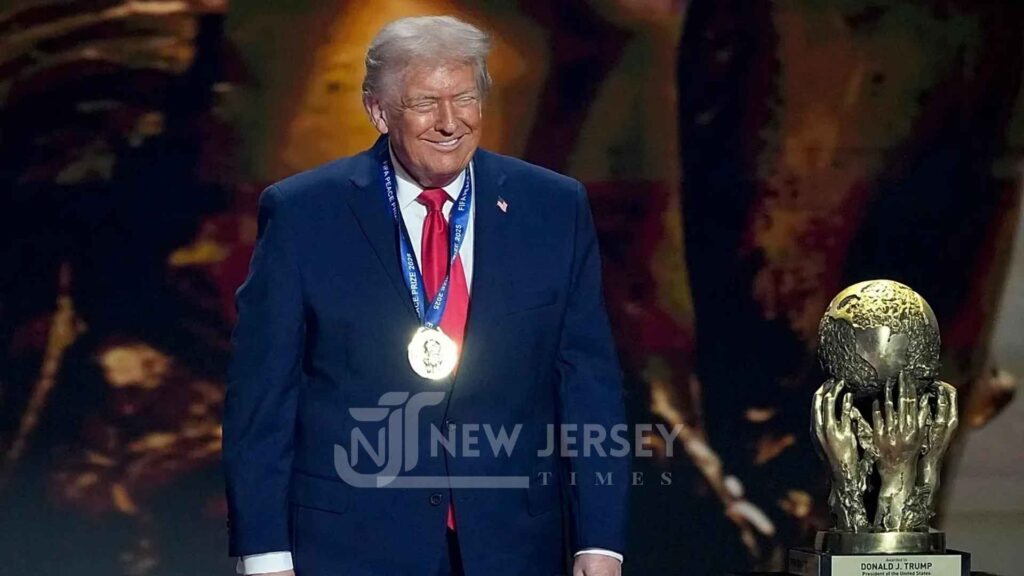
Trump called the recognition “one of the greatest honours of my life,” folding the moment into a narrative of personal diplomacy. He listed conflicts he believed he had helped settle, presenting the award almost as confirmation of his international instincts. The reaction in the room mixed into a single indistinct sound: applause, yes, but also a hesitancy that hung for a few seconds before the next transition onstage.
A Collision Between FIFA’s Rhetoric And Its Realities
Outside the building, criticism was faster and much more direct. The Guardian described the presentation as “gaudy” and “gauche,” noting that the ceremony looked built around Trump rather than around the sport. Reporters pointed out that FIFA often insists it avoids political endorsements. Yet here it was, front and center, handing a peace prize to a sitting U.S. president.
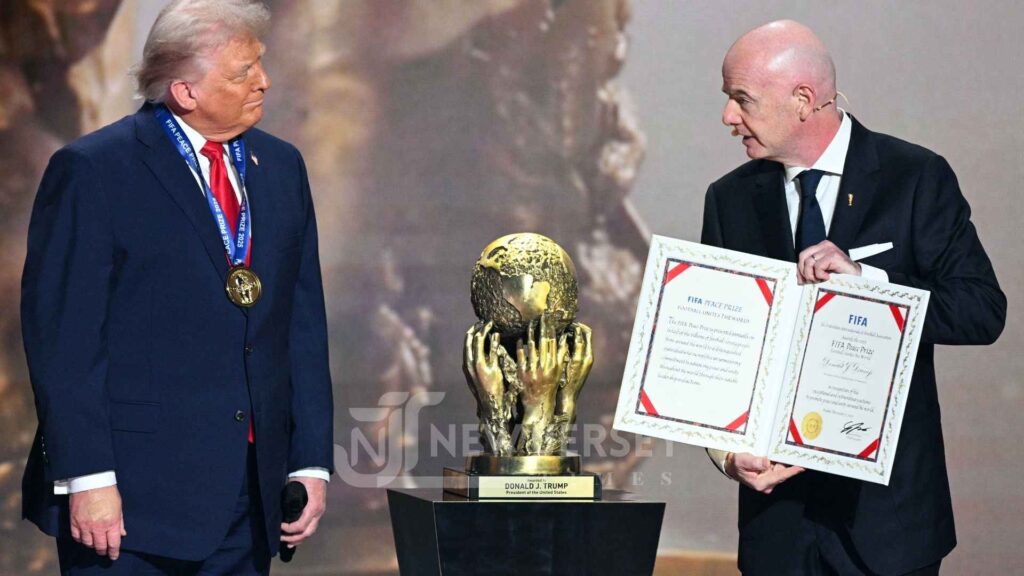
Materials compiled on Wikipedia only reinforced the tension: the prize was meant to symbolize football’s contribution to unity. Now, instead of consensus, it had delivered a political lightning rod. Even some football officials privately wondered how a group that penalizes players for making political statements ended up creating an honor that carries unmistakable geopolitical weight.
Human Rights Watch Asks Questions FIFA Won’t Answer
According to Al Jazeera, Human Rights Watch immediately requested key information: the names of the nominees, the selection criteria, and the identities of the judges. As of Saturday morning, no reply had surfaced. The absence of even a basic explanation has fueled speculation that the process may have involved a very small circle of insiders.
There is no public evidence of alternative candidates. No short list. No background rationale. Just the polished result onstage, which left many observers trying to reverse-engineer how the decision had been made.
FIFA Stands Firm And Signals No Regret
Infantino, quoted in Inside FIFA’s official release, defended the award by returning to safe terrain: football can bridge divides, and those who contribute to peace should be recognized. He reiterated that the Peace Prize will be a yearly fixture, not a one-off gesture. His comments suggested no hint of second thoughts, despite the criticism that arrived within minutes of the announcement.
Still, it’s difficult to ignore the political reality surrounding this decision. The timing, the location, the recipient, and the global platform of the World Cup created a spotlight wider than FIFA may have expected. And unlike a VAR dispute or a scheduling controversy, this is not a story that will dissolve after a referee’s explanation.
A Worldwide Response That Refuses To Settle
Early commentary from Fortune and the Financial Times described the moment as risky for FIFA, especially on the eve of a World Cup hosted by the United States, Canada, and Mexico. In some quarters, the award was welcomed as overdue recognition of Trump’s foreign engagements. In others, it was read as a pointed political choice that could complicate FIFA’s standing with member federations.
What has become clear is that the reaction is fractured. Some South American commentators shrugged at the whole thing, calling it typical FIFA pageantry. Several European analysts were openly baffled. In parts of Africa and Asia, early coverage barely registered the story at all. The unevenness of the global response has made the controversy harder to categorize, which in turn has made it harder for FIFA to contain.
The Prize’s Future Now Hangs In The Balance
Whether the FIFA Peace Prize becomes a respected institution or a short-lived curiosity will depend on what FIFA does next. If the organization keeps its selection process opaque, civil-society groups may continue pressing for transparency. If future honorees trigger similar uproars, the award could become a recurring political storm rather than a unifying gesture.
For now, FIFA appears determined to move forward. But the organization may have discovered, unintentionally, the limits of declaring itself apolitical while also trying to play a meaningful role in global diplomacy. The next award, one year from now, will reveal whether Friday night was a new tradition’s shaky beginning or its defining misstep.
Either way, the aftershocks of this week’s decision are unlikely to fade quickly.
New Jersey Times Is Your Source: The Latest In Politics, Entertainment, Business, Breaking News, And Other News. Please Follow Us On Facebook, Instagram, And Twitter To Receive Instantaneous Updates. Also Do Checkout Our Telegram Channel @Njtdotcom For Latest Updates.

A former college-level cricketer and lifelong sports enthusiast, Arun Upadhayay brings the heart of an athlete to the sharp eye of a journalist. With firsthand experience in competitive sports and a deep understanding of team dynamics, Arun covers everything from grassroots tournaments to high-stakes international showdowns. His reporting blends field-level grit with analytical precision, making him a trusted voice for sports fans across New Jersey and beyond.
- Arun Upadhayay
- Arun Upadhayay
- Arun Upadhayay
- Arun Upadhayay
- Arun Upadhayay
- Arun Upadhayay
- Arun Upadhayay
- Arun Upadhayay
- Arun Upadhayay
- Arun Upadhayay
- Arun Upadhayay
- Arun Upadhayay
- Arun Upadhayay
- Arun Upadhayay
- Arun Upadhayay
- Arun Upadhayay
- Arun Upadhayay
- Arun Upadhayay
- Arun Upadhayay
- Arun Upadhayay
- Arun Upadhayay
- Arun Upadhayay
- Arun Upadhayay

A political science PhD who jumped the academic ship to cover real-time governance, Olivia is the East Coast's sharpest watchdog. She dissects power plays in Trenton and D.C. without bias or apology.
- Olivia Mathers
- Olivia Mathers
- Olivia Mathers
- Olivia Mathers
- Olivia Mathers
- Olivia Mathers
- Olivia Mathers
- Olivia Mathers
- Olivia Mathers
- Olivia Mathers
- Olivia Mathers
- Olivia Mathers
- Olivia Mathers
- Olivia Mathers
- Olivia Mathers
- Olivia Mathers
- Olivia Mathers
- Olivia Mathers
- Olivia Mathers
- Olivia Mathers
- Olivia Mathers
- Olivia Mathers