
Kylie Jenner and Timothée Chalamet Ignite Marty Supreme Premiere in Bold Coordinated Orange Looks
The couple’s striking Chrome Hearts ensembles turned the Los Angeles debut into a red carpet spectacle and intensified the conversation around their relationship.


Los Angeles, December 9 EST: Kylie Jenner and Timothée Chalamet didn’t simply walk the carpet at the Marty Supreme premiere on Monday night. They engineered it. Their synchronized entrance, dressed in identical shades of blistering orange, quickly became the only story anyone was talking about at the LA debut of the holiday release.


A High-Visibility Entrance That Shifted the Night’s Energy
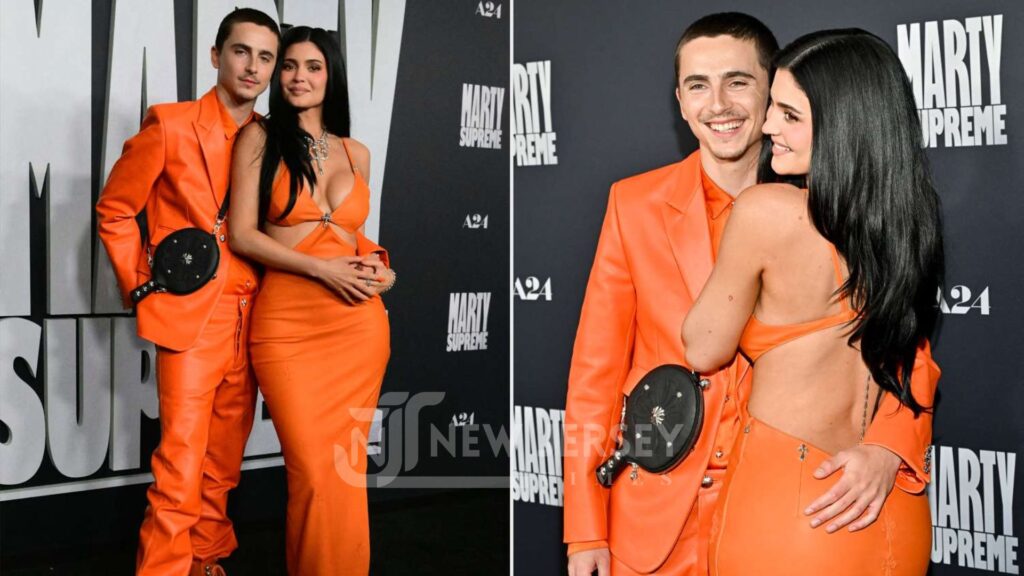
Photographers had been shouting for Chalamet long before he arrived, but the tenor changed the second he stepped out in a Chrome Hearts-designed leather suit the color of a traffic cone at noon. As People reported, he paired the tailored jacket with a silk shirt in the same hue and carried a black ping-pong paddle case, a tongue-in-cheek nod to his character’s sport in the film. The accessory was small, but it was the kind of detail that signaled Chalamet knew exactly how much attention would land on him.
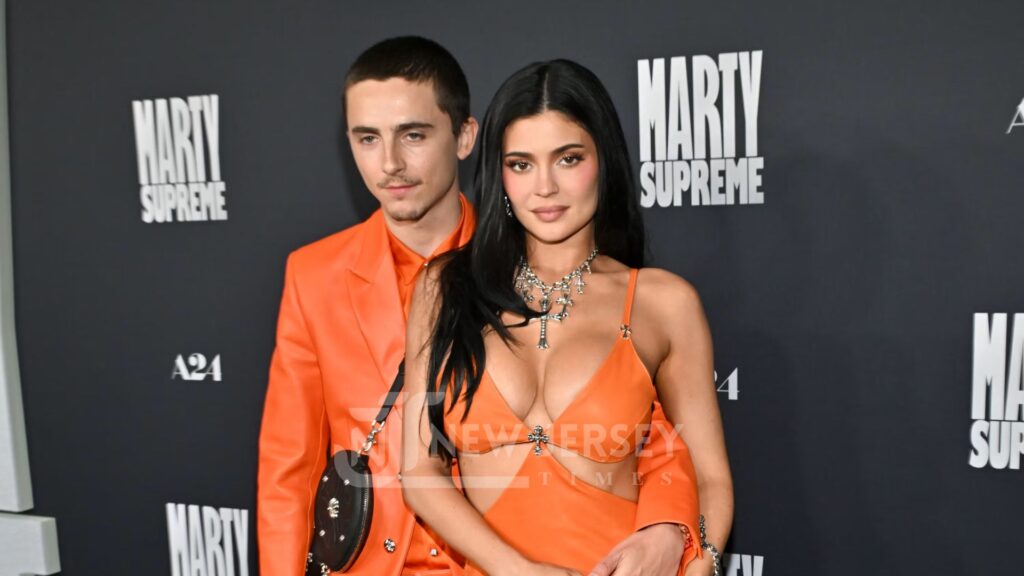
Seconds later, Jenner emerged in a floor-length orange gown that played with negative space through deep cutouts and a plunging neckline secured by chrome-toned crosses. E! Online noted that she matched the dress with orange-washed makeup and equally bold accessories, giving her a sharp, sculptural silhouette that contrasted Chalamet’s more kinetic look. Together they appeared less like a couple stumbling into a coordinated moment and more like two performers fully committed to a shared concept.
Why Their Appearance Hit So Hard
On its own, the fashion statement would have been enough to dominate the press line. But the timing gave the moment extra charge. For weeks, social media had been mulling over rumors that the pair had quietly split. None of the reporting was solid, but the absence of joint public appearances made the speculation loud enough to stick.
Mandatory, surveying the reaction across gossip circles, suggested the coordinated orange might be read as a public rebuttal to that swirl of chatter. Still, in person, the two didn’t look like they were trying to prove anything. They moved with the casual rhythm of people accustomed to scrutiny, exchanging brief, private glances that didn’t feel staged for the cameras. The subtext was simple: whatever their status may be, they were showing up together.
Fitting Into the Larger Arc of Marty Supreme’s Rollout
The film’s marketing campaign has been unusually textured for a major holiday release. Wikipedia’s production notes outline how the movie has leaned on neon-forward visuals, character-driven merch drops, and unexpected styling choices that give the promotion the feel of a subculture rather than a studio product. Chalamet’s paddle case falls squarely into that lineage.
This premiere wasn’t their first shared stop connected to the film. According to ELLE, Jenner and Chalamet appeared together in May at the 70th David Di Donatello Awards in Rome, marking their first formal event as a pair. Later in the year, People reported that Jenner was present backstage when the New York Film Festival surprised audiences with an early, unannounced showing of Marty Supreme. Her attendance then, like now, fueled online investigation into just how tightly their personal dynamic overlaps with Chalamet’s professional orbit.
A Red Carpet Overshadowed by Its Own Spectacle
If Monday’s event proved anything, it was how quickly a high-profile couple can redirect the conversation around a major release. Reporters arrived expecting to probe the film’s themes and its December 25 opening. Instead, the evening became an unspoken referendum on the couple’s chemistry and what the coordinated orange might signify.
The coverage reflected that pivot. InStyle zeroed in on Jenner’s architectural dress, while Harper’s Bazaar highlighted the symmetry between their ensembles, framing the moment as a deliberate aesthetic partnership rather than a coincidence. Within minutes, the images started circulating widely, pushing the film’s cast interviews into the background.
Still, this isn’t necessarily a loss for the studio. Celebrity coordination of this scale tends to generate attention that paid campaigns rarely achieve. And given how much Marty Supreme relies on performance energy and visual boldness, the couple’s appearance ended up reinforcing the film’s larger cultural pitch.
Why This Moment Will Stick
Part of the staying power comes from scarcity. Jenner and Chalamet are not constant presences on carpets together, which makes each joint outing feel like a small cultural event. Every decision becomes interpretive fodder: the hand placements, the gaze direction, even the color theory.
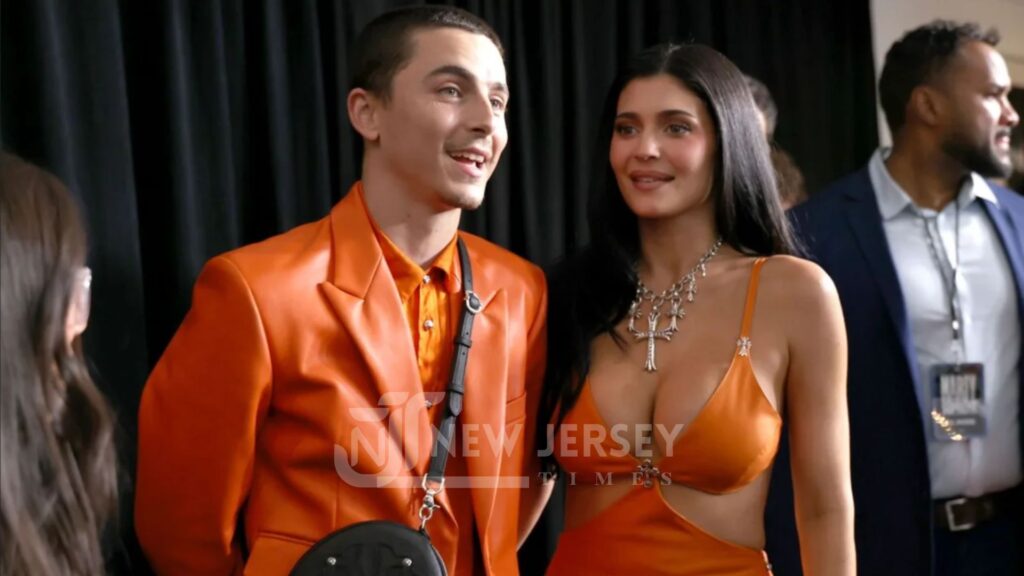
Their choice of Chrome Hearts also added an edge. The brand’s metal-forward aesthetic isn’t typical red carpet fare and helped create a mood somewhere between glam and street culture, which aligns well with Chalamet’s public lean toward fashion experimentation.
For now, whether the orange looks were a playful gesture, a strategic promotional decision, or a quiet comment on the swirling rumors remains unclear. But what is clear is that the appearance landed with uncommon precision, recalibrating both their public narrative and the early conversation around one of the season’s most anticipated films.
The Bottom Line
Jenner and Chalamet didn’t just coordinate an outfit; they coordinated the narrative. And in a premiere season where most carpets blur into each other, that kind of clarity travels fast. Whatever noise surrounds them next, this appearance will stand as one of the few Hollywood moments this year that felt genuinely orchestrated, visually risky, and unmistakably intentional.
New Jersey Times Is Your Source: The Latest In Politics, Entertainment, Business, Breaking News, And Other News. Please Follow Us On Facebook, Instagram, And Twitter To Receive Instantaneous Updates. Also Do Checkout Our Telegram Channel @Njtdotcom For Latest Updates.

Korean-American minimalist living in Hoboken, Ren blends aesthetic writing with deep dives into wellness, home design, urban routines, and the pursuit of the good life. Think Monocle meets MindBodyGreen.