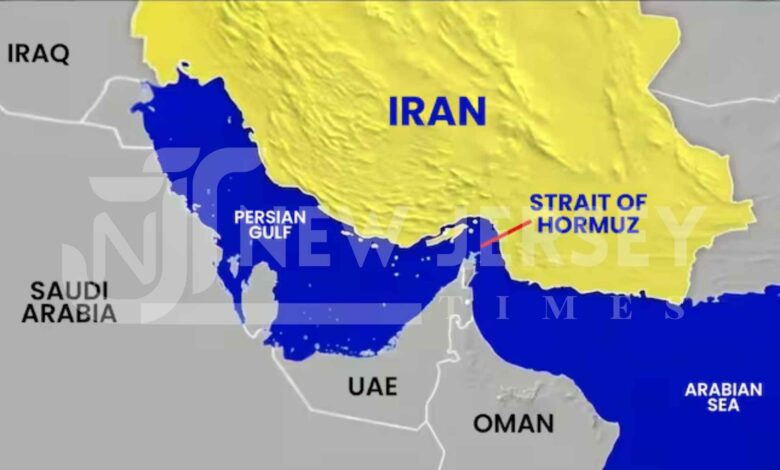
Washington, D.C., May 4: The United States military launched one of its most consequential operations in the Middle East in decades on Monday, as U.S. Central Command formally kicked off “Project Freedom.” The mission aims to guide stranded commercial vessels through the Strait of Hormuz a waterway that has been effectively sealed off from global shipping since February 2026. The Iran war 2026 has fundamentally reshaped energy markets, global shipping lanes, and the balance of power across the entire Persian Gulf region.


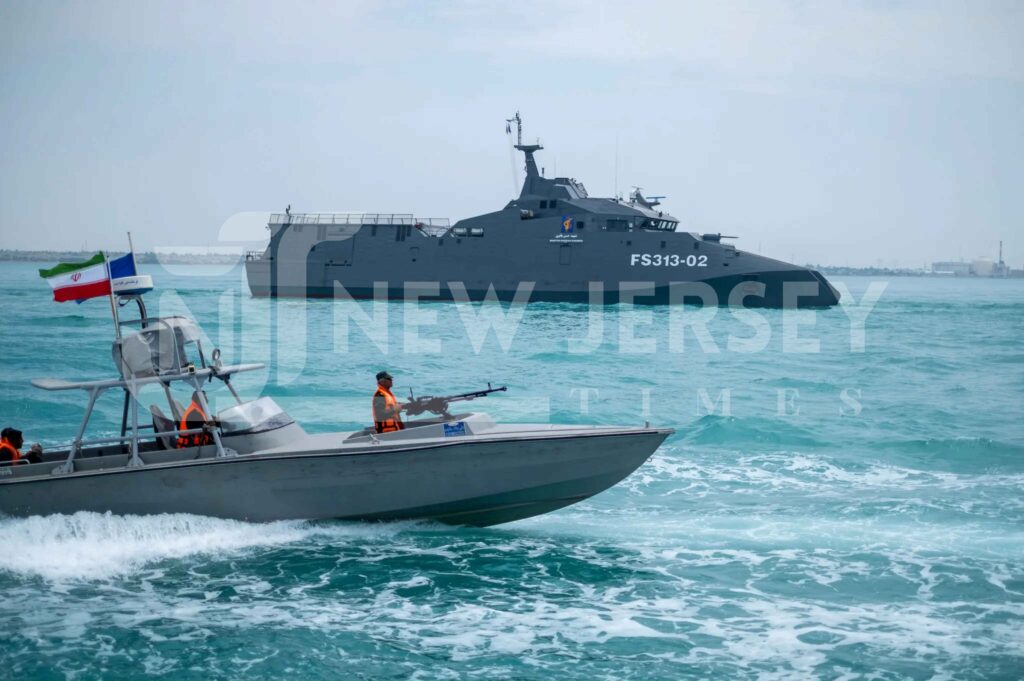
Within hours of the operation going live, the Iran U.S. conflict escalated sharply. According to Al Jazeera, citing IRGC affiliated state media, two missiles struck a U.S. Navy vessel near Jask Island after it reportedly ignored warnings from the Islamic Revolutionary Guard Corps to halt its approach. The warship was forced to abandon its course and withdraw from the area entirely.
The operation was announced just 24 hours earlier by President Donald Trump on Truth Social. Within hours of going live, Maj. Gen. Ali Abdollahi, commander of Iran’s Khatam al Anbiya Central Headquarters, warned through state media that any U.S. military force approaching the Strait of Hormuz would face immediate attack. That warning was not rhetorical. It was followed, within the same morning, by missiles.
What began as a bold U.S. military declaration is now a live confrontation. The stakes for global energy markets, diplomatic negotiations, and the safety of 20,000 stranded seafarers could not be higher.
What Project Freedom Actually Entails
Despite Trump’s humanitarian framing, the operational picture is far more complex than the announcement suggested. CENTCOM confirmed the effort draws on guided missile destroyers, more than 100 land and sea based aircraft, multi domain unmanned platforms, and roughly 15,000 service members deployed across the region.
The U.S. military has framed this as a defensive mission not a combat operation. But that line is already blurring in real time.
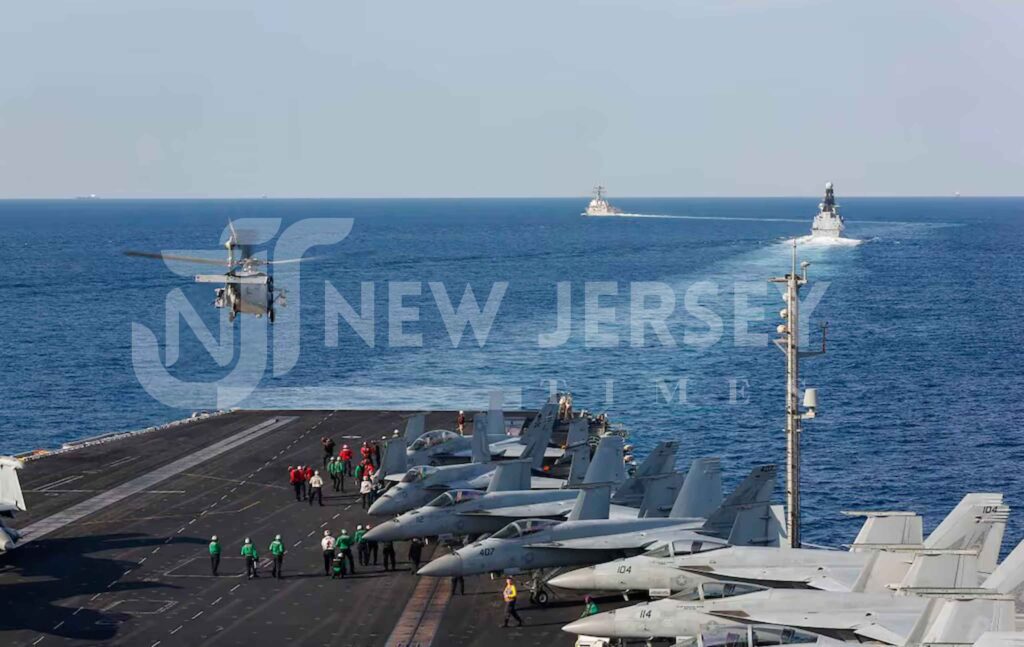
As per sources familiar with the planning, two American officials clarified that Project Freedom will not involve U.S. Navy ships directly escorting merchant vessels through the Strait of Hormuz. One official said warships will be “in the vicinity” in case Iranian forces attempt to attack neutral commercial traffic. The gap between “in the vicinity” and “under fire” narrowed considerably by Monday afternoon.
Jennifer Parker, a nonresident fellow at the Lowy Institute and former Royal Australian Navy officer, told sources the operation is less about direct vessel protection and more about reassuring commercial ships that the Strait of Hormuz is safe enough to transit. She described it as a presence operation rather than a close escort mission designed to change the psychological environment on the water rather than physically shield individual vessels.
She was equally clear about the operational limits. Not all destroyers currently in the region can be committed to Hormuz duty. Several are tied to carrier strike group air defense responsibilities. Others are actively enforcing the naval blockade of Iranian ports further out in the Arabian Sea.
Adm. Brad Cooper, CENTCOM commander, stated the mission is “essential to regional security and the global economy.” Still, the reality of blockading Iranian ports while simultaneously attempting to free neutral shipping trapped inside the Persian Gulf is generating sharp and visible contradictions on the water. Both operations are competing for the same limited pool of naval assets.
How the Strait of Hormuz Got Here
The Strait of Hormuz has been largely blocked since February 28, 2026 the day the United States and Israel launched coordinated airstrikes against Iran, targeting military facilities, nuclear sites, and senior leadership in what was called Operation Epic Fury. Supreme Leader Ali Khamenei was killed. The Iran war 2026 had officially begun, and the world’s most critical maritime chokepoint was about to become a battlefield.
Iran hit back with overwhelming force. Missile and drone barrages struck Israeli cities, U.S. military bases across the Gulf, and key infrastructure in allied Gulf states. The IRGC then formally forbade passage through the Strait of Hormuz, boarded and attacked merchant vessels attempting to transit, and confirmed the presence of sea mines deliberately laid across the waterway.
Before the Iran war 2026 erupted, the Strait of Hormuz carried roughly 20 million barrels of oil daily. That figure represents approximately one fifth of all global seaborne oil trade. The strait also carried around 20% of the world’s liquefied natural gas shipments much of it bound for Asia and Europe. Both flows have now collapsed to a fraction of pre war levels.
According to Lloyd’s List Intelligence, transits through the Strait of Hormuz remain below 10% of typical daily flow. Between 500 and 700 vessels over 10,000 deadweight tons are currently trapped inside the Persian Gulf with no clear path out. Hundreds more smaller vessels sit in similar limbo.
The economic consequences are rippling outward. Asian markets particularly China, which received roughly a third of its oil through the Strait of Hormuz before the war are drawing down reserves. Europe is facing acute LNG shortfalls. Global fertilizer supply chains, which depend heavily on Persian Gulf exports, are under serious strain as well.
The Human Cost Nobody Is Talking About
Beyond oil prices and shipping data, there is a human crisis unfolding in the Persian Gulf that has received far less attention than it deserves.
An estimated 20,000 seafarers remain stranded aboard vessels that have been unable to move for months. As per sources covering the humanitarian dimension of the crisis, crews across dozens of ships have been forced to ration food, fresh water, and medical supplies. Fatigue is severe. Mental health deterioration is accelerating. Some captains have reportedly been managing crew members in psychological crisis with no access to outside support.
Trump cited these conditions directly as justification for launching Project Freedom, calling it a “humanitarian gesture” on behalf of nations with no stake in the Iran U.S. conflict but ships caught squarely in its crossfire. That framing has generated both support and skepticism support from humanitarian organizations monitoring the crisis, and skepticism from analysts who see the mission primarily as a strategic challenge to Tehran’s control of the Strait of Hormuz.
Iran Pushes Back Hard
Tehran’s response to Project Freedom has been immediate, coordinated, and unambiguous.
Ebrahim Azizi, chairman of the Iranian parliament’s National Security Commission, warned on Sunday that any U.S. military mission guiding ships through the Strait of Hormuz would be considered a direct violation of the existing ceasefire. As per Fars News Agency, he stated flatly that the Strait of Hormuz and the Persian Gulf would not be managed by social media posts from Washington.
Foreign ministry spokesman Esmaeil Baghaei said Monday that Iran’s armed forces knew exactly how to respond to U.S. military pressure. He confirmed that Iran had received a U.S. counter proposal through Pakistan and was reviewing it carefully. The diplomatic channel remains technically open but barely, and with missiles now in the air, its survival is uncertain.
The IRGC Navy unveiled a new map Monday showing the Strait of Hormuz area it claims to fully control. The zone extends from Kuh e Mobarak in Iran to south of Fujairah in the UAE a sweeping territorial assertion that international maritime law does not recognize but that Tehran appears prepared to enforce by force. The map was not a bureaucratic exercise. It was a declaration.
The Shipping Industry Is Not Convinced
Even before missiles flew on Monday, global shipping executives were expressing deep and pointed skepticism about whether Project Freedom could meaningfully reduce risk in the Strait of Hormuz.
Bjørn Højgaard, CEO of Anglo Eastern, said plainly that it takes both sides to unblock a waterway not just one. He noted that safe and predictable passage requires far more than a unilateral U.S. military announcement made less than 24 hours before implementation.
Richard Hext, chairman of the Hong Kong Shipowners Association, urged caution across the board. Iran’s National Security Commission had already labeled the U.S. move a ceasefire violation before a single commercial ship had attempted to move. War risk insurance premiums already dramatically elevated since the Iran war 2026 began remain at levels that make any transit a costly financial gamble.
As per sources tracking maritime insurance markets, the financial exposure alone is keeping most commercial operators on the sidelines. The presence of U.S. military destroyers overhead does not change the actuarial math when Iranian missiles are confirmed in the water.
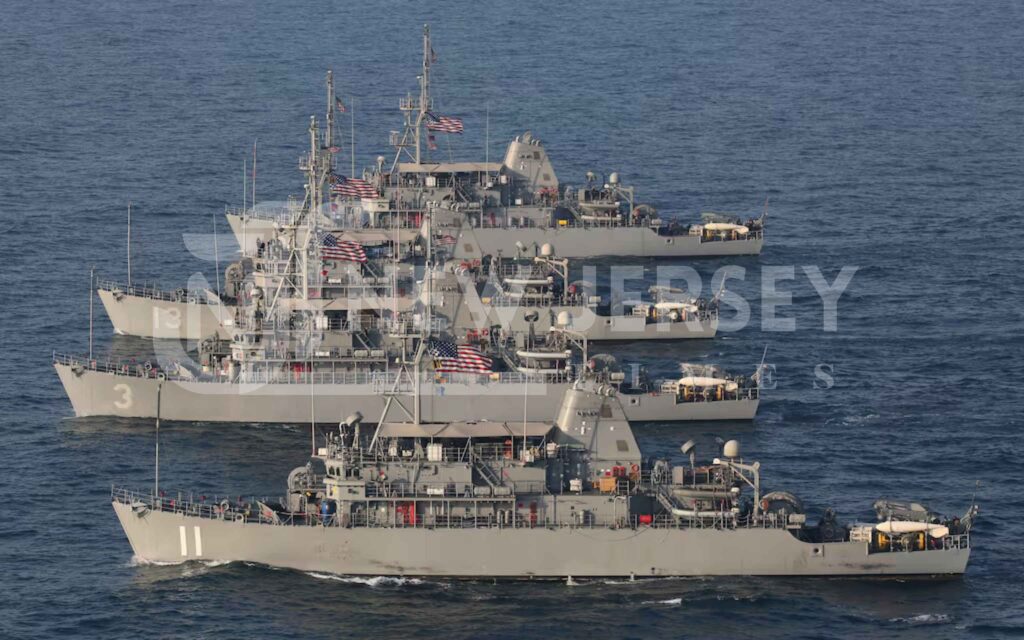
The U.S. military had already conducted anti mine operations in the Strait of Hormuz in prior weeks. Analysts warn that full clearance of the waterway could still take months. Tehran had previously demanded that ships pay an IRGC approved toll reportedly exceeding $1 million per vessel in some cases and that demand has not been formally withdrawn as part of any agreement.
A Negotiation Track Running Parallel
Neither side has formally abandoned diplomacy even as the Iran U.S. conflict inches closer to open confrontation on the water with each passing hour.
Trump stated over the weekend that discussions with Iran are going “very well” and could lead to something genuinely positive for all parties involved. The U.S. reportedly sent an amended draft peace agreement to Iran on Sunday through Pakistani intermediaries. Tehran confirmed receiving it Monday but declined to discuss any specifics publicly.
The core tension is this: military operations and diplomatic negotiations are now running simultaneously on the same clock. Commanders on both sides are setting hard physical conditions mines, missiles, blockade enforcement lines that diplomats must then somehow navigate around at the negotiating table. Each military action narrows the space for the other channel to operate.
Whether Project Freedom becomes the pressure point that finally breaks the Iran war 2026 open toward a diplomatic resolution or the flashpoint that collapses talks entirely and restarts full hostilities may be decided in the next 48 hours. The narrow, contested, and now missile scarred waters around Jask and the Strait of Hormuz will tell the story.
Trump believed Iran would capitulate rather than close the Strait of Hormuz. He believed the U.S. military could reopen it if they chose otherwise. Both assumptions have been tested under live fire. The strait remains partially closed. The Iran war 2026 has no clear resolution in sight. And on the very first operational day of Project Freedom, Iran answered with missiles.
New Jersey Times Is Your Source: The Latest In Politics, Entertainment, Business, Breaking News, And Other News. Please Follow Us On Facebook, Instagram, And Twitter To Receive Instantaneous Updates. Also Do Checkout Our Telegram Channel @Njtdotcom For Latest Updates.

A Wall Street veteran turned investigative journalist, Marcus brings over two decades of financial insight into boardrooms, IPOs, corporate chess games, and economic undercurrents. Known for asking uncomfortable questions in comfortable suits.

Trained in war zones, raised in Newark, and seasoned in city hall, Jordan blends grit reporting with deep integrity. From floods to finance bills, they’re always first on scene and last to leave.