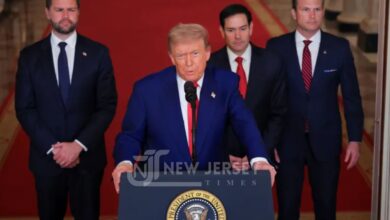

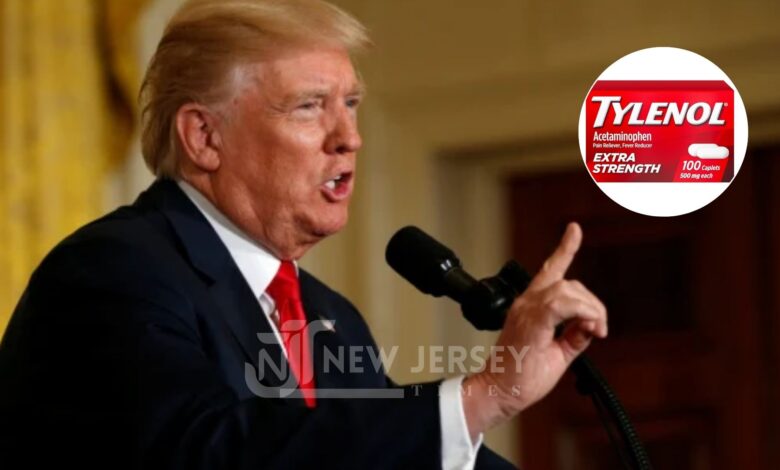
Washington, September 22 EST: Donald Trump has never shied from upending consensus science, but his administration’s decision today to formally link Tylenol use during pregnancy to autism marks a new frontier in presidential health policy. Flanked by Health and Human Services Secretary Robert F. Kennedy Jr., Trump declared acetaminophen a “very big factor” in autism diagnoses and suggested the White House had finally “found an answer to autism.”

The announcement was not simply a health advisory. It was a statement of power: a president and his health secretary attempting to redefine the boundaries of medical orthodoxy from the podium of the White House.
Trump and Kennedy’s Shared Crusade
This moment has been building for years. Trump’s early embrace of fringe autism theories during his first term was widely dismissed as political theater. Kennedy Jr., long branded an anti-vaccine crusader, has since been elevated to the highest levels of government and handed the reins of federal health guidance. Together, they are recasting America’s autism debate in their own image: skeptical of mainstream medicine, eager to reframe causation, and dismissive of the cautious pace of scientific consensus.
That Trump chose acetaminophen is telling. Tylenol has been considered one of the safest drugs in the maternal toolkit for generations, endorsed by the FDA, WHO, and nearly every major obstetrics association. By singling it out, Trump and Kennedy Jr. are not merely challenging one medication, they are implicitly questioning the judgment of the institutions that have guarded public health advice for decades.
Medical Establishment on Edge
The reaction was immediate and fierce. Kenvue, the maker of Tylenol, accused the administration of ignoring “over a decade of rigorous research” showing no causal link to autism. Leading physicians warned of real-world consequences: pregnant women avoiding Tylenol may turn to stronger, riskier medications, or worse, forgo necessary treatment altogether.
For doctors, the fight is not just about acetaminophen. It is about trust. “The danger is not just medical,” said one physician quoted by Reuters. “It’s the erosion of public faith in evidence-based guidance.” The concern is familiar: Trump has a history of casting doubt on expert consensus, from climate science to pandemic response, often reshaping the political battlefield even when the science remains settled.
The Science Doesn’t Support the Claim
The evidence behind the administration’s claim is thin. Some observational studies have flagged possible associations between prenatal acetaminophen use and autism, but they are marred by confounding factors and do not prove causation. The largest study to date, a 2024 Swedish analysis of 2.5 million siblings, found no increased autism risk tied to Tylenol exposure in pregnancy.
Autism research has long frustrated politicians seeking simple answers. The scientific community broadly agrees the condition is driven by complex genetic and environmental interactions, not a single pharmaceutical culprit. Trump, however, is seizing on the ambiguity. By presenting Tylenol as a smoking gun, he positions himself as the leader willing to confront what “the experts” have supposedly ignored.
The Market Reacts
Wall Street noticed. Shares of Kenvue plunged 6 percent Monday, deepening a bruising September that has already stripped nearly a fifth of the company’s market value. Investors fear both lawsuits and consumer retreat from one of the most widely used household medications. The financial fallout underscores how a single White House pronouncement can move markets as much as regulatory filings or court rulings.
Politics Masquerading as Science
What happened today was not merely a health announcement, it was a political maneuver. By declaring a link between Tylenol and autism, Trump reframed a complex medical debate into a story of government revelation and corporate denial. Kennedy Jr.’s push for leucovorin, a cancer drug with scant evidence as an autism therapy, further illustrates the administration’s appetite for iconoclastic medical narratives, even when the science is nascent at best.
The symbolism is potent. Trump, the politician who once suggested vaccines caused autism, now claims he has identified its cause. Kennedy Jr., long on the outside of scientific respectability, now delivers pronouncements from the inside. Their alliance is not about medical consensus, it is about reshaping the terrain on which consensus is built.
A Familiar Strategy, A New Arena
History shows the power of presidents to redefine scientific debates. Ronald Reagan did it with “Star Wars” missile defense. George W. Bush did it with stem cell research. Trump is doing it with autism. Each time, the politics raced ahead of the science, leaving institutions scrambling to catch up.
For now, the administration’s declaration will almost certainly heighten confusion among expectant mothers and intensify lawsuits against Tylenol’s maker. More broadly, it cements a governing style in which science is not a guardrail but a battlefield. Trump and Kennedy Jr. are betting that their defiance of medical orthodoxy resonates with a base already distrustful of elites.
The question is not whether the science will eventually catch up to the claim. It is whether, by then, the public will still believe in science at all.
New Jersey Times Is Your Source: The Latest In Politics, Entertainment, Business, Breaking News, And Other News. Please Follow Us On Facebook, Instagram, And Twitter To Receive Instantaneous Updates. Also Do Checkout Our Telegram Channel @Njtdotcom For Latest Updates.

A political science PhD who jumped the academic ship to cover real-time governance, Olivia is the East Coast's sharpest watchdog. She dissects power plays in Trenton and D.C. without bias or apology.
- Olivia Mathers
- Olivia Mathers
- Olivia Mathers
- Olivia Mathers
- Olivia Mathers
- Olivia Mathers
- Olivia Mathers
- Olivia Mathers
- Olivia Mathers
- Olivia Mathers
- Olivia Mathers
- Olivia Mathers
- Olivia Mathers
- Olivia Mathers
- Olivia Mathers
- Olivia Mathers
- Olivia Mathers
- Olivia Mathers
- Olivia Mathers
- Olivia Mathers
- Olivia Mathers
- Olivia Mathers

A Wall Street veteran turned investigative journalist, Marcus brings over two decades of financial insight into boardrooms, IPOs, corporate chess games, and economic undercurrents. Known for asking uncomfortable questions in comfortable suits.
- Marcus Reed