Washington, D.C., May 8: Here is the thing about Robert Francis Prevost. He never really learned how to be careful with his words.

Spent too many years in places where careful words did not feed anyone or stop anything from happening to the people around him.
So when he became Pope Leo XIV and almost immediately started talking about Iran in ways that made the Trump administration deeply uncomfortable, nobody who actually knew him was particularly shocked.
Washington apparently needed a moment to catch up.
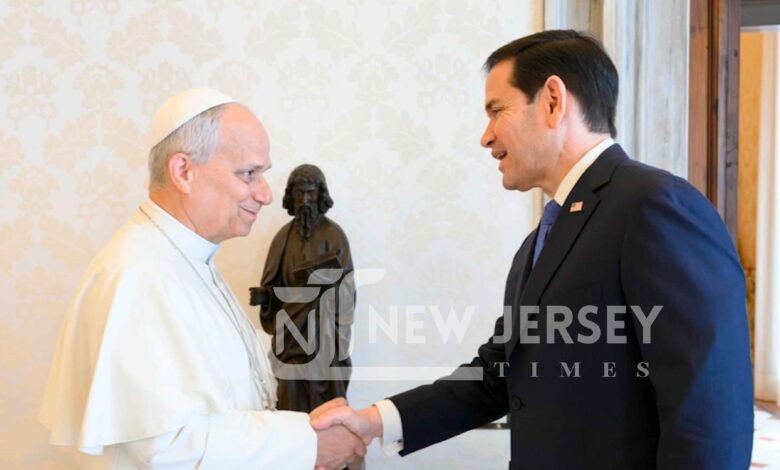
By the time Secretary of State Marco Rubio landed in Rome this week, the situation had already developed a momentum of its own.
A public argument between the White House and the head of the Roman Catholic Church had broken out faster than anyone planned for.
The administration needed it contained before it calcified into something with a longer shelf life.
The State Department called the visit congratulatory. In the sense that Rubio probably did congratulate the man, that is technically accurate.
But the actual reason he got on the plane had very little to do with pleasantries.
He went because things had gotten uncomfortable and someone senior enough to matter needed to go fix it in person.
The Life That Made Pope Leo XIV Who He Is
If you want to understand why this pope operates the way he does, you have to go back before the white smoke and the crowds and the historic headlines.
You have to go back to Peru.
Prevost grew up in Chicago. Solid upbringing, serious education, the kind of early trajectory that could have taken him anywhere inside the institutional church.
Instead he went to South America and stayed for years.
Did real missionary work in communities that were genuinely poor. Not photographically poor but grinding, structural, generational poverty where the distance between a government decision and its consequences for actual human beings was something you could see every single day.
He became Bishop of Chiclayo. Became a Peruvian citizen. Built something real there.
Pope Francis eventually brought him back to Rome and gave him the Dicastery for Bishops, the office that handles episcopal appointments across the entire global church.
It sounds bureaucratic until you think about what it actually requires.
You spend your time thinking about where the church exists in the world. Conflict zones. Authoritarian states. Countries where a bishop’s appointment carries real political weight.
He was good at it. More than good.
So when he became the new pontiff and started expressing public concern about American military action against Iran, that was not some naive religious leader stumbling into geopolitics for the first time.
That was a man with a long and specific understanding of what happens to communities when powerful people make large decisions without living near the consequences.
He was not speaking abstractly. He was speaking from somewhere real.
How the New Pontiff Sparked a Fight Washington Did Not Expect
The Trump administration had its Iran posture firmly in place long before any of this.
Maximum pressure. Military options kept deliberately visible. A general stance of strength and resolve.
And then the new pope, a man born in Illinois, starts publicly calling for restraint and dialogue.
You could feel the awkwardness from across the Atlantic.
People close to the situation who spoke to The New York Times and separately to NBC News described the frustration inside the White House as genuine. Not performative. Real.
President Trump said publicly that the Vatican had no standing to weigh in on American security decisions.
As a political statement aimed at a domestic audience, it probably worked fine.
As a thing to say about the institution that roughly 70 million American Catholics consider central to their spiritual lives, it landed badly.
European allies who were already watching the Iran situation carefully filed it away alongside their other concerns about Washington’s current direction.
The optics were bad in multiple directions at once.
To the administration’s credit, they did not let it fester.
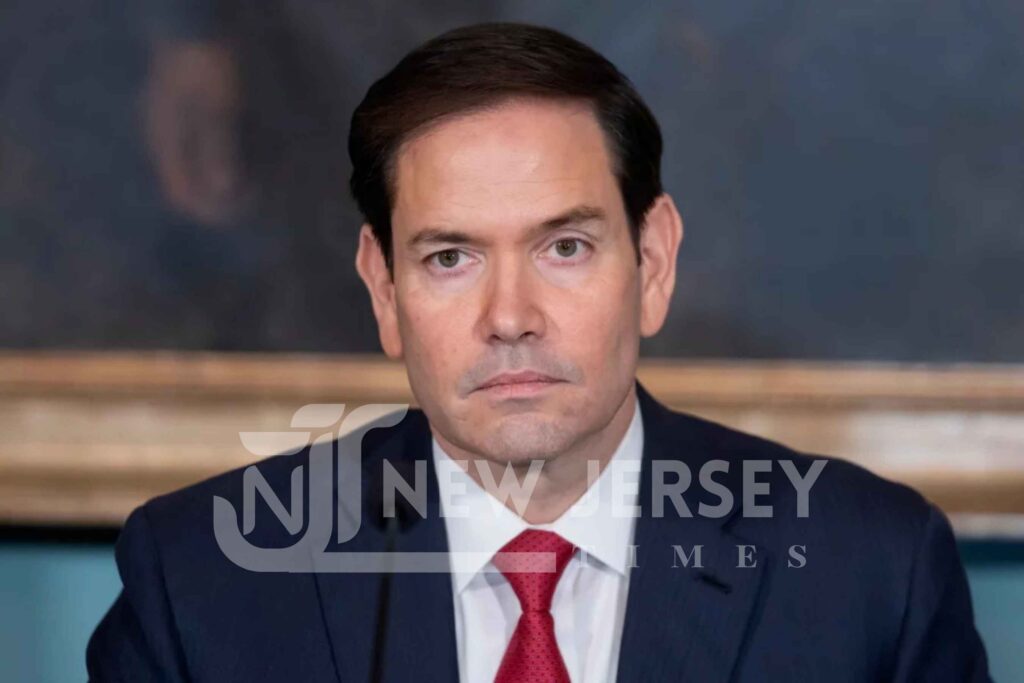
The decision to send Rubio came together relatively quickly, and whoever made that call deserves credit for the choice of messenger.
He is a practicing Catholic. He understands the institution not as an abstraction but as something he actually belongs to.
He knows how to walk into the Apostolic Palace and communicate respect without appearing to back down from anything.
CNN reported that the choice was deliberate. That tracks.
What Rubio and Pope Leo XIV Actually Said Behind Closed Doors
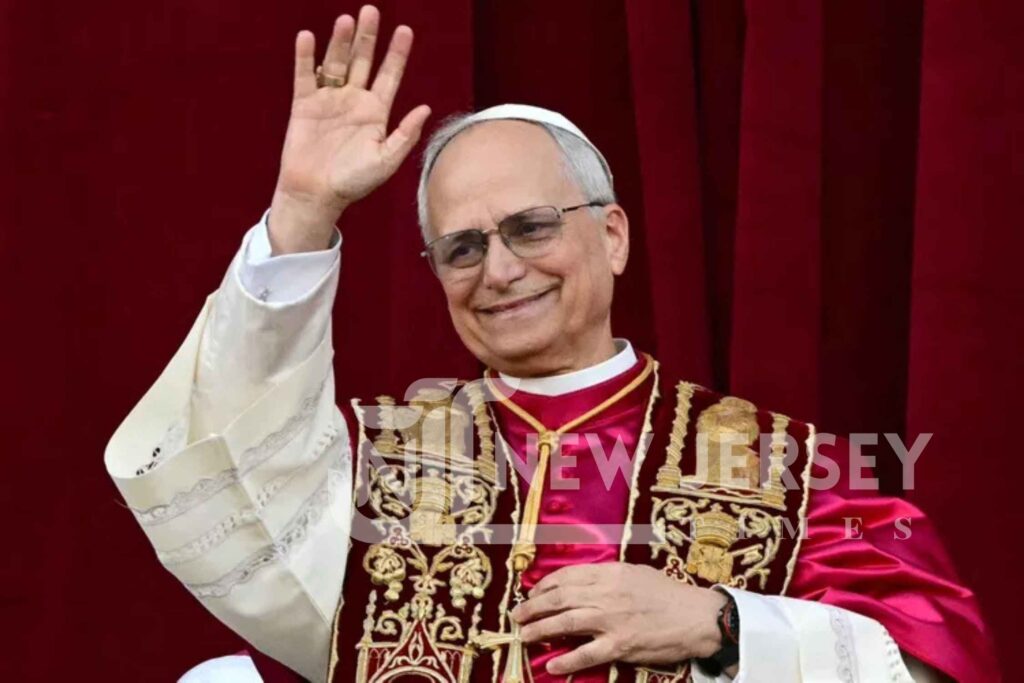
The readout the State Department put out afterward used words like productive and respectful.
In diplomatic terms, that means roughly that the building remained standing and both parties left through the front door.
Not nothing. But not much of a window into what actually happened either.
Sources who spoke to Politico off the record described a conversation that moved around more than the official framing suggested.
Iran was obviously central. But the two men apparently spent real time on the situation facing Christian communities across the Middle East.
That is a subject where both sides carry genuine concern rather than just rhetorical positions.
It gave the meeting somewhere real to land.
When you are trying to repair something after a public falling out, you start where you actually agree. You build from there.
There was no joint statement afterward.
People who follow Vatican diplomacy closely noticed immediately. These things are not accidents.
When two parties want the world to see their alignment, they produce a document. When they just want the world to know they talked, they do not.
The two sides agreed to keep the conversation going.
That is not a failure. It is just an honest picture of where the relationship actually stands right now.
The Iran Problem That Did Not Get Solved in Rome
Here is what nobody should pretend.
Whatever happened in that room at the Vatican, the underlying disagreement on Iran did not get resolved.
It could not have been. Not in a single meeting. Not on a timeline like this.
The Trump administration is committed to its approach.
Iran is continuing to do what the International Atomic Energy Agency has been documenting with uncomfortable specificity in its recent assessments.
The space for a negotiated outcome, if it still exists, is not expanding.
What the pontiff’s public statements did accomplish was add serious weight to a concern already being expressed from multiple directions.
France and Germany have both signaled real unease about escalation.
The United Nations has been pressing for dialogue consistently enough that it clearly reflects genuine alarm rather than diplomatic routine.
Into that conversation, the Vatican brings something the others do not.
Not just moral authority, though that is real. But actual practical access.
The Holy See maintains relationships across the Middle East with communities and institutions that Western governments often simply cannot reach through conventional channels.
Experienced diplomats understand this is not a symbolic point. It is a real and usable asset.
The critics who argued the new pope was overstepping made a case worth taking seriously.
A religious institution wading into an active security negotiation does risk its own carefully cultivated neutrality.
But the Vatican has been playing this kind of role for long enough that being told to stay in its lane is more of an occupational hazard than an actual deterrent.
The History Behind US Vatican Relations and the New Papacy
The formal US-Vatican diplomatic relationship dates to 1984, but the real working history stretches back much further.
Kennedy and Paul VI during the worst years of the Cold War.
Reagan and John Paul II working in close coordination on Poland and the unraveling of Soviet influence across Eastern Europe.
People who were inside those conversations described them as genuinely consequential. Not symbolic gestures but real strategic coordination between two institutions that saw the world in compatible ways at a critical moment.
Biden and Francis in Rome in 2021, working through immigration, climate, the state of the Middle East.
The pattern across all of it is consistent. American administrations find the Vatican relationship useful because it can do things that formal diplomacy cannot.
The Holy See has served as a back channel in negotiations involving Cuba, Colombia, and conflicts across Africa that barely registered in Western newspapers.
That kind of quiet institutional usefulness does not build overnight.
And it does not repair overnight either.
Analysts who spoke to Bloomberg pointed to a real and visible gap between where this relationship stands now and where it was a year ago.
Rubio’s visit probably helped close that gap somewhat.
Whether it stays closed depends on what the next several months bring on Iran.
Right now, nobody has a confident answer to that question.
The 70 Year Vatican Iran Connection Most People Missed
Somewhere underneath all the current noise is a fact that deserves more attention than it is getting.
The Vatican and Iran have maintained formal diplomatic ties since 1954.
Not recently. Not as an experiment. Since 1954.
That relationship has been running continuously through the Iranian Revolution, the hostage crisis, the Iran Iraq War, and every single round of nuclear negotiations that has happened since.
John Paul II used that channel to press for protections for Christians living inside Iran.
Francis pursued similar conversations over his entire pontificate.
The Vatican has kept that line open consistently and deliberately.
Partly because it believes in dialogue as a matter of principle. Partly because that access has proven genuinely useful at specific moments when every other door was closed.
The current pontiff speaking about Iran is not a pope going rogue.
He is the leader of an institution that has been directly engaged with that country for more than seventy years.
He has standing in this conversation that does not require anyone’s permission.
The Trump administration finds that inconvenient.
The Vatican has been inconveniencing powerful governments for considerably longer than either of them has been around.
Who actually is the new pope and what made him this way?
His name before the papacy was Robert Francis Prevost and he grew up in Chicago. What shaped him most was not his education or his institutional career. It was the years he spent in Peru doing real pastoral work in communities with very little.
He became a bishop there. Became a citizen there. Developed a firsthand understanding of what poverty and political instability actually do to people at the community level. Francis eventually brought him back to Rome for a senior administrative role. He spent years thinking about where the church operates in difficult parts of the world and why that matters. That accumulated experience is what you are watching play out right now.
What exactly did the new pontiff say about Iran that caused all this?
Within days of his election, he publicly expressed serious concern about the possibility of American military action against Iran. He called for a return to real multilateral dialogue. Reuters and The Associated Press both covered the remarks carefully. The position was consistent with longstanding Vatican thinking on conflict and de-escalation. What was different was the timing and the directness.
An American born pope saying that publicly about American foreign policy within his first week in office landed differently than a similar statement from a European or South American predecessor would have.
Has this kind of tension between the Holy See and Washington happened before?
The current friction is new territory for this particular pontificate. But the broader pattern of Vatican clashing with Washington is not. Francis and the first Trump term had multiple public disagreements on immigration and climate that got genuinely testy. John Paul II clashed with Reagan on specific issues despite the broader strategic alignment they shared. What feels different this time is the subject at the center of it. Iran is not a slow moving policy debate. It is a live situation with a real possibility of military escalation attached to it. That changes what is at stake in every conversation about it.
How long have the Vatican and Iran actually had a relationship?
Since 1954. Through the revolution, through the hostage crisis, through the wars, through everything. The Holy See has used that access for specific and practical purposes over the decades. Pressing for the welfare of Christian minorities inside Iran. Urging restraint during regional crises that threatened to spiral. The current pope is not speaking from a position of naivety about Iran. He is speaking from an institution with more than seventy years of direct engagement there.
Where should people follow this story as it develops?
Reuters and The Associated Press for fast and reliable news out of the Holy See. Vatican News for what the institution officially says about itself. Foreign Policy and The Tablet for serious analytical coverage that treats Vatican diplomacy as the geopolitical subject it actually is. La Stampa’s Vatican Insider section for reporting that consistently surfaces significant developments ahead of the broader press.
Often because it has actual sources inside the institution rather than just official readouts.
New Jersey Times Is Your Source: The Latest In Politics, Entertainment, Business, Breaking News, And Other News. Please Follow Us On Facebook, Instagram, And Twitter To Receive Instantaneous Updates. Also Do Checkout Our Telegram Channel @Njtdotcom For Latest Updates.

A Wall Street veteran turned investigative journalist, Marcus brings over two decades of financial insight into boardrooms, IPOs, corporate chess games, and economic undercurrents. Known for asking uncomfortable questions in comfortable suits.

A political science PhD who jumped the academic ship to cover real-time governance, Olivia is the East Coast's sharpest watchdog. She dissects power plays in Trenton and D.C. without bias or apology.