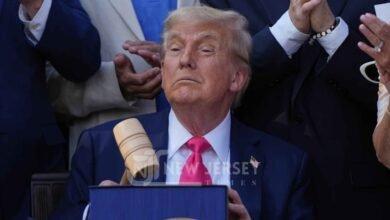
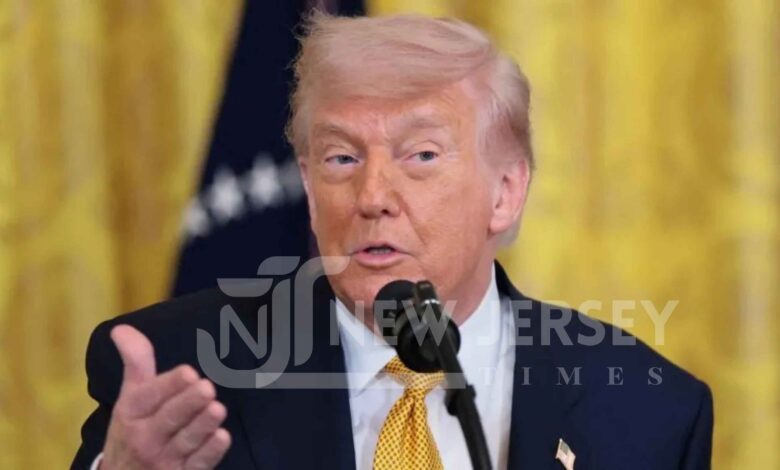
Indianapolis, May 7: Here is the thing about Donald Trump and the Republican Party that keeps surprising people who really should have stopped being surprised by now. The man wins. Not sometimes, not in the right conditions, not when everything lines up perfectly. He wins in Indiana on a Tuesday in May when most of the country is not paying attention, and he wins convincingly, and the candidates he wanted to win are the ones walking away with the nominations. That happened again this week and the story it tells is pretty straightforward if you are willing to read it honestly.


Voters across Indiana came out for the Republican primary and they did what Republican primary voters have been doing for the better part of a decade now. They looked at the choices in front of them, they thought about which candidate the president was standing behind, and they voted for that person.
Not because they were told to. Not because there was no one else running. In several of these races there were legitimate alternatives with real credentials and real campaign money behind them. Voters just were not particularly interested. They knew what they wanted and they got it.
Indiana Did Not Surprise Anyone Who Has Been Watching
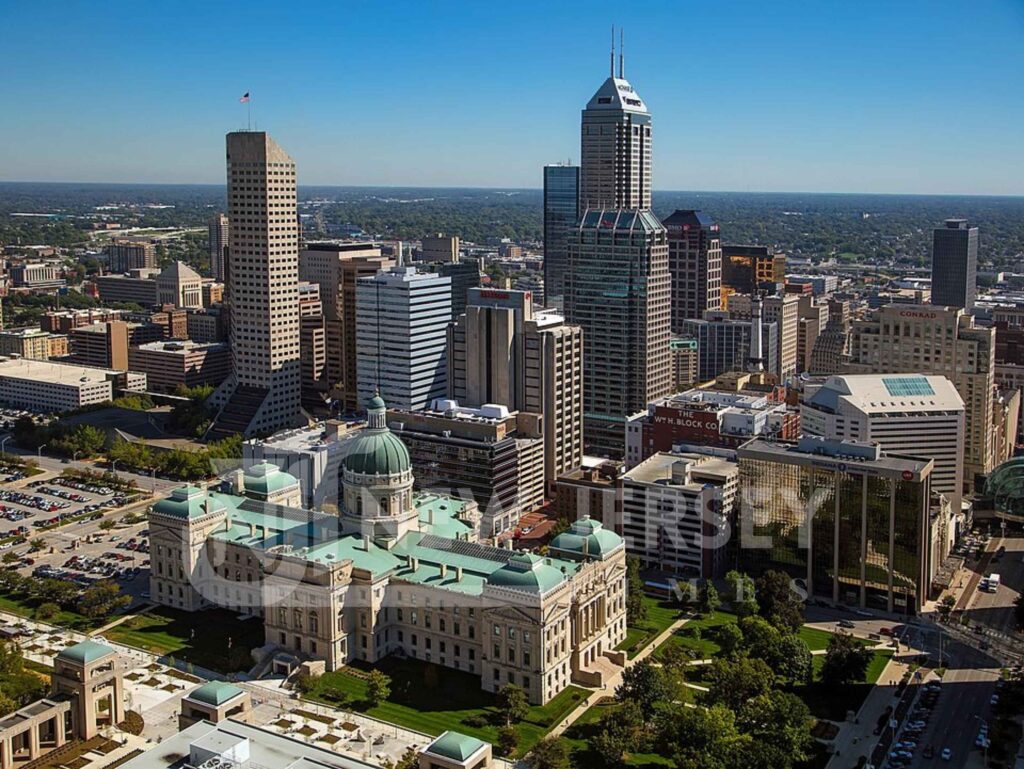
Let’s be real here. Indiana was never going to be the place where the wheels came off the Trump political machine. The state has been voting Republican in presidential races since 2012 and Trump carried it easily in both 2020 and 2024. Nobody was sitting in a newsroom somewhere expecting a dramatic upset.
What made this week’s results worth paying close attention to was not the outcome itself but how clean it was. This was not a squeaker. Across different kinds of races in different parts of the state, the Trump-backed candidates won with the kind of margins that do not leave much room for interpretation.
Politico reported that several candidates who had been keeping a careful distance from the president in the earlier months of their campaigns quietly changed their tune in the final stretch before primary day. They started talking more like Trump, started emphasizing the issues he emphasizes, started making sure voters knew they were on board with his agenda.
Some of that repositioning worked. Some of it came too late to matter. But all of it told the same story. When you are running in a Republican primary in 2026, the president is the weather. You do not debate the weather. You figure out how to dress for it.
Why His Endorsement Still Hits Different
FiveThirtyEight put out analysis earlier this year showing that candidates with a Trump endorsement in non-presidential primary cycles have been winning at a rate above 80 percent over the last four years. That number has not moved much even through the legal battles, the controversies, the constantly churning news cycle that surrounds this president at all times.
The endorsement keeps delivering and people keep underestimating why.
Here is what a lot of political coverage gets wrong about this. They treat the endorsement like it is just a really good campaign ad. A famous person says your name and suddenly your polling goes up. That is part of it but it is honestly the smaller part.
What the endorsement really does in places like rural Indiana is tell voters that this candidate belongs. That they are not some outsider who flew in with a briefcase full of talking points. That the person the president is vouching for is genuinely part of the same community of values and priorities that these voters feel strongly about.
That kind of signal is worth a lot more than a TV spot.
So why exactly does a Trump endorsement carry this much weight in a Republican primary?
Think about it this way. Imagine you are living in a small town in central Indiana and you are trying to figure out which of three candidates running for a congressional seat actually has your back. One of them has a polished website and a lot of yard signs. One of them has endorsements from local business groups.
And one of them has Donald Trump publicly saying this is the person I trust to represent you.
For a huge portion of Republican primary voters, that last thing is not just one factor among many. It is the whole ballgame. Trump has spent years building a relationship with these voters that is genuinely personal in the way they experience it. They feel like he gets them in a way most politicians do not even try to.
So when he says someone is worth voting for, they believe him. It really is that simple.
The Candidates Who Tried to Run Their Own Race
There were a few people in Indiana this week who looked at the political landscape and decided they were going to run a different kind of campaign. One candidate for a congressional seat had a genuinely strong background, solid local connections, and enough funding to make a real run of it.
The regional press was paying attention. Early on the race felt genuinely competitive.
And then the president posted on social media.
According to people familiar with that campaign’s internal numbers, they had been closing the gap in the final two weeks before the primary. Things were moving in their direction and the team felt cautiously good about where they stood.
After Trump came out publicly for the other candidate, the momentum stopped. Not gradually. Pretty much immediately. By the time votes were counted the margin was not close.
Now to be fair, not every race in Indiana that went against a non-endorsed candidate came down purely to the endorsement factor. Some of those losses had more to do with name recognition, local relationships, and money than with ideology.
Primary results are messy and reducing everything to one explanation usually gets the story wrong. But when you look at the races where the endorsement was the clearest variable, the pattern is hard to argue with.
Can a Republican actually win a primary these days without Trump’s support?
Yes, it happens. But if you talk honestly to anyone who runs these kinds of campaigns, they will tell you that doing it without the endorsement means you need something else working hard in your favor.
Usually that means you are already well known in the district, you have been around for years, people already trust you personally before the primary even starts. A long serving state legislator with deep community roots can sometimes overcome the gap.
A newcomer trying to win on their own merits in a competitive district without Trump behind them is fighting a very steep battle. The Politico primary tracker data from this cycle is pretty clear on that.
The candidates who won without endorsements almost all had that kind of built-in local advantage. Raw talent alone without those roots just has not been enough.
What November Is Going to Look Like
Winning a primary and winning a general election are two completely different conversations and anyone who tells you otherwise is not being straight with you. Democrats have been making the argument for years now that Trump-aligned candidates hurt themselves in November because they spend the primary becoming exactly the kind of candidate that moderate and independent voters in competitive districts do not want to elect.
That argument has been right sometimes and wrong other times and the honest answer is it really depends on where you are.
What Indiana’s primary results tell us about November is less about any individual race and more about the energy and confidence level of the Republican base heading into the fall. These voters are not showing up reluctantly. They are not holding their nose and picking the least bad option.
They are enthusiastic and they are decisive and that kind of energy is genuinely valuable in a midterm cycle where turnout can swing everything.
The Washington Post’s political team has been reporting that the White House is watching these primary results closely and reading them as a green light to push harder on the president’s agenda in Congress.
The thinking among senior aides, reportedly, is that Republican members heading into an election cycle where the base is this fired up will be less likely to break with the president on the votes that matter most to him.
Does winning with Trump’s backing actually help or hurt in the general election?
A former president’s endorsement is basically a golden ticket in primaries from sources, nearly 95-96% of his backed candidates have won their primaries in recent election cycles. But in the actual general election, things get trickier.
Research shows his endorsed candidates tend to lose about 1.5 points in competitive races, and the 2022 midterms proved this painfully, with key Senate seats slipping away in Georgia, Arizona, Nevada, and Pennsylvania. However, 2024 flipped the script around 76% of his endorsed candidates won their general elections, mostly because he himself was riding a big wave and pulling others along. Simply put, his backing almost guarantees a primary win, but in a close general election, it can scare away moderate and independent voters unless he’s winning big himself.
This Is Not a Fan Club Anymore. It Is the Foundation.
Something shifted in the Republican Party over the last several years that a lot of political coverage still has not fully caught up to. The people who were excited about Trump as a disruptive outsider in 2016 are not outsiders anymore.
They are the party. They are running the county committees and the state parties. They are volunteering on campaigns and knocking on doors and showing up to vote in primaries when a lot of other people stay home.
What started as a movement has become an institution and institutions are a lot harder to dislodge than movements.
That is the real story coming out of Indiana this week. It is not just that Trump-backed candidates won. It is that the voters who put them over the top are not going anywhere.
They are embedded in the structure of the Republican Party at every level in states like this one. You cannot separate the party from this coalition anymore because in most of these states the coalition basically is the party.
What does Indiana actually tell us about where Republicans stand going into the midterms?
It tells us the base is solid and it is motivated. These results were not close in most races and they were not driven by reluctant voters picking the lesser of two evils. People came out and chose deliberately.
What that means for November is that Republican candidates will be walking into general election campaigns with an energized and unified base behind them.
Whether that is enough to win in competitive districts depends on what independent voters decide to do. And right now independent voters in swing districts are the single most unpredictable variable in American politics.
Democrats will try to make those voters nervous about the direction the country is heading. Republicans will try to make those voters feel good about what the party has delivered.
How that argument lands in places like the Indianapolis suburbs or the competitive districts in Ohio and Pennsylvania will determine who controls Congress next year.
Ten Years Later and the Argument Is Still Happening
The Republican Party of a decade ago was genuinely messy in an interesting way. There were real fights inside the party about foreign policy, about fiscal conservatism, about immigration, about the role of government.
Different factions had real power and real disagreements. Most of that has quieted down considerably and what replaced it is a party that is much more unified around one set of priorities and one political identity.
Whether that is good for the long term health of the party is a conversation Republicans will probably have to have at some point. For right now though, in May 2026, that question feels pretty theoretical. The voters are not asking it.
They came out in Indiana this week and they did what they have been doing for years. They picked the candidates the president wanted them to pick and they did it with conviction.
The coalition is holding and it is holding in the places that matter most for the Republican Party’s ability to keep its congressional majorities through the fall.
Could Trump’s grip on Republican primaries ever start to fade?
Sure, eventually. Nothing in politics lasts forever and anyone who tells you differently is selling something. The historical pattern with dominant political coalitions is that they tend to hold right up until they do not, and the breaking point is usually something big.
A bad economy that voters blame on the party in power. A major electoral loss that forces a reckoning. Something that changes the political weather in a fundamental way.
None of those things have happened yet in a way that has visibly shaken the Republican base. The primary data right now does not show erosion. It shows consistency.
Voters in Indiana and across the Republican heartland are still showing up, still making the same choices, and still treating the president’s endorsement as the most meaningful signal they get in a primary campaign.
When that changes it will show up in the numbers first. Right now the numbers are not showing it.
New Jersey Times Is Your Source: The Latest In Politics, Entertainment, Business, Breaking News, And Other News. Please Follow Us On Facebook, Instagram, And Twitter To Receive Instantaneous Updates. Also Do Checkout Our Telegram Channel @Njtdotcom For Latest Updates.

A Wall Street veteran turned investigative journalist, Marcus brings over two decades of financial insight into boardrooms, IPOs, corporate chess games, and economic undercurrents. Known for asking uncomfortable questions in comfortable suits.

A political science PhD who jumped the academic ship to cover real-time governance, Olivia is the East Coast's sharpest watchdog. She dissects power plays in Trenton and D.C. without bias or apology.