
Trump Administration’s Shocking 3-Course Golf Deal in D.C. Leaves East Potomac’s Future Hanging


Washington, D.C., May 9: The Trump administration picked a Friday evening to drop the news.


That timing was no accident. Uncomfortable agreements tend to land when the news cycle is winding down, and this one qualified as uncomfortable for both sides.
The joint statement between the administration and the National Links Trust confirmed that all three of Washington D.C.’s public golf courses would stay open. Calling it a resolution would be generous. Calling it a ceasefire gets closer to the truth.
These are not abstract parcels of federal land being argued over in conference rooms. The Washington D.C. public golf courses at the heart of this fight, East Potomac Golf Links, Langston Golf Course, and Rock Creek Park Golf, are places where people have been showing up for decades with worn-out bags and Tuesday morning tee times.
Courses where the parking lot fills before sunrise. Where the regulars know each other by name. The idea that any of them could be quietly handed over to a championship redesign without public process is what turned a lease dispute into something far more combustible.
How the Trump Administration Split the Fairways With This Deal

On paper, two of the three Washington D.C. public golf courses got a decent outcome.
The National Links Trust walks away with a new long-term lease to operate and redevelop Langston and Rock Creek Park Golf. Renovations at Rock Creek are back on the table, including a new clubhouse, driving range, practice facilities, and an ecological trail, according to ABC-affiliate WJLA.
Langston gets a learning center and a continuation of its caddie program with the Western Golf Association. The Washington Commanders are apparently in early talks about some kind of partnership at Langston, though nobody is putting specifics on paper just yet.
That is the good news portion of the statement.
East Potomac Golf Links is where the language gets slippery. The Trust will continue operating it, but only on an interim basis, while the Interior Department’s National Park Service plans what officials are calling a “historic restoration.”
That phrase is doing a lot of work for a document that provides almost no detail. No timeline. No funding breakdown. No definition of what “historic restoration” actually means in practice.
The Trump administration has not scaled back its ambitions for East Potomac. Nothing in Friday’s statement suggests otherwise. What changed is that a federal judge got involved, the lawyers got busy, and a shutdown that was reportedly days away did not happen.
The three Washington D.C. public golf courses are open. The underlying fight is very much alive.
Five Years of Work Undone by One Trump Administration Letter

Mike McCartin grew up playing East Potomac. He wrote his graduate thesis on it.
When he and Will Smith founded the National Links Trust and won a 50-year lease from the National Park Service in June 2020, it was not a business opportunity. It was the thing he had been building toward his entire career.
The Trust brought in architects who felt the same weight of obligation. Tom Doak took East Potomac. Gil Hanse and Jim Wagner took Rock Creek. Beau Welling drew Langston. All three worked without charging a fee, according to Golf Digest.
These were not contractors padding a government project. They were people who genuinely cared about what these Washington D.C. public golf courses represented.
Over five years, the Trust put more than 8.5 million dollars into capital improvements. Rounds played doubled. Revenue doubled. Green fees stayed where working people could afford them.
The courses were not just surviving. They were genuinely getting better, and the communities using them felt the difference.
On December 31, 2025, the Trump administration sent a termination notice. Effective immediately.
The letter cited lease defaults. The Trust disputed every single one of them. One NLT official told Golf Digest it was “genuinely one of the most ridiculous and disappointing things I’ve ever read.”
That quote landed in December and still holds up in May.
The termination did not arrive in a vacuum. It came alongside the Kennedy Center shake-up, the White House East Wing demolition, and a pattern of the Trump administration moving fast on high-profile institutional changes in the capital while keeping explanations thin.
Whether the golf courses were a deliberate piece of that pattern or a convenient opportunity is a question the administration has never felt obligated to answer.
The Course the Trump Administration Is Really Watching
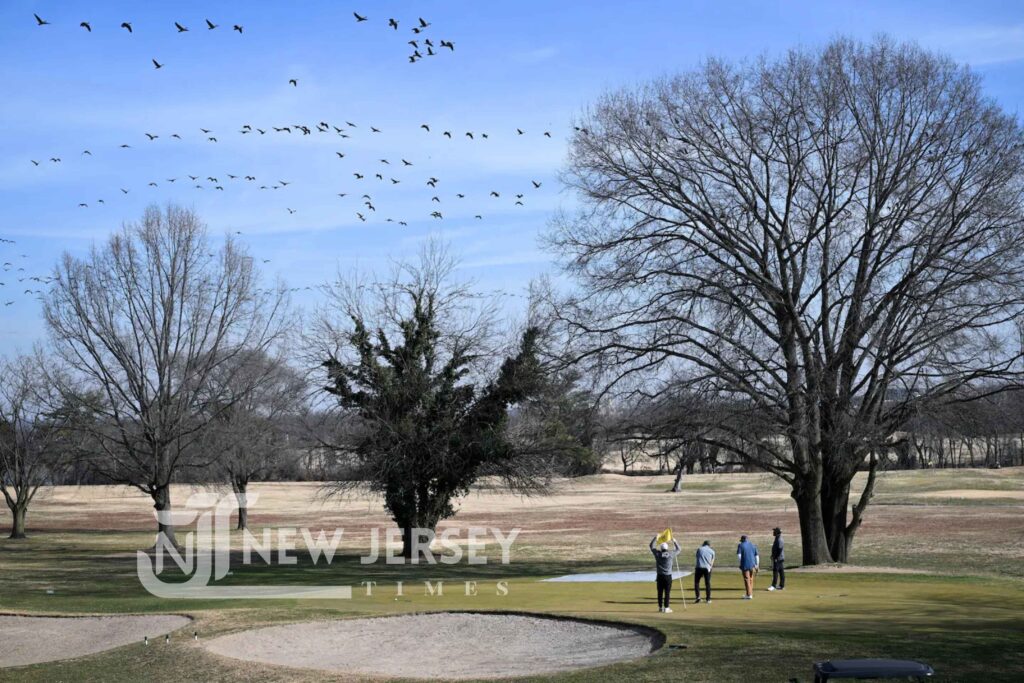
Of the three Washington D.C. public golf courses, East Potomac Golf Links is the one that has attracted the most attention.
The course sits on a man-made island at Hains Point, with the Washington Monument in one direction and the Potomac River in the other. Walter Travis designed it in 1920 with the intention that anyone could play it. For most of the century since, that is more or less what happened.
President Donald Trump, according to sources cited by Golf Digest, wants something different.
The word circulating privately is that he envisions East Potomac as a major championship venue, possibly a Ryder Cup site. A course that competes with the best in the country rather than one that welcomes the average golfer on a Tuesday afternoon.
Whether that vision is compatible with East Potomac remaining a Washington D.C. public golf course in any meaningful sense is a question nobody in the administration has addressed directly.
The circumstantial evidence is hard to wave away.
In late 2025, Tom Fazio, a golf course architect who has designed four Trump properties, showed up at East Potomac under a fake name. Public records reviewed by Golf Digest show he went to the White House that same afternoon and stayed for more than three hours.
He has not been officially confirmed for anything. But nobody who covers golf or this administration seriously believes his presence at East Potomac was a coincidence.
The Washington Post reported separately that a group calling itself the National Garden of American Heroes Foundation had been sending fundraising materials to private donors. Those materials included architectural renderings of a completely reimagined East Potomac, championship layout, monument space, the works.
The White House did not comment. Emails to the contacts listed in the document came back undelivered.
Then NOTUS reported that the Trump administration planned to lock the gates at East Potomac after the last tee time on Sunday, May 3. No announcement. No process. Just done.
That report set off the legal scramble that led directly to the courtroom on May 4 and, eventually, to Friday’s agreement.
An unannounced site visit by a Trump-connected architect. A private fundraising document with championship renderings. A reported closure with no public process.
Each piece might be explained away individually. Together, they suggest a plan that is considerably further along than the Trump administration has acknowledged in any official forum.
A Federal Judge Who Was Not Buying the Trump Administration’s Story
The DC Preservation League had been in court since February.
The trigger was jarring. Construction crews had dumped roughly 30,000 cubic yards of debris from the White House East Wing demolition project directly onto East Potomac’s grounds. Plaintiffs raised concerns about lead and asbestos. An orange pile of rubble sat in the middle of one of the most historically significant Washington D.C. public golf courses in the city.
Nobody from the administration offered an explanation.
After the NOTUS closure report, the group filed an emergency motion before U.S. District Judge Ana Reyes. The May 4 hearing was not the dramatic confrontation some expected, but it was revealing.
Reyes did not issue a full restraining order.
What she did was tell the Trump administration plainly that she was not buying the government’s version of events. She ordered the National Park Service not to cut down more than ten trees at East Potomac without court approval.
She told government attorneys, as reported by WUSA9: “When you have a pledge going out with pictures, asking people for money, we’re far down the road. I think there’s been more happening.”
That line landed.
The government had spent weeks insisting its plans for East Potomac amounted to routine maintenance. A fundraising document with championship renderings circulating among private donors suggested otherwise. The judge said so out loud.
She warned the Trump administration against acting first and explaining later, a direct reference to the East Wing demolition situation. She ordered the production of internal communications between the White House, federal agencies, and the private foundation.
The government attorneys maintained their position. Reyes made clear she would be watching closely.
A preliminary injunction hearing is still coming. Friday’s deal did not close that case.
What the Trump Administration’s Golf Deal Means for Affordable Access
Here is the part of the story that gets lost when the conversation stays focused on lease terms and court filings.
Langston Golf Course is known as the “Home of Black Golf in America.” That is not a marketing slogan. It reflects a genuine history, generations of Black golfers who built their relationship with the sport at Langston when most private clubs in the country were not an option.
The course has always meant something specific to its community. Something that championship-level pricing and a redesigned layout would not preserve.
Lorenza “Country” Robinson has worked at East Potomac for 16 years. She told WUSA9 exactly what she thought about the administration’s vision for the course.
“It’s not about making it better, because that’s not what we do at East Potomac. It’s about making people feel comfortable and welcoming everybody in from every walk of life.”
That is the thing the Trump administration’s public messaging keeps missing.
These Washington D.C. public golf courses are not failing assets that need rescuing by someone with grander ambitions. They were working. The Trust’s numbers proved it. Doubling rounds, doubling revenue, holding fees down.
That is not a turnaround story waiting to happen. That is a success story being interrupted.
Legal observers cited by Axios are clear that any significant redesign of East Potomac requires formal federal review and public notice. None of which has started.
The National Garden of American Heroes Foundation, the group behind those donor renderings, had no public filings and no fundraising registration as of last week. The Trump administration has not explained the foundation’s relationship to the White House.
Tom Fazio’s official role remains unconfirmed. Every one of those loose ends is still dangling.
The Trump Administration’s Broader Pattern in the Capital
Golf is not really the story here. It is the venue for a story about how this administration handles public institutions it decides it wants.
The Trump administration terminated a 50-year lease five years in, citing defaults the tenant disputes in detail. It dumped demolition debris on a historic public course without explanation. It circulated private fundraising materials for a redesign while telling courts no final decision had been made.
It reportedly planned a closure with no public process until a news report forced a legal response.
That is the pattern. Move fast, keep the real plan private, manage the paperwork afterward.
The Washington D.C. public golf courses became visible precisely because the National Links Trust had receipts. Five years of documented improvements. Architects on record. Community members willing to testify. A paper trail that made the administration’s stated justifications difficult to sustain under scrutiny.
Most of the time, this kind of institutional pressure does not generate that level of documentation. These courses happened to be an exception.
The Trump Administration Left These Courses Open. For Now.
All three Washington D.C. public golf courses are still running as of this writing.
Langston and Rock Creek have a real lease agreement now, which is more than they had a week ago. That matters, and it is worth saying plainly.
East Potomac is a different situation entirely.
It is open, watched over by a skeptical federal judge, caught between an active lawsuit and an administration that has not shown its full hand. The interim operating arrangement the Trust accepted for East Potomac is not stability. It is a reprieve.
Friday’s agreement may hold. The Trump administration may decide that two courses is enough and leave East Potomac to the courts and the community.
Or the administration may be waiting for the legal situation to clarify before making the next move. Given everything that has happened since December, assuming the latter requires less imagination than assuming the former.
Five years of work. Eight and a half million dollars. A caddie program. A restored nine-hole layout. Workers like Lorenza Robinson who have given the better part of their professional lives to these fairways.
The agreement signed on a quiet Friday evening is not a resolution. It is a pause.
What comes next at East Potomac Golf Links will say a great deal about whether public land in Washington D.C. still means what the words say it means.
Q1: What exactly did the Trump administration and the National Links Trust agree to?
Late Friday evening on May 8, both sides put out a joint statement saying all three courses, East Potomac, Langston, and Rock Creek, would stay open.
The National Links Trust got a new long-term lease for Langston and Rock Creek. For those two courses, that is a real and tangible win.
East Potomac is the complicated one.
The Trust gets to keep running it, but only temporarily, while the National Park Service figures out what it is calling a historic restoration. What that actually means, how long it takes, and who pays for it, nobody is saying publicly yet.
Q2: Why did the Trump administration pull the plug on the original lease in the first place?
On New Year’s Eve 2025, the Department of the Interior sent the Trust a termination letter citing lease defaults.
The Trust pushed back hard and disputed every single claim. One Trust official told Golf Digest it was genuinely one of the most ridiculous things they had ever read.
The timing and the reasoning struck a lot of people as thin.
The Trust had spent five years investing more than 8.5 million dollars into courses that were genuinely improving. Doubling rounds. Doubling revenue. Holding fees down.
Many observers connected the termination to the administration’s broader habit of reshaping Washington D.C. institutions quickly and without much public explanation. The administration never addressed that directly.
Q3: What does the Trump administration actually want to do with East Potomac?
That is the question everyone keeps asking and nobody in the administration will answer directly.
Sources told Golf Digest that Trump has privately talked about turning East Potomac into a major championship venue, possibly even a Ryder Cup site.
Then there is the Tom Fazio situation.
Fazio, who has designed four Trump courses, quietly toured East Potomac under a fake name in late 2025. He showed up at the White House that same afternoon and stayed for over three hours. A private fundraising document with full championship redesign renderings has been circulating among donors.
The White House has not confirmed any of it officially. But the pieces are not hard to read.
Q4: What happened in court and what did the judge actually say?
Judge Ana Reyes held an emergency hearing on May 4 after reports surfaced that the administration was planning to shut East Potomac down with zero public notice.
She did not issue a full restraining order. But she made her position clear.
She told government attorneys that a fundraising document with pictures and donor solicitations is not the behavior of an administration with no plans.
Her exact words, as reported by WUSA9, were direct: “When you have a pledge going out with pictures, asking people for money, we’re far down the road. I think there’s been more happening.”
She ordered the Park Service not to cut more than ten trees without court approval. She also demanded the government hand over internal communications between the White House, federal agencies, and the private foundation behind the fundraising materials. The case is still very much alive.
Q5: What do these courses actually mean to the people who use them?
A lot more than a place to play golf on a weekend.
Langston has been called the Home of Black Golf in America, and that title reflects something real. For generations of Black golfers in Washington D.C., Langston was accessible when most private clubs were not.
East Potomac and Rock Creek have their own versions of that history.
Working people, government employees, retirees, kids learning the game, all sharing the same tee sheet without a membership fee standing in the way.
Lorenza Robinson has spent 16 years working at East Potomac. She put it simply to WUSA9. She said it has never been about making the course fancier. It has always been about making people feel welcome, all kinds of people, from every walk of life.
New Jersey Times Is Your Source: The Latest In Politics, Entertainment, Business, Breaking News, And Other News. Please Follow Us On Facebook, Instagram, And Twitter To Receive Instantaneous Updates. Also Do Checkout Our Telegram Channel @Njtdotcom For Latest Updates.

A Wall Street veteran turned investigative journalist, Marcus brings over two decades of financial insight into boardrooms, IPOs, corporate chess games, and economic undercurrents. Known for asking uncomfortable questions in comfortable suits.

Trained in war zones, raised in Newark, and seasoned in city hall, Jordan blends grit reporting with deep integrity. From floods to finance bills, they’re always first on scene and last to leave.