


WASHINGTON, May 13: The Trillion Dollar Shield Nobody Can Afford to Ignore


There’s a number floating around Washington right now that keeps stopping people mid sentence.
One point two trillion dollars.
That’s the independent estimate for what it would actually cost to build the Golden Dome the missile defence system President Trump signed into motion earlier this year with the kind of confident flourish that suggested the hard part was already done. The White House put its own figure at $175 billion. The Congressional Budget Office looked at the same project and came back with something nearly seven times larger.
Seven times. That’s not a rounding error. That’s not even in the same neighborhood. That’s a fundamentally different program being described by two different sets of numbers, and at some point Washington is going to have to decide which version it’s actually building.
When the Math Stops Making Sense
Here’s what makes this gap genuinely hard to dismiss. The $175 billion figure was never accompanied by a public cost breakdown. No line items. No phased deployment schedule. No methodology explaining how the administration arrived at that number. The Trump missile shield was announced the way you’d announce a home renovation budget before actually calling a contractor with confidence that the specifics would follow eventually.
The Congressional Budget Office doesn’t operate that way. Their analysts examined what a real continental missile defence architecture would require to function: space based interceptor satellites potentially numbering in the hundreds, new and expanded ground based launch sites beyond the existing installations in Alaska and California, next generation over the horizon radar networks capable of tracking hypersonic threats, hardened command and control infrastructure designed to survive a first strike, and the targeting software sophisticated enough to coordinate all of it in real time.
When you price those components out individually and honestly, you land somewhere between one and one point two trillion dollars spread across roughly twenty years of development and deployment.
That’s not a worst case scenario built to make the program look bad. That’s what the parts cost.
The Golden Dome, as currently described by the administration, is not a modest upgrade to existing missile defence infrastructure. It’s a ground up reimagining of continental air defence at a scale the United States has never attempted. The gap between the White House number and the independent estimate reflects exactly that ambition, and the tension between those two figures is now the central argument happening in Washington.
What This Thing Actually Is
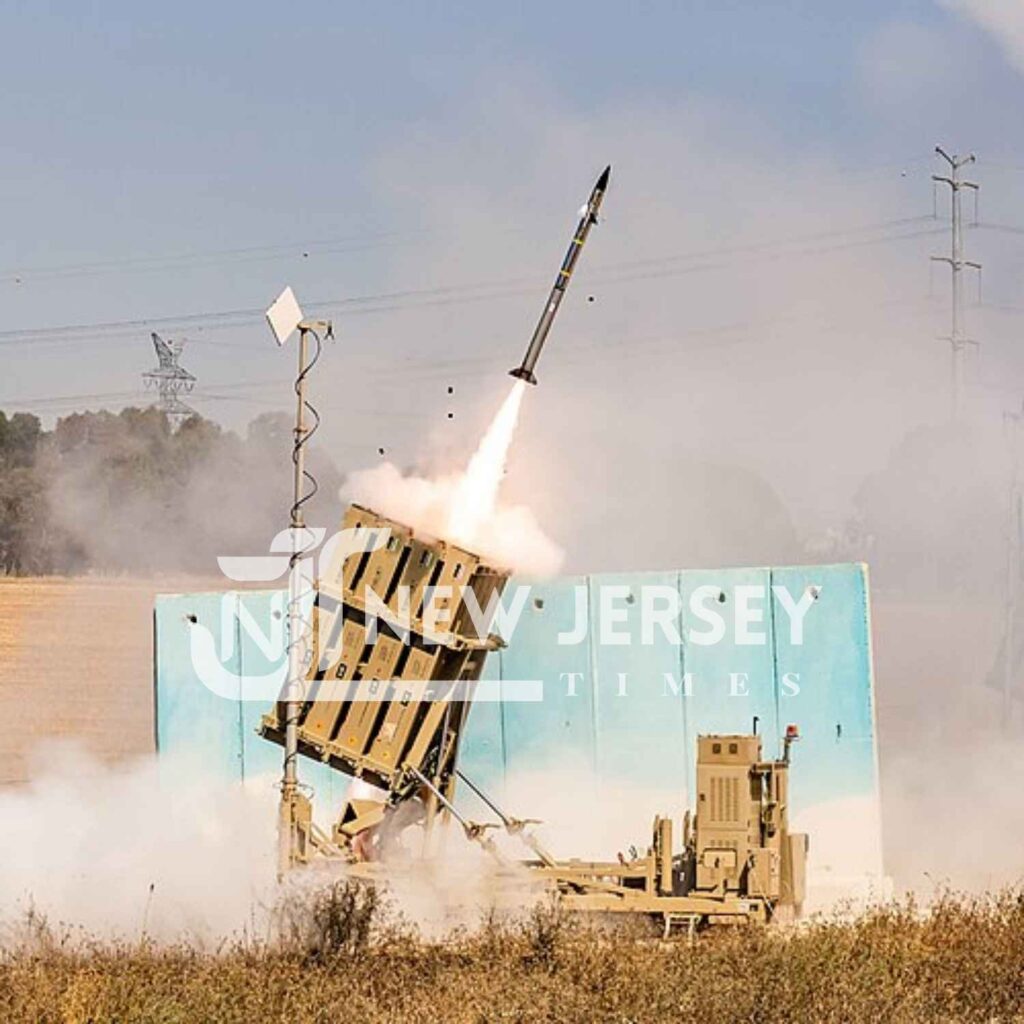
The Golden Dome gets compared to Israel’s Iron Dome constantly, and the political appeal of that comparison is obvious. Iron Dome is real. It works. People have watched it intercept rockets on live television. It represents a genuine, deployable success in a field of defence spending that doesn’t always produce visible results.
The comparison falls apart quickly once you look at the actual engineering involved. Israel is roughly the size of New Jersey. The threats Iron Dome defends against, while serious and lethal, are relatively short range rockets and mortar fire. The interception geometry is manageable. The system works within a defined, relatively compact operational envelope.
The Trump missile shield is being asked to defend a continent spanning thousands of miles in every direction. The threats it needs to address include Russian hypersonic glide vehicles that travel at speeds and altitudes that make conventional interception logic largely obsolete, a Chinese ICBM force that has been expanding faster than most declassified estimates predicted, and the possibility of simultaneous multi vector attacks from more than one adversary.
These are not incremental differences. The engineering challenge of defending New Jersey from short range rockets and the engineering challenge of defending the continental United States from Russian hypersonic missiles are separated by several generations of technical difficulty. Invoking Iron Dome as the model for Golden Dome is a little like describing a commuter bicycle and a commercial aircraft as basically the same thing because both have wheels.
The Reagan Echo Nobody Talks About Enough

It’s genuinely difficult to write about Golden Dome without thinking about 1983. President Reagan stood at a podium and described a future in which nuclear weapons would be rendered impotent and obsolete by a space based defensive shield capable of intercepting Soviet ballistic missiles before they reached American soil. The scientific community expressed serious reservations almost immediately. Physicists wrote open letters. Critics labeled it Star Wars, which was unkind but captured something real about the gap between the vision and the technology available to execute it.
What followed was decades of missile defence research, billions in investment, and eventually a ground based midcourse defence system that exists today in Alaska and California. That system has an uneven intercept record in controlled tests under conditions far less demanding than a real adversarial launch. It represents genuine progress. It also represents how hard this problem actually is, even after forty years of sustained effort.
Golden Dome is asking the next version of Reagan’s question. The proposed answer involves putting interceptors in orbit, which introduces its own set of complications around cost, vulnerability, international arms treaty implications, and the basic physics of space based weapons systems. None of those complications are insurmountable in principle. None of them are cheap in practice.
The Satellite Problem
The space layer is where Golden Dome cost estimates diverge most sharply from the White House figure, and it’s worth spending a moment on why.
Providing meaningful missile defence coverage over a continent from orbit requires enough satellites in enough orbital planes to ensure continuous coverage of the defended territory. You can’t have gaps. A missile launched during a gap in coverage is a missile that gets through. Continuous coverage at the scale required means a large constellation, and large constellations of sophisticated interceptor carrying satellites are extraordinarily expensive to design, launch, maintain, and eventually replace.
Independent analyses have suggested the satellite component alone could account for several hundred billion dollars of the total program cost. That’s before a single new ground interceptor site has been permitted and constructed. Before radar upgrades. Before the command infrastructure. Before the software development program that would need to integrate all of it.
SpaceX has come up in conversations about the launch and potentially the satellite components. Palantir has been mentioned in connection with the software and targeting layers. Both companies have genuine capabilities relevant to the program. Both companies have also never built anything at this particular scale or with these particular requirements. The enthusiasm at industry day events is real. So is the distance between enthusiasm and a functioning continental missile defence system.
Lockheed Martin, Northrop Grumman, RTX, and L3Harris are all in the conversation for various hardware components. The Pentagon has held preliminary industry engagement sessions. There is no formal request for proposals yet. The program exists at the level of executive announcement and early stage interest, not yet at the level of defined requirements and competitive contracts.
What Congress Is Actually Thinking
Support in the House has been reasonably strong among defence hawks, with the Armed Services Committee leadership publicly backing the program and suggesting that competitive contracting would keep costs manageable. The specifics of how competition drives down the cost of technology that doesn’t fully exist yet have not been elaborated.
Behind closed doors, the Senate Armed Services Committee has been less comfortable. Briefings with Pentagon officials have reportedly left members with unanswered questions about the cost methodology underlying the administration’s $175 billion estimate. One congressional aide described the answers received as incomplete, which is a diplomatic way of saying the math wasn’t fully explained.
Among House Republicans who watch the deficit closely, the public posture has been cautious silence rather than open opposition. Not endorsing Golden Dome, not challenging it, waiting to see what the actual budget request looks like before committing to a position. That kind of careful quiet usually means genuine private concern.
Senate Democrats have been more direct. The characterization of the program as a fiscal fantasy wrapped in a security blanket was pointed and public. Whether you agree with the politics or not, the underlying arithmetic concern is legitimate. A program independently estimated at $1.2 trillion, announced with a White House price tag of $175 billion, with no public cost methodology bridging the two figures, is a program that invites skepticism.
The History Nobody Wants to Repeat
Large defence programs have a documented pattern in this country, and it is not an encouraging one for Golden Dome optimists.
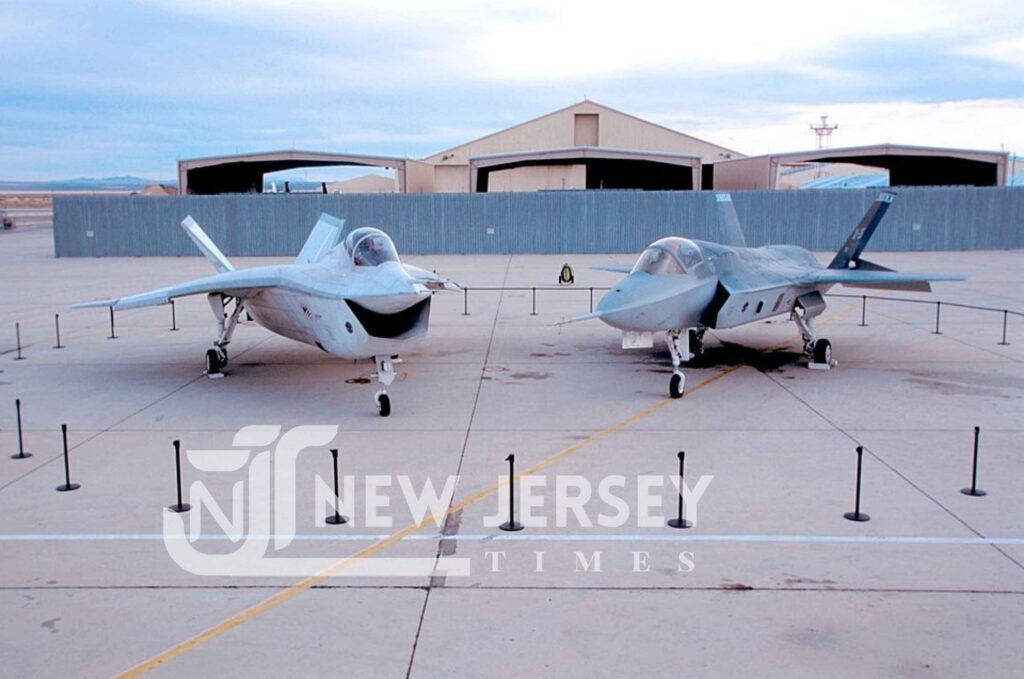
The F-35 joint strike fighter program entered development with an acquisition cost estimate around $233 billion. It ultimately exceeded $400 billion. The program took longer than projected, cost more than projected, and delivered capabilities on a schedule that consistently slipped. It is also a genuinely capable aircraft that the Air Force, Navy, and Marine Corps depend on. The overruns didn’t make it worthless. They made it expensive and late.
The Army’s Future Combat Systems program was designed to modernize ground forces with networked vehicles and robotics. It was cancelled after absorbing billions in development costs without producing a deployable system. The ambition outran the technology and the budget simultaneously.
The Ground based Midcourse Defence system, the existing backbone of American missile defence, has been in development for decades. Costs have grown substantially from initial projections. Intercept tests under controlled conditions have produced mixed results. The program continues because the mission is necessary, not because the execution has been smooth.
Golden Dome is larger, more technically ambitious, and more dependent on technology that doesn’t yet exist than any of these programs. The procurement history is not offered here as an argument against building it. It’s offered as context for why the CBO’s $1.2 trillion figure deserves to be taken seriously rather than dismissed as bureaucratic pessimism.
The Fiscal Reality Underneath All of This
Sixty billion dollars a year is roughly what a twenty year, $1.2 trillion program costs on an annualized basis. The total Pentagon budget currently sits around $850 billion. Finding an additional $60 billion annually within that envelope, without cutting into conventional readiness, shipbuilding, aircraft procurement, and the dozens of other programs already competing for funding, is not a simple arithmetic exercise.
The national debt has passed $36 trillion. Annual interest payments on that debt are consuming a growing share of the federal budget, crowding out discretionary spending in ways that are already creating difficult choices across multiple departments. The fiscal environment in which Golden Dome is being proposed is not one that easily accommodates a new trillion dollar commitment, regardless of the security justification.
That doesn’t mean the security justification is wrong. The threat environment is genuinely serious. Russia and China have invested specifically in capabilities designed to hold American territory at risk in ways that didn’t exist a generation ago. The impulse behind the Trump missile shield reflects a real strategic problem, not a manufactured one.
The question is whether this specific architecture, at this specific cost, on this specific timeline, is the right answer to that problem. Or whether a more targeted, phased approach could address the most urgent threat scenarios at a cost the budget can actually absorb without sacrificing other critical defence priorities.
That question has not been answered publicly. That’s the actual gap in this story, and it matters more than any single number.
The Summer Tells You Everything

A formal White House budget request for Golden Dome funding is expected sometime this summer as part of supplemental defence appropriations. The specifics of that request, how it’s structured, what it funds in the near term, and whether it includes anything approaching a credible long term cost estimate, will tell you more about the seriousness of this program than any executive order or press conference.
If the request comes with genuine cost transparency and a realistic phasing plan, that’s a meaningful signal. If it comes as a lump sum number attached to broad program language, the $175 billion versus $1.2 trillion argument will simply continue at higher volume.
Congress will have to decide how hard to push for answers. Some members clearly want to. Others are waiting to see which way the political wind settles before taking a position. The contractors are ready. The Pentagon is engaged. The technology is partially available and partially theoretical.
Golden Dome is real enough to be taken seriously and uncertain enough to be questioned carefully. Both of those things are true at the same time, and Washington’s ability to hold both of them simultaneously will determine whether this program becomes a genuine strategic asset or another entry in a long list of expensive lessons.
What is the Golden Dome missile defence system?
It’s a proposed continental missile defence architecture combining space based interceptors, ground launch sites, and advanced radar networks. The stated goal is to intercept ballistic, cruise, and hypersonic missiles before they reach American soil, representing the most ambitious missile defence proposal since Reagan’s Strategic Defence Initiative.
Why is the Golden Dome cost estimate so much higher than the White House figure?
The White House cited $175 billion without releasing any public cost breakdown or methodology. The Congressional Budget Office independently priced the actual required components, including a large satellite constellation, and estimated the total between $1 trillion and $1.2 trillion over roughly twenty years.
Is Golden Dome technically feasible with current technology?
Partially. Some components build on existing missile defence infrastructure. Space based interceptors at the required scale do not yet exist operationally. Hypersonic missile defence specifically remains an unsolved engineering challenge, adding meaningful uncertainty to both timelines and final costs.
How does Golden Dome compare to Israel’s Iron Dome?
The name similarity is mostly political. Iron Dome defends a small country against short range rockets within a compact operational area. The Trump missile shield would need to defend a continent against ICBMs and hypersonic weapons from major nuclear powers, which is a categorically different and vastly more complex engineering problem.
When would Congress actually fund Golden Dome?
A supplemental budget request is expected in summer 2026. Full congressional authorization and appropriation would follow, likely involving extended debate over cost methodology, phasing options, and trade offs against existing defence priorities already competing for limited funding.
Summary
The Golden Dome will probably get built in some form. Whether that form resembles the sweeping vision from the Oval Office or ends up as a more constrained version of the Trump missile shield that the fiscal math can actually support is a question no announcement can answer. It gets answered in appropriations subcommittees, engineering reviews, and intercept tests that either work or don’t. Washington has made declarations like this before. The distance between the declaration and the delivered system is always where the real story lives.
New Jersey Times Is Your Source: The Latest In Politics, Entertainment, Business, Breaking News, And Other News. Please Follow Us On Facebook, Instagram, And Twitter To Receive Instantaneous Updates. Also Do Checkout Our Telegram Channel @Njtdotcom For Latest Updates.

A Wall Street veteran turned investigative journalist, Marcus brings over two decades of financial insight into boardrooms, IPOs, corporate chess games, and economic undercurrents. Known for asking uncomfortable questions in comfortable suits.

Trained in war zones, raised in Newark, and seasoned in city hall, Jordan blends grit reporting with deep integrity. From floods to finance bills, they’re always first on scene and last to leave.




