
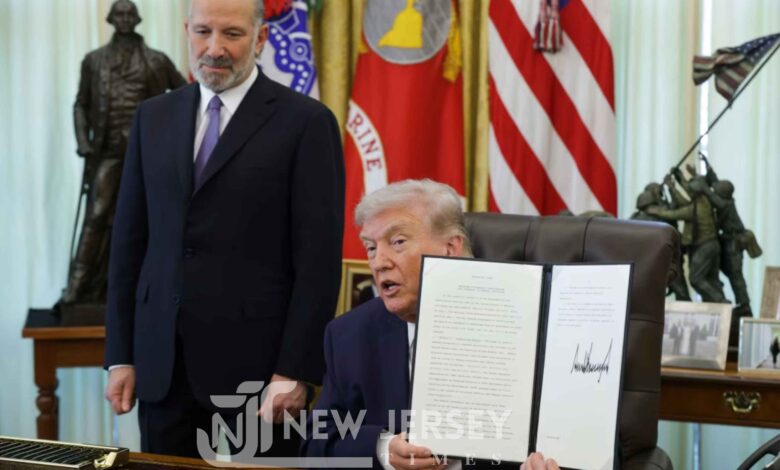
Washington, D.C., May 15: Here is the part that is hard to get past: the Department of Justice walked into federal court this week and told a judge that the voter lists President Trump ordered to determine who gets to cast a mail-in ballot are probably wrong.
Not speculative. Not contested. The administration’s own lawyers admitted out loud that these voter eligibility lists compiled and shared with state election officials are likely incomplete and unreliable. That admission landed in Federal District Court in Washington, in the middle of a lawsuit challenging the very executive order that created this system in the first place. And still, the administration is pushing ahead.
That tension building a system your own people say will not work, then threatening states with funding cuts if they refuse to use it is really what this story is about.
Trump’s Voter Eligibility Order: What He Actually Signed
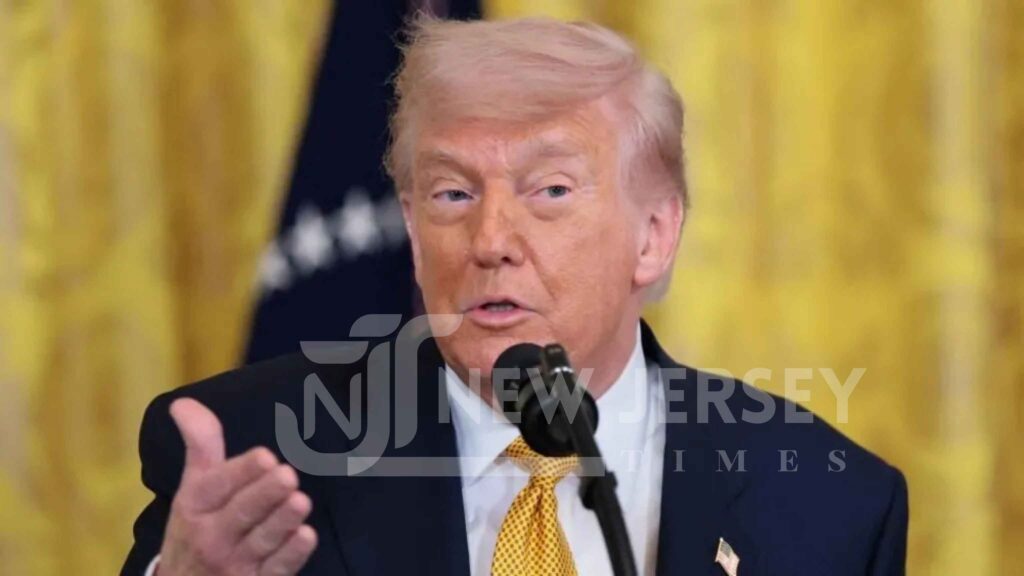
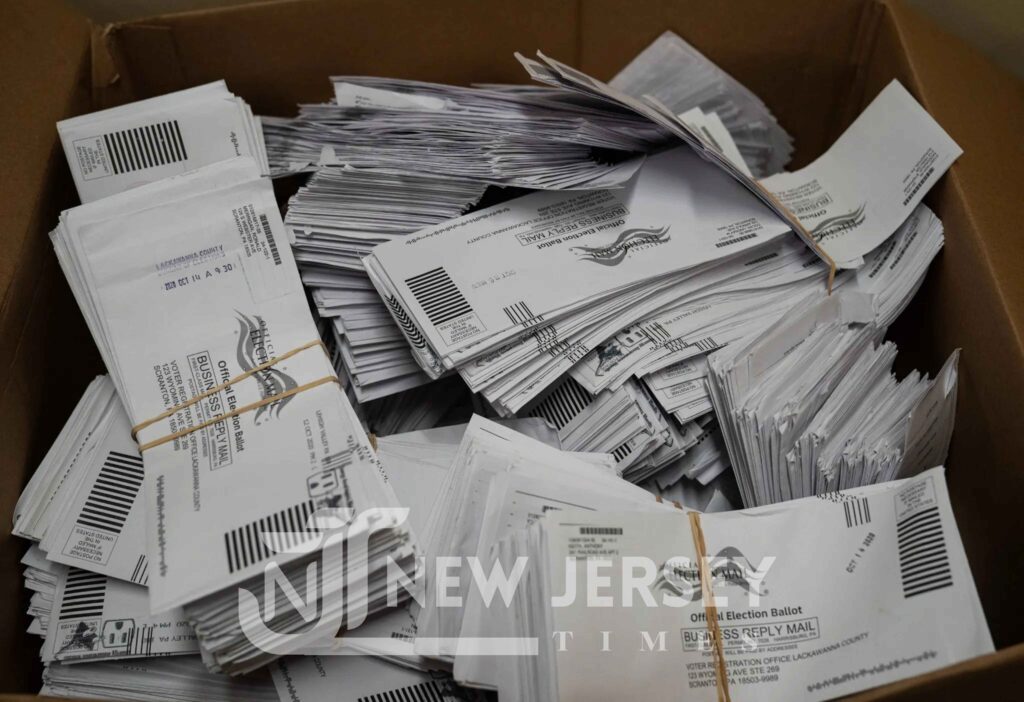
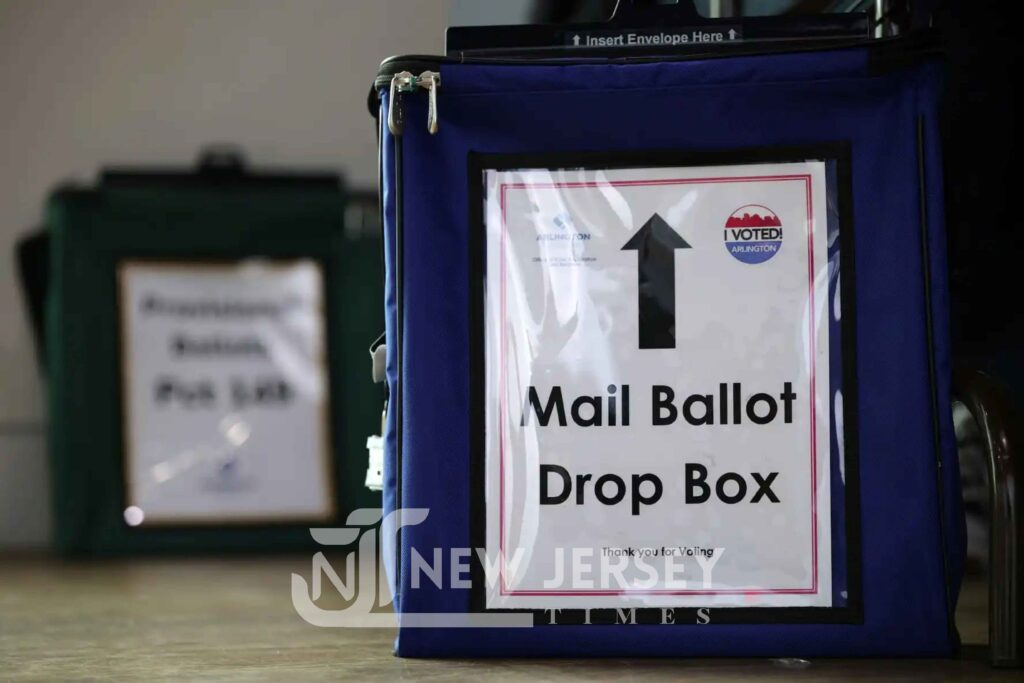
On March 31, Trump signed an executive order creating a nationwide eligibility list of verified citizens. The order calls on the Department of Homeland Security, working alongside the Social Security Administration, to compile state-by-state citizenship lists of people deemed qualified to participate in federal elections. It then directs the U.S. Postal Service to refuse delivery of absentee ballots to anyone whose name does not appear on that federally compiled list.
Effectively, a database assembled in Washington would decide who gets a ballot in the mail. Plaintiffs in the mounting pile of lawsuits have called it “Big Brother,” and it is not hard to understand why.
States that refuse to play along face serious consequences. According to reporting by NPR and PBS NewsHour, the administration has made clear it is prepared to withhold federal funding from noncompliant states a pressure tactic generating fierce resistance across the country, including from states with Republican governors.
The order did not arrive in a vacuum. It came just days after the U.S. Senate rejected Trump’s preferred legislation, the SAVE America Act directly tied to the ongoing Trump voter eligibility bill Senate debate that would have imposed new identification and documentation requirements nationwide. That bill died in the Senate, blocked by Democratic opposition and the legislative filibuster. When Congress said no, the White House reached for a pen instead.
The Database Nobody Trusts Including the Government
The entire machinery here runs through two federal systems: the SAVE database which stands for Systematic Alien Verification for Entitlements and records held by the Social Security Administration. Neither was ever built for voter eligibility verification at this scale, and both carry well-documented reliability gaps that experts have flagged for years.
The SSA does not consistently maintain citizenship data for Americans born before 1981. According to an analysis by Common Cause, that means more than 140 million people may not be verifiable as citizens through SSA records alone. The agency itself has stated in writing that its citizenship records represent only a snapshot of a person’s status at the time they last interacted with the agency. The administration is using those records to make voter eligibility decisions anyway.
SAVE has its own troubled track record. A North Carolina audit found that 97.6 percent of people flagged as potential noncitizens by SAVE were, in fact, U.S. citizens. The DOJ acknowledged in court that SAVE has significant holes, particularly for derived citizens people whose parents naturalized while they were still minors. This is precisely what critics mean when they describe Trump voter eligibility lists as unreliable.
As reported by the Institute for Responsive Government, evidence from multiple states’ recent use of SAVE has shown a consistent failure to verify citizenship for a meaningful share of registered citizens, including those whose eligibility should have been straightforward to confirm.
There is also a far more mundane trap buried in this order that deserves more attention. Any American woman who changed her name after marriage could find herself locked out entirely. If her registration reflects her married name but the Social Security Administration still carries her maiden name, she will not appear on the federal list as a confirmed voter. No fraud. No wrongdoing. Just paperwork that moved faster through one agency than another. Under this order, that mismatch alone could cost her a mail ballot in November.
30 States Are Refusing the Demands
The administration has not been subtle about wanting the underlying data to power this system. According to Reuters, the DOJ’s Civil Rights Division has sent letters to nearly every state demanding access to unredacted rolls records containing sensitive personal information including partial Social Security numbers and driver’s license data.
The response has been widespread defiance. Dozens of states, including several with Republican governors, have refused outright. The Justice Department responded by suing 30 states and the District of Columbia to force compliance.
Courts have not been receptive. Judges have rejected the DOJ’s attempts in California, Massachusetts, Michigan, Oregon, Rhode Island, and Arizona. Notably, among those judges were three appointed by Trump himself during his first term. The DOJ is currently appealing each of those losses.
As of this week, at least 12 states have complied or indicated they plan to share their rolls: Alaska, Arkansas, Indiana, Louisiana, Mississippi, Nebraska, Ohio, Oklahoma, South Dakota, Tennessee, Texas, and Wyoming. The rest are either in court, under litigation threat, or simply not responding.
A legal opinion issued by the DOJ’s Office of Legal Counsel on May 12 signaled the department has no intention of backing down from the Trump voter eligibility push, even as federal judges continue ruling against it.
A Legal Fight Playing Out Across the Country
The opposition is broad, fast-moving, and growing by the week.
On May 14, U.S. District Judge Carl Nichols heard arguments in a trio of lawsuits brought by the Democratic National Committee, the NAACP, and the League of United Latin American Citizens, all seeking to block the order before it strips eligible citizens of mail ballot access ahead of the November midterms. At the heart of every argument is the same core concern that Trump voter eligibility lists are unreliable and will harm legitimate citizens.
Common Cause, the NAACP, and Black Voters Matter filed a separate suit in early April, arguing the order seizes control of federal elections, weaponizes the Postal Service, and exposes local election officials to criminal prosecution for doing their jobs.
That last piece has alarmed administrators across the political spectrum. The order directs the DOJ to prioritize investigating and prosecuting anyone involved in the printing, shipment, or distribution of ballots to ineligible individuals language broad enough to sweep in vendors, mail carriers, and volunteers who assist people in submitting absentee ballots. The Brennan Center for Justice noted it is difficult to imagine how any of those people would know an individual’s eligibility status, let alone have criminal intent.
A coalition of 23 Democratic-led states and the League of Women Voters has filed similar suits in federal court in Massachusetts.
The constitutional argument running through all of these cases is the same: elections are run by states and Congress, not the president. The Elections Clause says as much explicitly. Multiple courts blocked Trump’s earlier 2025 election order on exactly those grounds. This one is structured similarly, and legal analysts expect the same outcome eventually.
The Clock Is Already Working Against the Administration
Even if every lawsuit vanished tomorrow, serious questions remain about whether any of this could function in time for November’s midterms.
Election experts who spoke with NPR were blunt. One described the timeline as “virtually impossible to implement in time for November’s elections,” adding it “seems highly unlikely any of this could be implemented for 2026, even if it were not blocked by courts.” For millions of eligible citizens, that uncertainty is not abstract it is a real threat to casting a ballot.
The National Rural Letter Carriers’ Association raised the practical absurdity of the postal piece directly. The union’s president, Don Maston, was pointed: “The Postal Service is not an election enforcement agency. It is not a substitute for state election administrators, and it is not equipped or authorized to decide who is or is not entitled to vote.”
None of that has slowed the White House down. Trump has said publicly, repeatedly, that he wants proof of citizenship requirements and an end to mail-in voting. He told supporters that if his Trump voter eligibility agenda passed, Republicans would not lose a race “for 50 years.” The executive order, the legal campaign against state rolls, the threats over federal funding all of it pulling toward the same destination, regardless of whether the system can get there before Election Day.
What Happens to People Caught in the Middle
The midterms are six months away. The courts are backed up. And somewhere in the middle of this legal and political fight, there are real people naturalized citizens, women who changed their names after marriage, older Americans whose citizenship data the SSA never properly recorded whose ability to receive a mail ballot may come down to whether a federal database built decades ago for a completely different purpose happens to have their name correctly on file.
The DOJ told a federal judge this week that those voter eligibility lists are probably unreliable.
The administration wants to use them anyway. That, more than anything else written in this story, is what every eligible voter heading into November needs to understand about the Trump voter eligibility fight now playing out in courtrooms across America.
New Jersey Times Is Your Source: The Latest In Politics, Entertainment, Business, Breaking News, And Other News. Please Follow Us On Facebook, Instagram, And Twitter To Receive Instantaneous Updates. Also Do Checkout Our Telegram Channel @Njtdotcom For Latest Updates.

A Wall Street veteran turned investigative journalist, Marcus brings over two decades of financial insight into boardrooms, IPOs, corporate chess games, and economic undercurrents. Known for asking uncomfortable questions in comfortable suits.

A political science PhD who jumped the academic ship to cover real-time governance, Olivia is the East Coast's sharpest watchdog. She dissects power plays in Trenton and D.C. without bias or apology.