
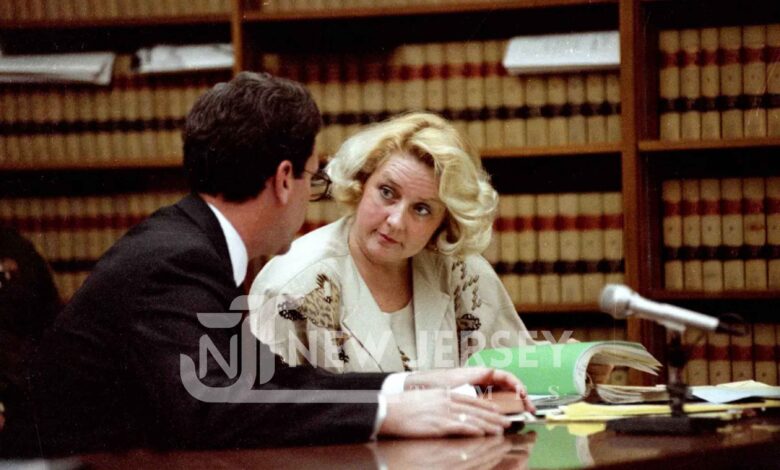
San Diego, May 9: Betty Broderick died Friday morning in a hospital bed, still in state custody, still arguing her case to anyone who would listen right up until her health made that impossible.
She was 78. The state had moved her from the California Institution for Women to an outside medical facility near Corona on April 18, about three weeks before she died. The California Department of Corrections and Rehabilitation put the time of death at 3:40 a.m. on May 8, 2026. Natural causes. The San Bernardino County Coroner will confirm it officially.
She had another parole hearing scheduled. 2032. She was not going to make it and on some level, probably everyone knew that.
Thirty-five years she spent inside. She went in when her youngest child was still a teenager. She came out in a box. And within hours of the news breaking, the internet was doing exactly what it always does with Betty Broderick, splitting down the middle between the people who saw a wronged woman and the people who saw a killer, everybody talking at once, nobody fully convincing anybody else of anything.
That has been this story’s defining feature since 1989. It probably always will be.
The Kind of Story That Does Not Let Go
True crime is a machine now. Podcasts, docuseries, streaming platforms churning out content about real murders faster than anyone can keep up with. Most of it fades within a week. People listen on their commute and forget the details by the weekend.
Betty Broderick is not that.
She has been a cultural obsession for over three decades, which is a genuinely strange thing when you stop and think about it. The crime happened in 1989. The trials wrapped in 1992. She has been in prison ever since, giving the occasional interview, showing up to parole hearings, not exactly generating new material.
And yet here we are.
Part of what kept her in the conversation was the story itself, which has the structural bones of something a screenwriter would invent. The devoted wife who put her husband through school. The affair he denied for two years. The savage divorce. The years of escalating conflict. The pre-dawn shooting. It plays.
But the other part, the part that actually explains why people who were not born when this happened have strong opinions about it, is what the story represents. A woman who organized her entire existence around a marriage and got absolutely nothing when it ended. Whether you think what she did was monstrous or understandable or something in between, you can feel the shape of the injustice she was responding to. That is the thing that transfers across generations. That is why the TikToks still get millions of views and the Reddit threads run to thousands of comments and every few years somebody makes another television show about it.
People see something in this story that feels true to them about how the world works. Or does not work.
Seventeen Years Old, Notre Dame, and Thirty Years of Consequences

She grew up in Bronxville, New York, born November 7, 1947, third of six kids in a strict Catholic family where the expectations for women were pretty clearly defined. She briefly tried modeling before enrolling at the University of Mount Saint Vincent in 1965 to study English and early childhood education.
That same year she met Daniel Thomas Broderick III at Notre Dame. She was seventeen. He was charming and ambitious and going places.
They married in 1969 and Betty spent the next decade and a half making his ambitions possible. Dan did medical school and law school simultaneously, which requires an enormous amount of support infrastructure that somebody has to provide. Betty provided it. She worked, she paid the bills, she raised Kim, Lee, Daniel, and Rhett, she moved the family twelve times in seven years, she made herself into the kind of wife that a man building a career like Dan’s needed in that era.
It worked. Dan became one of the top medical malpractice attorneys in San Diego, eventually running the San Diego Bar Association and pulling in well over a million dollars a year. The house, the cars, the lifestyle. They had everything.
Then in 1983 Betty started to suspect that Dan was sleeping with Linda Kolkena, a former flight attendant he had hired as his legal assistant. She confronted him.
He told her she was wrong.
He said that for two years. Then he moved out and stopped lying about it and filed for divorce in 1985 and the whole thing collapsed into one of the ugliest custody and property battles San Diego had seen in a while. Dan knew every corner of the legal system they were fighting in. Betty did not have that advantage and the outcomes reflected it. He got primary custody of the children. She got a settlement she found deeply insulting given what she had contributed to building everything they were now dividing.
The years between 1985 and 1989 were a sustained disaster. Betty violated court orders. She left messages on their answering machine that were profane enough to get played at trial. She drove her car into the front door of the house where Dan and Linda were living. She was coming apart in ways that were very visible and very documented.
Her attorneys argued later that this was what a woman looks like when she has been systematically broken down by someone who knows exactly how to use institutional power against her. The prosecution argued it was a woman who had decided she was going to make someone pay.
Looking at the record, both of those things were probably happening at the same time.
What Happened That Morning
November 5, 1989. Betty took a key from her daughter without asking, drove to the Marston Hills neighborhood, and let herself into the house Dan and Linda had bought together.
She went to the bedroom. She fired.

Linda Kolkena was 28 years old. She was reportedly pregnant. She died within minutes. Dan Broderick was 44. He came off the bed when the shooting started and died there. Betty left and called a friend and told her what she had done.
The lead detective, Terry Degelder of the San Diego Police Department, called it cold-blooded and calculated in testimony and said Betty was a woman who had decided that hurting the people she blamed was all she had left. Dan had reportedly told friends in the years before his death that if Betty ever truly came for him she would find a way to do it. He said that more than once. He knew her.
He was right.
The first trial in 1990 ended without a verdict. Some jurors were not ready to convict and the holdouts were enough to prevent unanimity. The second trial in 1992 was different. Guilty on both counts. Two consecutive 15-year-to-life sentences. Betty went into custody in 1991 and the parole board said no three separate times over the following decades, pointing each time to the same issue: she had not demonstrated genuine remorse in the way California law requires. She kept showing up to hearings and talking about what Dan had done. What she had done was in the conversation too but it was never where she chose to put the weight.
The board noticed every single time.
1992, CBS, and the Version of Betty That Millions of People Believed
Television got to her almost immediately and for a lot of America, television became the whole story.
CBS aired two films in 1992. “A Woman Scorned: The Betty Broderick Story” first, then “Her Final Fury: Betty Broderick, The Last Chapter.” Meredith Baxter played Betty in both. The ratings were big. For the enormous audience that watched without having followed the trial at all, these films were the definitive account. They saw a woman who had built something and had it taken from her. They watched the legal system seem to reinforce that theft. They watched Betty fall apart.
The films were not a documentary and they were not trying to be. They were drama, which means they made choices about emphasis and characterization. Dan Broderick and Linda Kolkena were real people with families and their own complete inner lives, and a CBS film in 1992 was not especially interested in exploring that complexity when the central story was this good.
What the films did was manufacture sympathy at scale. And sympathy, once manufactured, is remarkably hard to walk back.
Then Showtime Brought Her Back and the Internet Took Over
By the 2010s the Betty Broderick story had settled into cultural memory. Something people of a certain age remembered. It came up in conversations about famous crimes or bad divorces and then moved on.
2020 changed that.

Critics responded. Rotten Tomatoes called Peet’s work an incredible embodiment of a woman scorned, picked up at the time by Entertainment Weekly and Variety. The numbers were strong. And the audience it found was largely people who had been children or not born in 1989, discovering the whole thing fresh and arriving with opinions before the credits rolled.
Then social media accelerated everything. TikTok creators pulled parole hearing footage and old prison interviews and built content around it that got millions of views. Reddit threads went deep. Petitions for Betty’s release circulated again with new momentum. Advocacy accounts dedicated entirely to her story grew followings that genuinely surprised people who had been watching the case for years.
The streaming era did something specific here. It made a 1989 murder feel like something happening right now, like a situation still in progress that you personally had a stake in. That is a strange thing to do to history but it is what the format does and this story was built for it.
Why This Case Specifically
There are thousands of true crime cases. Most of them do not get two television adaptations and a streaming revival and an active online community still arguing about them 35 years later.
What made Betty Broderick different is that her story is not really about a murder. It is about a marriage. About what happens when someone builds their whole identity around another person and that person decides they are done. About whether the legal system is actually equipped to handle the kind of slow damage that does not leave visible marks. About power and who has it and what happens to people who do not.
Those questions do not have clean answers. They did not in 1989 and they do not now. And stories without clean answers keep generating conversation because people keep hoping someone will finally say the thing that resolves it.
Nobody ever does.
The archetype Betty represents runs through American culture well beyond her specific case. The woman who sacrificed and was discarded and eventually broke. It shows up in films and novels and television shows that have nothing directly to do with her but carry her shape, her particular emotional logic. She became a kind of template. Not a flattering one exactly but a deeply recognizable one.
Scholars who study gender and media have pointed to the Broderick case as one of the events that forced a genuine public conversation about what happened to women in high-conflict divorces, about whether courts were structurally tilted against wives with no independent financial standing, about the gap between what the law calls justice and what the person on the wrong end of a brutal divorce experiences as fairness.
Betty did not intend any of that. But it happened in her wake.
Why does this story keep becoming television?
Because it resists resolution. Every dramatization raises the same questions and leaves them unanswered and audiences come back hoping this version will be the one that finally settles it. It never is. Simple stories get told once and remembered occasionally. This one keeps getting remade.
How accurate was the Showtime series?
It was drama, not documentary. It was built around real events involving real people and their real families, and it made the choices that drama makes. Critics praised it extensively and Entertainment Weekly and Variety covered the response at the time. Whether a dramatization is accurate is always a more layered question than it appears.
Why did the parole board deny her three times?
California requires demonstrated remorse and genuine insight as conditions for release after a violent conviction. The California Board of Parole Hearings found across three separate hearings that Betty had not met those conditions. Reporting by the San Diego Union-Tribune over the years documented the consistent pattern of Betty centering her own account of grievance rather than the harm she caused on November 5, 1989.
Will new projects follow her death?
Almost certainly yes. The true crime industry moves fast when major figures in well-known cases die and Betty Broderick is one of the most recognizable names the genre has. Several platforms have ongoing interest in complex figures from recent history and this story fits that appetite exactly.
What was her actual sentence?
Two consecutive 15-year-to-life terms following the 1992 conviction. She was in state custody from 1991 until her death in May 2026. Thirty-five years. Her next scheduled parole date was 2032.
The Argument Outlives Her
She never left. That is the simple fact underneath all of it. Betty Broderick spent 35 years inside telling anyone who would listen that she had been wronged, that what the divorce did to her was the real crime, that she had long since served whatever time was proportionate to what she had done. People believed her. Genuinely. They showed up to parole hearings and ran social media accounts in her name and felt real anger about what they saw as a system holding an old woman past any reasonable justification.
Dan Broderick was 44. Linda Kolkena was 28 and reportedly pregnant. They were asleep. Their families have lived with that for 35 years too, mostly out of the spotlight, mostly on the outside of the cultural conversation that kept finding new ways to center someone else.
The streaming platforms are already moving. Someone is making calls right now about the rights to the next project. A new documentary will come. A new dramatization. A new audience will find the story and the cycle will start again because that is what this story does, it finds new people and pulls them in and leaves them somewhere between outrage and confusion and unable to fully let it go. That is its power. It has always been its power.
Betty Broderick was a real woman with four kids and a history and 35 years of prison. She was also, by the end, something the culture had turned into something larger than any of that. She died and the argument she spent her life at the center of did not die with her. It never does.
New Jersey Times Is Your Source: The Latest In Politics, Entertainment, Business, Breaking News, And Other News. Please Follow Us On Facebook, Instagram, And Twitter To Receive Instantaneous Updates. Also Do Checkout Our Telegram Channel @Njtdotcom For Latest Updates.

A Wall Street veteran turned investigative journalist, Marcus brings over two decades of financial insight into boardrooms, IPOs, corporate chess games, and economic undercurrents. Known for asking uncomfortable questions in comfortable suits.

A bi-coastal pop culture critic and former indie screenwriter, Gia covers Hollywood, streaming wars, and subculture shifts with razor wit and Gen Z intuition. If it’s going viral, she already knew about it.